"Latin Patriarchate School" in Ajloun.. A Century of Education and Nation-Building
Amman6 min read
Share
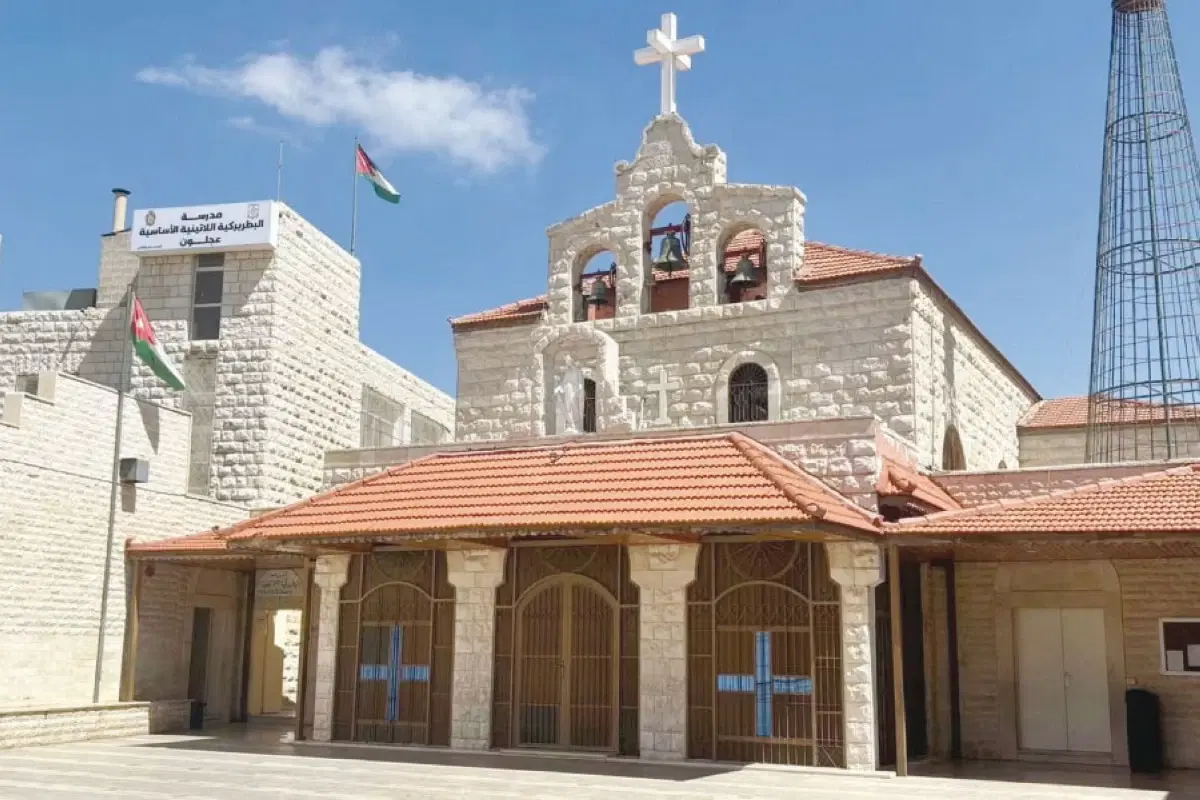
The Latin Patriarchate School in Ajloun Governorate stands as one of the prominent historical milestones in the governorate's educational journey. Since its establishment in 1888, its name has been associated with efforts to spread education and instill human and educational values. For over a century, it has contributed to preparing generations of students who continued their paths in various fields, while today the school continues its educational mission, keeping pace with modern developments in teaching and learning methods.
The school, which is one of the oldest educational institutions in Ajloun, recalls a history rich in experiences and memories linked to the city's educational journey. Its role was not limited to imparting knowledge inside classrooms; rather, it extended to building the student's personality, promoting moral and national values, and consolidating a culture of love, tolerance, coexistence, and respect for others, reflecting the role of educational institutions in building communities and enhancing their cohesion.
Father Johnny Bahbah, priest of the St. Paul the Apostle Parish, stated that the school was opened in 1888, and the number of its students at its founding was 23, marking the beginning of an educational and pedagogical journey that spanned long decades, during which it succeeded in sustaining its mission of education and serving the local community.
He added that throughout its journey, the school has maintained an educational approach that combines learning with instilling human values and community participation, pointing out that its mission is not limited to the academic side, but includes cultural, spiritual, and social aspects, alongside enhancing national identity and a sense of belonging among students, while fostering a spirit of responsibility, respect for diversity, and cooperation among community members.
He emphasized that the school's continuation in performing its educational mission reflects the importance of preserving educational institutions that are linked to the history and memory of cities, and have contributed to shaping the features of their educational and social life, pointing out that the school represents a part of Ajloun's educational history and the development witnessed by the governorate in the field of education across generations.
School Principal Sahar Haddad said that over its years of operation, the school has continued to graduate generations of students who have worked in various specializations and fields, contributing to public and professional life. She noted that a number of its graduates remain keen to visit it and revive their memories with their teachers and peers, due to the special status it holds in their personal and educational journeys.
She added that the school's vision is based on building the student's personality in an integrated manner, so that academic achievement goes hand in hand with developing positive values and behaviors, consolidating the principles of love, tolerance, coexistence, and respect for others, and enhancing national belonging, alongside discovering students' inclinations and talents, working to develop them, and refining their capabilities to help them continue learning and innovating. Haddad explained that the school is keen to provide an educational environment that encourages students to participate and interact, and develops their thinking, communication, and teamwork skills through various programs and activities that respond to their interests and support their scientific, cultural, and artistic capabilities.
She stated that the school engages its students in cultural, religious, artistic, and educational activities and competitions, noting that they have achieved advanced results in English language, Bible, and musical instrument competitions, alongside organizing lectures, courses, and events aimed at enhancing their knowledge, developing their skills, and building their personalities.
She emphasized that extracurricular activities constitute an important aspect of the educational process, due to the opportunities they provide to discover talents, develop self-confidence, and encourage students to take initiative and participate positively, in addition to giving them the space to express their capabilities and interests in multiple fields.
Regarding the development of the educational process, Haddad pointed out that the school has witnessed an update in educational means and equipment by introducing modern technologies into classrooms and providing them with interactive smart screens and boards, in addition to equipping a computer lab containing 20 devices, and implementing training courses for female teachers on dealing with modern curricula and technologies, thereby enhancing their ability to employ digital tools in teaching and keep pace with educational developments.
She added that keeping pace with educational developments requires continuing to develop the skills of the teaching staff and modernizing teaching methods, which provides students with better opportunities for learning and interaction, and contributes to improving the quality of the educational process and benefiting from the capabilities offered by modern technologies.
For his part, Yousef Al-Somadi, founder of the "Hekayet Makan" (A Place's Tale) initiative, stated that the Latin Patriarchate School represents an important part of Ajloun's educational and cultural memory, due to the history it carries spanning over a century, and the generations and human and educational experiences associated with it that have contributed to shaping a part of the local community's identity.
He added that the value of historical schools is not limited to their founding date or their continued delivery of education, but encompasses the memories of students and teachers they preserve, and the associated photos, documents, and narratives that reflect the nature of educational and social life across different stages.
Al-Somadi pointed out that documenting the school's history by collecting old photographs and school documents, and recording the accounts of its graduates, teachers, and staff, constitutes an important step in preserving the governorate's educational memory and highlighting the transformations witnessed by the education sector across generations.
He stressed the importance of involving students, graduates, and members of the local community in initiatives to document the history of ancient educational institutions, which enhances the connection of new generations to their city's history, introduces them to the efforts made by educational institutions in spreading education and building humans, and preserves the stories of figures and experiences that contributed to Ajloun's educational journey.
The Latin Patriarchate School in Ajloun remains, with its educational and social legacy, a witness to important stages in the governorate's educational history, and a model for the continuity of educational institutions in combining the preservation of their historical mission with the continuous development of their curricula and educational means, to meet the needs of students and contribute to preparing generations capable of participating in building the future.