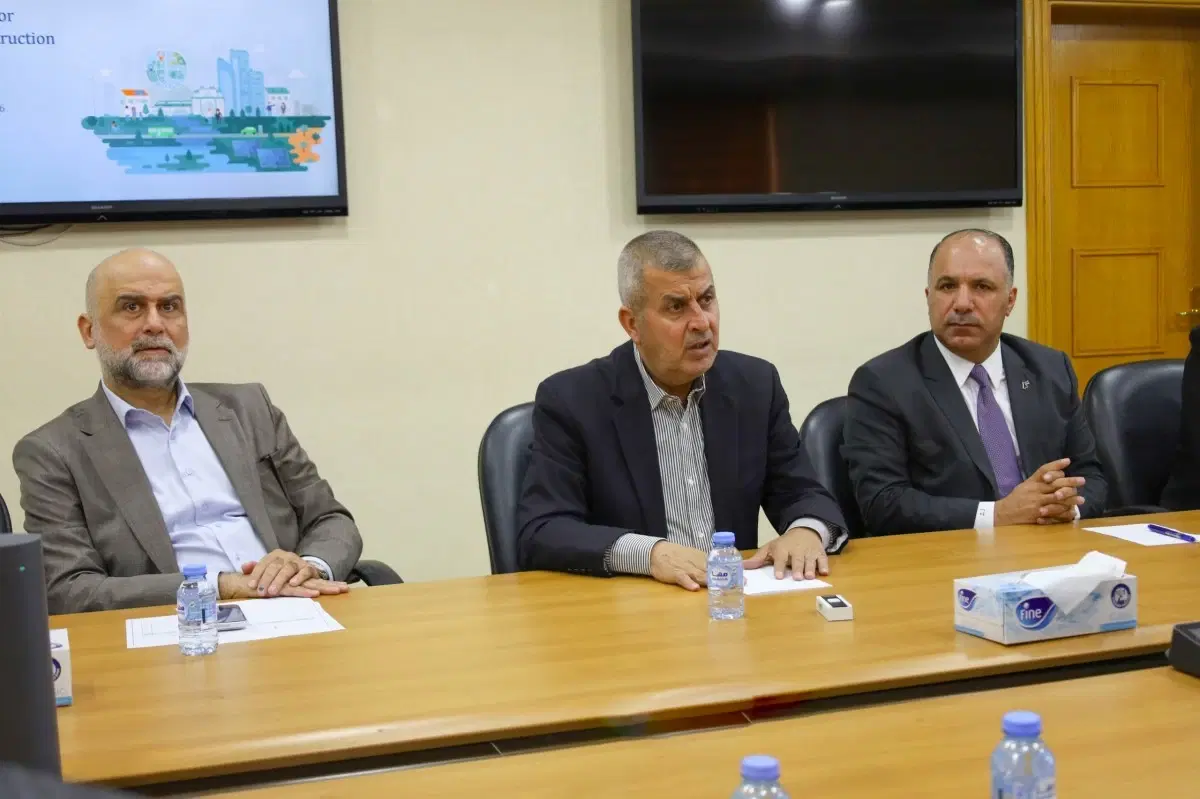
Kharabsheh Chairs Energy Sector Partnership Council Meeting to Discuss National Roadmap for Buildings in Jordan
Amman3 min read
Share
* Kharabsheh: Green Building is a Precious Opportunity to Reduce Energy Bills and Enhance Building Efficiency
The Minister of Energy and Mineral Resources, Dr. Saleh Kharabsheh, chaired, today Monday, the meeting of the Public-Private Partnership Council for the energy sector, to discuss the national roadmap for buildings and construction in Jordan, which was prepared within the framework of the Jordanian-German partnership in the energy sector in cooperation with the German Energy Agency (dena) and aimed at reducing emissions from existing and new buildings.
Kharabsheh said that green building for existing and new buildings represents a precious opportunity that will have a significant impact on reducing the energy bill in the building sector, pointing out that energy efficiency must be an integral part of the planning, design, and implementation stages in the building and construction sector.
He explained that the application of green building codes and specifications in the building sector is not mandatory at the moment, but it may become a global mandatory requirement, which necessitates Jordan's preparation and readiness for these requirements, especially in the industrial building sector.
He stressed the importance of the national roadmap in providing a clear framework for the transition to more energy-efficient and less-emitting buildings, and taking advantage of the opportunities available in the fields of energy efficiency, renewable energy, and modern technologies, which will reflect on reducing energy costs and enhancing the competitiveness of economic sectors.
For her part, the Director of the Energy Efficiency and Climate Change Directorate, Engineer Lina Mubaideen, said that the building and construction sector in Jordan consumes more than 40% of the total final energy and more than 60% of electricity, making it one of the most impactful sectors in energy consumption and carbon emissions.
She pointed out that more than 70% of buildings in Jordan were built before the adoption of energy efficiency codes, which provides a wide scope for improvement through the rehabilitation of existing buildings, and the application of the necessary codes and specifications on new buildings.
Mubaideen noted that the Ministry has launched 3 national energy efficiency plans, in addition to the national green growth plan that targets reducing emissions, as well as the adoption and gradual application of green building and energy efficiency codes in government projects and new buildings.
She added that the preparation of the national roadmap represents a fundamental step in developing the policies and executive frameworks necessary to enhance the building and construction sector, in line with the national directions towards more energy-efficient, sustainable, and climate-resilient buildings.
She emphasized that the implementation of the roadmap requires an active partnership between the public and private sectors, and taking advantage of modern investments, technologies, and innovative financing models, which contribute to accelerating the implementation of energy efficiency projects and the rehabilitation of buildings, and reducing energy costs for citizens and establishments.
She pointed out that Jordan is working on developing an integrated system to support the transition to more efficient, sustainable, and resilient buildings in the face of the effects of climate change, through the development of policies and legislation and strengthening partnership with various relevant parties.
During the meeting, amendments to the instructions for licensing the practice of energy auditing issued in 2017 were discussed, where the amendments to these instructions were made to facilitate the licensing of the first and second categories to provide an opportunity for licensing the largest possible number of companies.
The national roadmap aims to stimulate climate action in the building and construction sector and support the transition to a low-carbon future in the Kingdom.