Jordanian-European Partnership Enters a Broader Phase of Investment and Production
Jordan Deepens Its Economic Path with Europe
Amman6 min read
Share
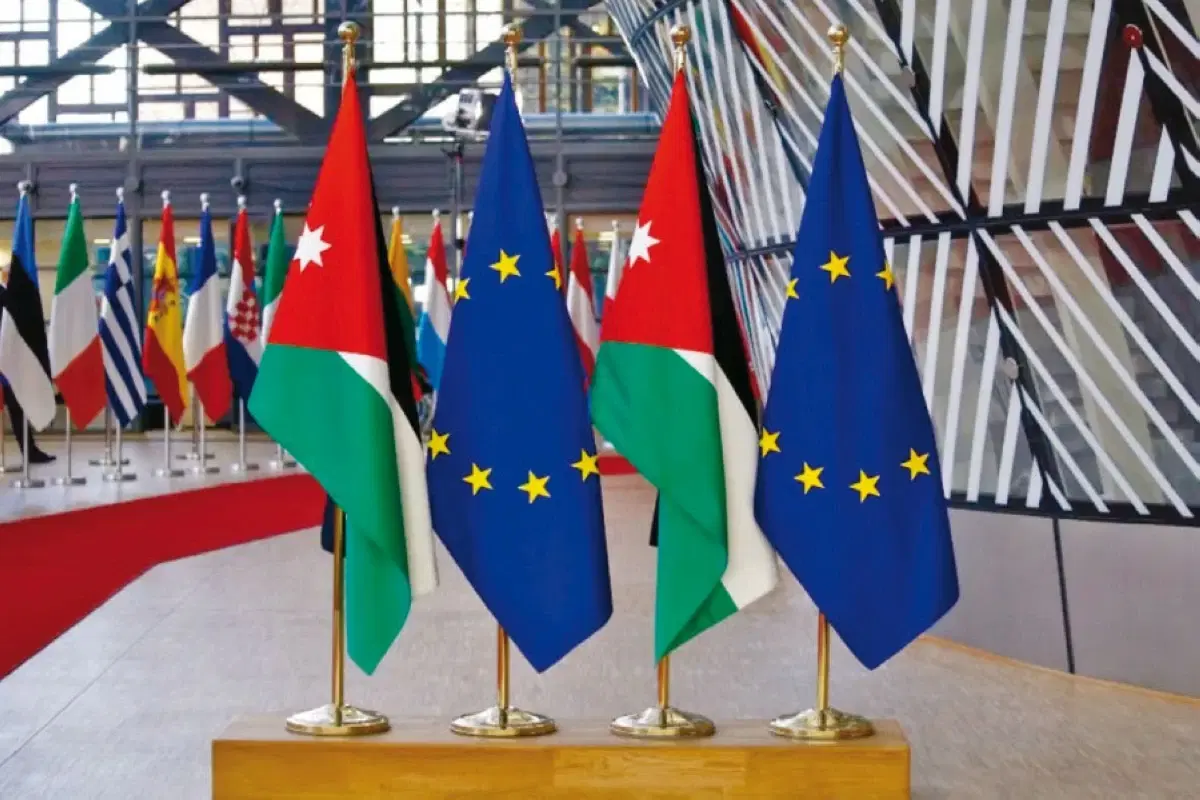
Economic experts agreed that King Abdullah II's affirmation, during his meeting with European Council President Antonio Costa, in the presence of Crown Prince Hussein bin Abdullah II, of Jordan's keenness to build on the strategic partnership with the European Union, carries an important economic dimension, at a time when the Kingdom is preparing to host the Jordanian-European Investment Conference in November.
They pointed out in interviews with «Al-Rai» that Jordan has a strong base on which to build, as the European partnership package for the period 2025-2027 amounts to 3 billion euros, distributed between 640 million euros in grants, about 1.4 billion euros in additional investments, and 1 billion euros in concessional loans within the overall financial assistance, noting the importance of treating it as a tool to stimulate greater private European investments.
King Abdullah II met with European Council President Antonio Costa on the sidelines of the UN General Assembly meetings in New York, in the presence of Crown Prince Hussein bin Abdullah II.
His Majesty affirmed Jordan's keenness to build on the strategic partnership with the European Union, expressing the Kingdom's aspiration to host the Jordanian-European Investment Conference in November.
The meeting addressed the latest regional developments, as His Majesty stressed the need to intensify international community efforts to reach a solution that ends the ongoing escalation and preserves the security and sovereignty of Arab countries, and warned of the seriousness of Israeli actions in the West Bank and Jerusalem, calling for support for Lebanon and Syria's efforts to preserve their security and territorial integrity.
Economic expert Wajdi Makhamara pointed out that the meeting carries important economic and political implications, especially as it comes ahead of the Jordanian-European Investment Conference on November 19, which aims to transform the strategic and comprehensive partnership between Jordan and the European Union into tangible projects and investments.
He pointed out that the relationship with the European Union is moving from financial aid and support to a broader phase based on investment, trade, production, technology transfer, and partnerships between the private sector, explaining that the conference represents an opportunity to market the investment environment and opportunities available in the energy, water, mining, transportation, logistics, industry, tourism, and green economy sectors.
Makhamara added that enhancing European investor confidence in Jordan represents an important economic indicator, especially in light of regional tensions, noting that the Kingdom's location between the Gulf markets, Iraq, and the Levant, and its proximity to Europe, enhances its opportunities to become a regional base for investment in transportation, logistics, industry, storage, and supply chains.
He stressed that the challenge is to focus on the quality of investment, not just its size, so that investments raise production capacity, increase exports, create jobs, and transfer technology, emphasizing that the success of the conference is measured by the transformation of opportunities and memoranda of understanding into funded and ongoing projects.
He explained that the European partnership directly intersects with the priorities of the Economic Modernization Vision, through supporting investment, innovation, job creation, and sustainable development.
Financial and economic expert Dr. Mohammad Al-Hadab Al-Sarhan affirmed that King Abdullah's affirmation of the keenness on the strategic partnership with the European Union provides an opportunity to move the relationship to a deeper partnership in investment, production, trade, and technology transfer, noting that the strategic and comprehensive partnership covers five axes, including economic resilience, trade, investment, and human capital.
Al-Sarhan explained that the European partnership package of 3 billion euros for the period 2025-2027 should not be seen as a ceiling for the relationship, but as a tool to stimulate greater private European investments.
He pointed out that the volume of trade in goods between the two sides amounted to about 6.1 billion euros during 2025, and the European Union was the second largest trading partner of Jordan, accounting for 15.2% of the Kingdom's trade in goods, while the European market share of Jordanian exports was only 8.7%, considering this a wide field for increasing exports.
He explained that Jordanian exports to European Union countries increased during the first four months of 2026 by 49.3% to 218 million dinars, compared to 146 million in the same period last year, calling for transforming this growth into a long-term path by linking Jordanian companies with European buyers and supply chains.
He added that the November conference should not be limited to presenting Jordanian projects, but also receive projects from European companies looking for new investment sites, while providing a clear and fast path for land, energy, water, licenses, skills, and financing.
Al-Sarhan pointed out that European financing can stimulate multiples of private investment, noting that 23 major projects were launched under the economic and investment plan since 2021, with a European commitment of approximately 439 million euros, contributing to mobilizing total investments of approximately 4.8 billion euros.
He stressed the importance of linking European investment with Jordanian small and medium-sized enterprises, transferring technology and knowledge, and training young people, so that the impact of investment extends to local supply chains, jobs, and exports, emphasizing that the success of the partnership is measured by the factories, investments, technology, markets, and job opportunities it leaves behind.
Former representative of the clothing and knitwear sector in the Jordan Chamber of Industry, Engineer Ehab Qadri, said that King Abdullah's meeting with the European Council President carries an economic dimension that goes beyond traditional bilateral relations, in light of Europe's re-examination of its economic security, supply chains, energy sources, and investment sites close to its markets.
He added that Jordan has an opportunity to turn its balance of political stability, credibility, geographical location, and international relations into a clearer economic advantage, so that the relationship with Europe moves from developmental support and cooperation to a broader partnership in investment, production, trade, and technology transfer.
Qadri pointed out that the Jordanian-European Investment Conference can be a tool for linking European capital, technology, and markets with the sectors that Jordan aims to develop within the Economic Modernization Vision, stressing that the quality of investment is the real test of the partnership, in terms of raising production and export capacity, transferring knowledge and technology, and integrating Jordanian companies into European value chains.
He added that the November conference should start with specific and ready-to-invest projects, followed by an institutional path that measures what has been transferred to financial closure, implementation, production, and export.
Qadri pointed out that the next phase should move the Jordanian-European relationship to a partnership in growth industry, so that Jordan's stability, location, and international relations are transformed into sustainable investment, exports, and job opportunities.