Jordan Industry: European Investments are an Opportunity to Expand the Industrial Base and Increase Exports
Amman6 min read
Share
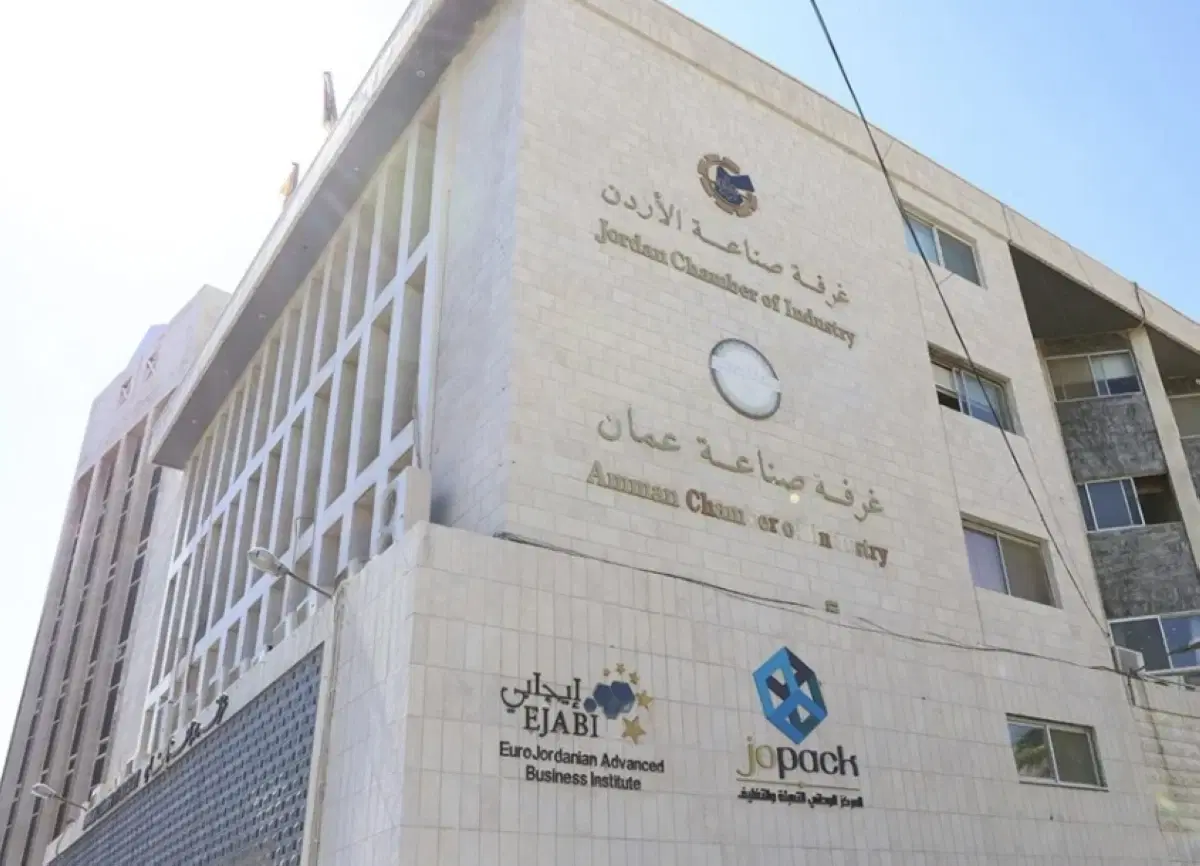
The Jordan Chamber of Industry confirmed that the Jordanian-European Investment Conference represents an important milestone for transitioning the economic relations between Jordan and the European Union from a traditional trade cooperation framework to deeper investment and production partnerships, enhancing manufacturing, technology transfer, value addition, employment, and exports.
It pointed out that the importance of the conference for the national industry lies in providing a platform to showcase the capabilities and potential that the Jordanian industry has reached, connecting European investors and companies with the industrial opportunities available in the Kingdom, contributing to attracting quality investments, establishing joint ventures, transferring technology and expertise, developing production and supply chains, and enhancing the integration of the Jordanian industry into European value chains.
The Jordanian-European Investment Conference will be held on November 19th, in the Dead Sea region, under the patronage of His Majesty King Abdullah II, with the participation of the President of the European Commission, Ursula von der Leyen, within the framework of the strategic and comprehensive partnership between Jordan and the European Union, which was launched at the beginning of last year.
His Majesty the King and the President of the European Commission witnessed in late January 2025 in Brussels, the signing of the comprehensive strategic partnership agreement between Jordan and the European Union, where the Union announced a package of financial and investment aid worth 3 billion euros for the years (2025–2027), in support of the objectives of the agreement.
During the conference, promising investment opportunities in the Kingdom will be presented, and prospects for partnership and cooperation in a number of priority sectors will be discussed, foremost of which are: renewable energy, clean technologies, the digital economy, industry, and logistics, and infrastructure.
Data on European investments registered with the Jordan Chamber of Industry indicates the presence of 50
European investment facilities with a total registered capital of $500 million, mainly concentrated in the engineering, electrical, and information technology industries sector, which accounts for 69.7 percent of the total European investment capital.
According to the data, the mining industries sector came in second with a share of 14.7 percent, followed by the food, agricultural, and livestock industries sector with 13.3 percent, while the remaining percentage is distributed among the packaging, chemicals, construction, leather, and plastic industries sectors.
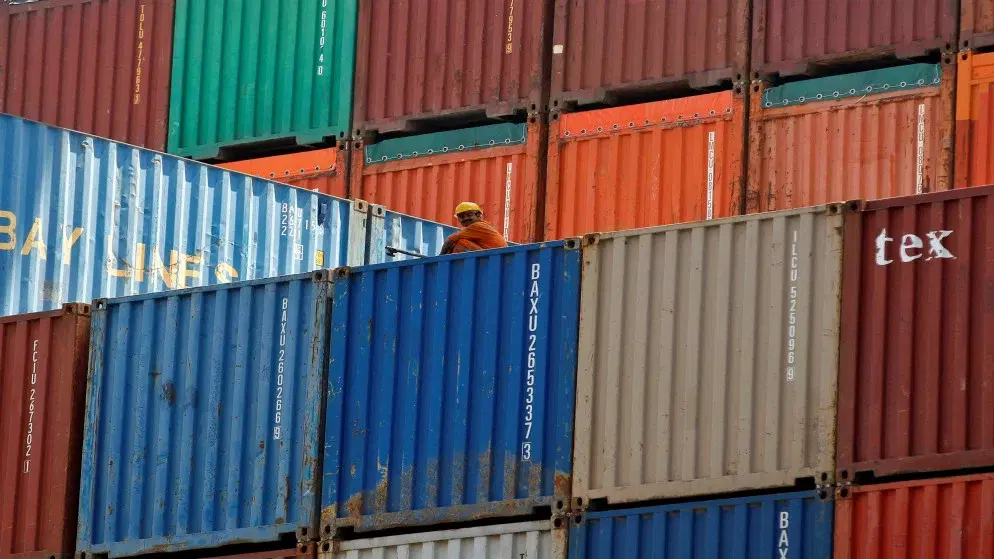
On the trade front, data showed that Jordanian exports to the European Union countries during the first half of the current year amounted to about 318 million dinars, compared to 233 million dinars in the same period of 2025, with a growth of 36.5 percent, while imports decreased to 1.419 billion dinars compared to 1.576 billion dinars in the same period last year.
According to the data, the Netherlands topped the European Union countries as the largest importer from the Kingdom during the first half of the current year, with a value of about 87 million dinars, with a growth of 88 percent, followed by Belgium with a value of 66 million dinars, with a growth of 45 percent, and Italy with a value of 50 million dinars, with a growth of 12 percent, reflecting a noticeable improvement in the presence of Jordanian products in a number of European markets.
In terms of the structure of Jordanian exports for last year, gold jewelry and jewelry topped Jordan's exports to the European Union countries with a value of about 136 million dinars, followed by potash salts with a value of about 110 million dinars, then ready-made clothing from other textile materials with a value of about 98 million dinars, along with a group of food and chemical products.
The Chamber explained that the growth achieved in exports during the recent period, along with the diversification of exported products, provides a base upon which to build to expand the Jordanian presence in the European market and gradually transition from focusing on existing products to developing new products with higher added value and linking Jordanian companies with European buyers and manufacturers within long-term partnerships.
The Chamber pointed out that the European market offers great potential for expanding the Jordanian export base, especially in light of the existence of untapped export opportunities estimated at about $926 million, reflecting a gap between the export potential of the national industry and the actual trade volume with the European Union markets.
The most prominent of these opportunities are concentrated in the clothing sector worth $284 million, chemicals $128 million, jewelry and precious metals $105 million, and fertilizers $37 million, in addition to opportunities available in a number of other industrial products and sectors.
At the level of the European Union countries, the data indicates the existence of significant untapped export opportunities in a number of markets, most notably: the Netherlands with a value of $122 million, Belgium $99 million, and Italy $81 million, reflecting the possibility of increasing Jordanian exports to these markets and benefiting more from the existing demand for national products in them.
The Jordan Industry pointed out that taking advantage of these opportunities requires continued work with the European side to develop and simplify the rules of origin, in line with the nature of the Jordanian industry and current supply chains, in addition to addressing technical and non-tariff barriers, facilitating conformity and accreditation procedures, enhancing the ability of Jordanian companies to take full advantage of the benefits provided by the Jordanian-European partnership.
It stressed the importance of raising the readiness of industrial companies to deal with the increasing European requirements related to sustainability, the environment, specifications, traceability, and carbon footprint, in addition to enhancing their capabilities in the fields of quality, packaging, marketing, and promotion, and providing the necessary information about market requirements and opportunities available in them.
The Chamber explained that increasing exports is not only related to opening markets, but also requires expanding production capacity, deepening local manufacturing, and developing products, making European investment a complementary factor to export efforts, through the establishment of new production projects, the transfer of technology and expertise, and linking Jordanian factories to European value chains.
It pointed out that the next phase requires dealing with the Jordanian-European economic relationship within an integrated vision that is not limited to increasing trade volume, but rather based on developing investment and industrial partnerships, technology transfer, and building shared value chains, in parallel with addressing barriers to access to the European market and enhancing the competitiveness of the national product.
It confirmed that the conference represents a practical opportunity to translate this integrated vision into executable projects and partnerships, and to take advantage of the available investment and commercial potential to support the expansion of the industrial base, increase added value and employment, and enhance Jordanian exports to Europe and global markets.