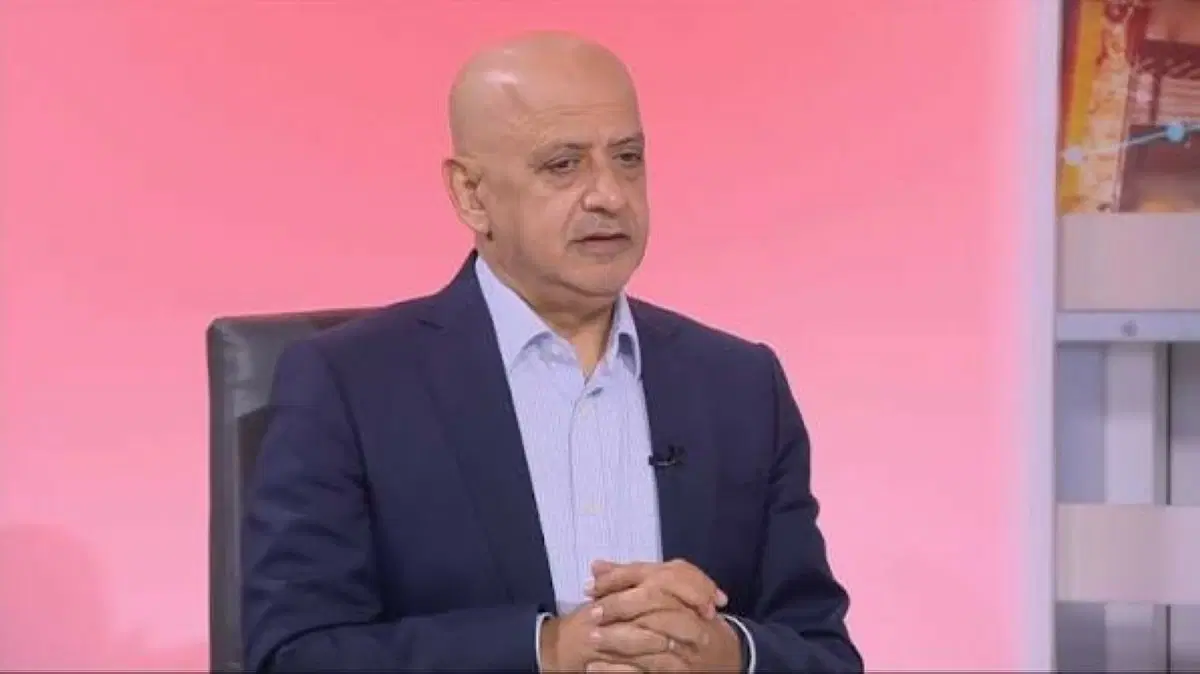
Al-Haj Tawfiq: The Jordanian-European Investment Conference Opens Horizons for Broader Economic Partnerships
Amman9 min read
Share
The President of the Jordan and Amman Chambers of Commerce, Senator Khalil Al-Haj Tawfiq, affirmed that the Jordanian-European Investment Conference constitutes an important milestone in advancing economic relations between the Kingdom and European Union countries, and in building deeper economic partnerships that go beyond the limits of traditional trade exchange.
Al-Haj Tawfiq said on Saturday that the commercial and service sector looks with great optimism toward the upcoming phase of Jordan's relations with EU countries, aiming for its hallmarks to be increasing Jordanian exports, attracting qualitative investments, and more broadly connecting local companies with European markets and value chains.
The Jordanian-European Investment Conference will be held on November 19, within the framework of the comprehensive and strategic partnership between Jordan and the European Union launched early last year.
His Majesty King Abdullah II and European Commission President Ursula von der Leyen witnessed in late January 2025 in Brussels the signing of the comprehensive strategic partnership agreement between Jordan and the European Union, as the EU announced—in support of the agreement's objectives—a financial and investment aid package worth 3 billion euros for the years (2025–2027).
During the conference, promising investment opportunities in the Kingdom will be showcased, and prospects for partnership and cooperation in several priority sectors will be discussed, foremost among them: renewable energy, clean technologies, the digital economy, industry, logistics services, and infrastructure.
Al-Haj Tawfiq, who also serves as the First Vice President of the Arab-French Chamber of Commerce, added: "We hope to see after the conference new investments, partnerships between Jordanian and European companies, new contracts and export opportunities, and for European interest in the Kingdom to translate into tangible projects on the ground."
He stressed that the conference must be the beginning of a sustainable economic path by identifying the opportunities and projects to be presented during it, connecting European investors with Jordanian companies, following up on business meetings, and establishing a mechanism to monitor what is achieved.
He pointed out that the Jordanian private sector is ready to play its part in this path, and that what is required is joint work between the government, chambers of commerce and industry, private sector institutions, and the European side to identify feasible opportunities and follow them up according to clear time programs.
He noted that Jordanian-European relations possess a strong base of cooperation established by royal efforts and the solid relations built by His Majesty the King with the European Union, which requires moving the strategic partnership from the stage of talking about potentials and opportunities to actual investment in them, increasing joint projects, and enhancing the access of Jordanian products and services to European markets.
According to statistical data monitored by the Amman Chamber of Commerce based on data from the Department of Statistics, Jordanian exports to EU countries rose from 179 million dinars in 2021 to 624 million dinars last year, achieving a growth of 248.4 percent, reaching nearly three and a half times its level recorded in 2021.
In contrast, imports rose from 2.718 billion dinars to 3.163 billion dinars during the same period, with a growth of 16.4 percent, meaning that the pace of growth of Jordanian exports to the European Union exceeded the pace of import growth by 15 times.
Regarding last year, Jordanian exports to EU countries increased by 39.3 percent compared to 2024, rising from 448 million dinars to 624 million dinars in 2025, while imports increased by 10.6 percent, from 2.861 billion dinars to 3.163 billion dinars.
Al-Haj Tawfiq said that these figures reflect an important improvement in the ability of Jordanian products to reach European markets, and confirm that the private sector has ample room to double its presence in a market that is among the largest and most powerful in purchasing power globally.
He added that the positive export trend continued during the current year, as the value of Jordanian exports to EU countries during the first half of the current year reached about 318 million dinars, compared to 233 million dinars for the same period of 2025, an increase of 36.5 percent.
He explained that this rise in exports was met with a decline in the Kingdom's imports from the European Union during the first half of the current year by 10 percent, dropping to 1.419 billion dinars, compared to 1.576 billion dinars for the same period last year.
Al-Haj Tawfiq, who also serves as the Third Vice President of the Arab-German Chamber, emphasized that what is required is not to reduce trade or imports from Europe, but rather to increase the Jordanian side of the equation by raising and diversifying exports and increasing the added value of national products reaching European markets.
He pointed out that the continued rise in exports coupled with the decline in imports represents a positive indicator that should be built upon by opening more channels for national products and addressing technical, procedural, and commercial obstacles that limit their access to European markets.
Al-Haj Tawfiq said that one of the most important indicators paving the way for a different phase in the economic relationship is the volume of untapped export potential, noting the existence of export potentials for Jordan to the markets of EU and Western European countries for various products estimated at about $1.3 billion.
He stressed that these data and figures must be transformed into an action map for both the public and private sectors, whereby targeted products, markets, and companies are identified, and the obstacles preventing the investment of these potentials are addressed.
According to the Amman Chamber of Commerce's statistical data, Jordan's most prominent exports to EU countries are concentrated in pearls, precious stones, precious metals and their manufactures, clothing, fertilizers, inorganic chemicals, and aluminum and its manufactures.
As for imports from EU countries, they are mainly concentrated in cars, vehicles and their parts, mechanical machinery and appliances, cereals, pharmaceutical products, and electrical machinery and equipment.
Italy tops the destinations for Jordanian exports to the European Union, followed by the Netherlands, Belgium, Germany, and Greece, while Germany tops the sources of Jordanian imports, followed by Italy, Romania, France, and Spain.
Al-Haj Tawfiq believes that this concentration confirms the need to expand the map of targeted European markets and not restrict Jordanian exports to a limited group of countries or products, in parallel with working to introduce new Jordanian products and services to the European market.
On the investment front, European investment flows to Jordan reached about $277 million last year, accounting to 13.7 percent of the total foreign direct investment flows to the Kingdom—according to data that includes EU countries and the United Kingdom—while EU countries alone accounted for about 9.6 percent of total investment flows.
European investments are mainly concentrated in the services sector, particularly energy, environmental services, health and social services, communications, transport, education, tourism, financial and legal services, information technology, chemical industries, diversified manufacturing, building materials, textiles, clothing, and electronics.
In this regard, Al-Haj Tawfiq stressed that Jordan looks forward to qualitative European investments whose value is not limited to the volume of capital, but rather contributes to transferring technology and knowledge, developing production and export capacities, creating job opportunities, and linking Jordanian companies with European value and supply chains.
The strategic partnership between the Kingdom and EU countries defines a set of priority sectors, including digital technologies and digitization, green and renewable energy, sustainable tourism, mining, the fertilizer industry, and the pharmaceutical industry, alongside entrepreneurship and innovation.
The statistical data of the Amman Chamber of Commerce revealed the existence of an actual base that can be built upon to enhance the investment partnership, as the number of partners from EU countries registered with it, as of September 9, reached 215 partners, with total registered capital shares amounting to about 735 million dinars.
The services, consultations, and other sectors captured the largest share, with 107 partners and capital shares amounting to 668 million dinars, followed by the communications and information technology sector with 24 partners, foodstuff with 20 partners, health, medicine, and supplies with 18 partners, the financial and banking sector with 17 partners, construction and building materials with 14 partners, and the rest distributed among other sectors.
Al-Haj Tawfiq emphasized that the presence of this base of European partners in the Amman Chamber of Commerce provides a ground from which to launch towards new investments, expand the business of existing companies, and build direct links between the Jordanian business community and its European counterpart.
He stressed that the upcoming phase must not remain limited to exporting and importing goods, but should move towards partnerships between Jordanian and European companies, joint investment, manufacturing for export purposes, transfer of technology and expertise, and linking Jordanian small and medium-sized enterprises with European supply chains.
He explained that the Jordanian services sector possesses great potential that can be built upon, especially in information technology, consulting, engineering, health, tourism, and educational services, which requires treating services exports as an essential part of the strategy to increase Jordan's economic presence in Europe.
He pointed out that investment in the Kingdom acquires a value that exceeds the size of the local market, given Jordan's location, network of trade agreements, expertise, and human resources, which qualifies it to be a platform for European companies to access regional markets. He stressed the necessity of forming a joint public-private council and technical committees emanating from it whose mission is to follow up on the outcomes of conferences and ensure their implementation.
He said that the developments witnessed in the region and the future opportunities associated with Iraq, Syria, Lebanon, and reconstruction projects open up wide prospects for alliances between Jordanian and European companies in construction, energy, transport, logistics, health, industry, and services.
He added that the experience of the Jordanian private sector in the region, its knowledge of the nature of its markets, and its commercial relations represent an added value that European companies can benefit from when considering entering these markets and participating in future projects.
He emphasized that statistical data and trade figures between the two sides carry within them a clear message that the Jordanian-European economic relationship is progressing, Jordanian exports are growing at a remarkable pace, and investments and partnerships already have an existing base, which requires exploiting all available potentials.
Al-Hajj Tawfiq pointed out the necessity of establishing Jordanian trade offices in some European countries called "Jordan House," comprising qualified competencies in economics and investment promotion to act as a permanent exhibition for Jordanian goods, services, and tourist sites, in addition to a national information bank that provides European businessmen with the Kingdom's investment map, the executive program for the Economic Modernization Vision, and a presentation of opportunities, feasibility studies, and incentives.