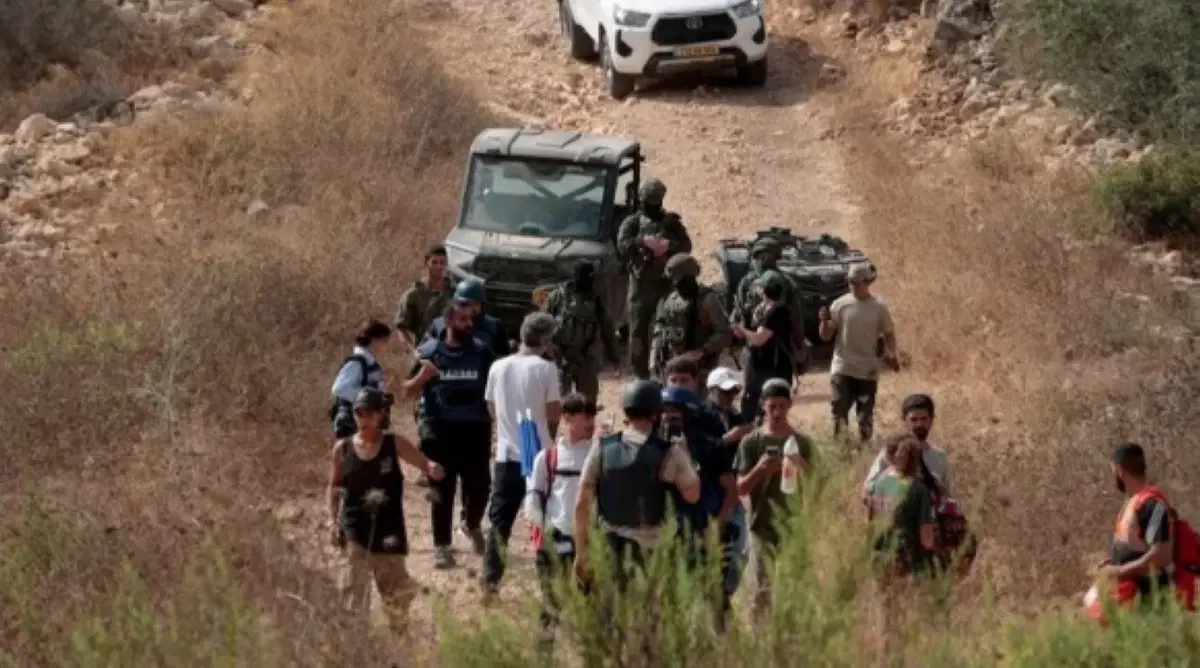
Salem, 50, said of the incident that occurred about two weeks ago near the village of Al-Lubban al-Gharbi where he lives, that the settlers emptied his olive harvest into bags and then transported it to a nearby settlement outpost to be pressed and turned into oil.
"How would you feel? You? When you see something that belongs to you... that is yours, and someone is attacking it, and you are unable to do anything," he asked.
A couple living in the outpost who own an olive press, which settlers have called on Israelis to use to press olive harvests grown in the West Bank, did not respond to repeated requests for comment, while the Yesha Council, which oversees Israeli settlements in the West Bank, has not yet responded to requests for comment.
The pace of attacks accelerated ahead of the Israeli elections scheduled for next week, in which opinion polls indicate that Prime Minister Benjamin Netanyahu and his pro-settler coalition may lose to rivals who have taken a more critical stance on settler violence.
Settlers move freely
The olive harvest season begins as temperatures drop, allowing Palestinian families to gather in the groves they have tended for generations.
Salem said, "My six-year-old son remembers that we went. We ate there... we made tea."
With the establishment of hundreds of small settlement outposts under the Netanyahu government since 2022, the army has increasingly restricted Palestinian access to neighboring areas, including many olive groves.
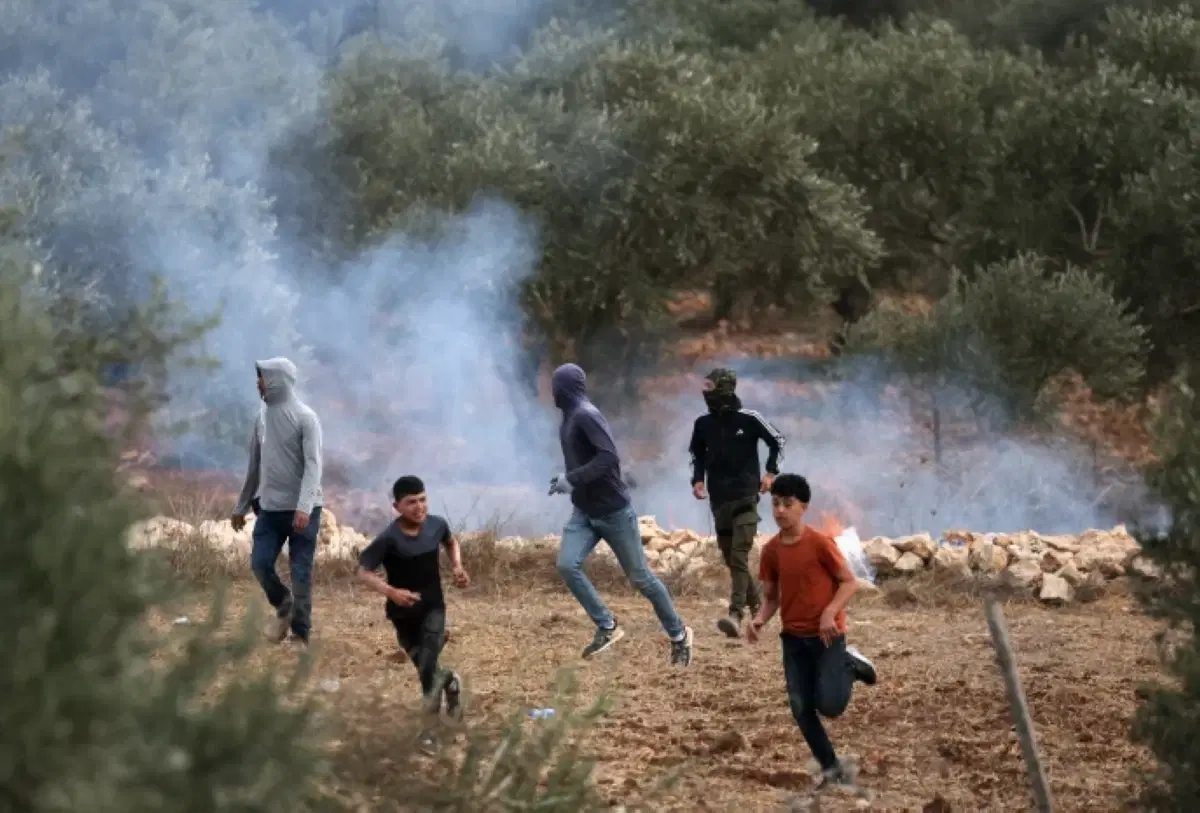
Even when Palestinians manage to reach their trees, it is not without risks. The organization Yesh Din reported yesterday, Wednesday, that there were 125 physical assaults on Palestinians harvesting olives during the 24 days since the start of the harvest season, and 168 incidents of crop theft, with Israeli army forces present in at least a quarter of the cases.
An Israeli military official stated that the army takes acts of violence, criminal activities, and attempts to undermine security seriously. The official did not address the settlers or comment on reports that olives were stolen in the presence of army forces. In separate incidents, the army uprooted trees using bulldozers, justifying this as necessary to prevent Palestinian attacks.
The seizure of the olive harvest from Palestinians has sparked mixed reactions from Israeli rabbis.
Ze'ev Whitman, rabbi of the Alon Shvut settlement south of Bethlehem, said, "I call it theft. From my point of view, I consider it theft or robbery, and it is forbidden."
Prominent Orthodox Rabbi Dov Lior authorized settlers to pick olives throughout the West Bank, asserting in an open letter that Palestinians have no property rights to the land and that harvesting olives fulfills the "mitzvah of settling the land."
Settlers online: "Either us or our enemy"
Hundreds of acres of land surrounding Salem's village, Al-Lubban al-Gharbi, were fenced off and seized between 2023 and 2026 by Avichai Farm, an Israeli outpost built on a nearby hill. These lands include olive groves.
Salem said that villagers saw settlers picking olives from the seized land and transporting them to a press in the outpost.
As the olive harvest season began, settlers posted calls on social media for Israelis to harvest West Bank olives and bring them to the Avichai Farm press.
A message on a Telegram account created by a group of settlers read, "Premium oil and at the same time strengthening Jewish control over vast areas of our land!... Either us or our enemy!"
The farm's press promotes "premium products produced by Avichai Farm" and sells a single bottle of olive oil for about $20 through a website run by the Hashomer Yosh organization, a settler group that Reuters reported receives significant financial support from the Israeli government, which says the goal is to promote peace.
Hashomer Yosh has not yet responded to a request for comment.
On a road leading to Avichai Farm, a man who asked not to be identified said he drove from a settlement about 90 minutes away to press 14 bags of olives from trees he claimed he planted himself.
Residents of Al-Lubban al-Gharbi, and other Palestinians who have lost their land to settlement expansion, described the picking of olives from groves on seized Palestinian land as theft.
UN bodies and most countries consider Israeli settlements built on land occupied during wars to be illegal under international law regarding military occupation. Israel rejects this and considers those lands disputed, not occupied.
We pay for the olives with blood
During this year's olive season, Palestinian authorities said that three Palestinians were killed in daily attacks by extremist settlers, and these attacks also caused injuries to a number of journalists, European diplomats, and a French mayor.
Stahl of the Israeli human rights organization Yesh Din stated that the violence is "part of a campaign of ethnic cleansing, paving the way for the annexation of the West Bank without its Palestinian inhabitants."
Israel, which has previously discussed the idea of annexation, says it is investigating some of the incidents.
A spokesperson for the Israeli occupation government indicated that olives "picked by a Jew in the land of the Jewish people's ancestors" are not considered stolen and that Jews own and cultivate "millions of olive trees" in the region. The spokesperson added that no one should take the law into their own hands.
Palestinian farmer Samer bin Shamsi said that masked settlers attacked him on October 9 in the Palestinian village of Beita near Nablus, then sped away in a pickup truck loaded with the olive harvest after he and other farmers fled.
Bin Shamsi said, "Now they are stealing with impunity because there is a government that supports them, and a powerful force behind them; the army and the police are on their side."
He added that in the past year alone, settlers shot him in the leg, beat him, and destroyed his property.
"We pay for the olives with blood," he continued.