IMF: Prolonging the Middle East war exacerbates the economic shock
Amman2 min read
Share
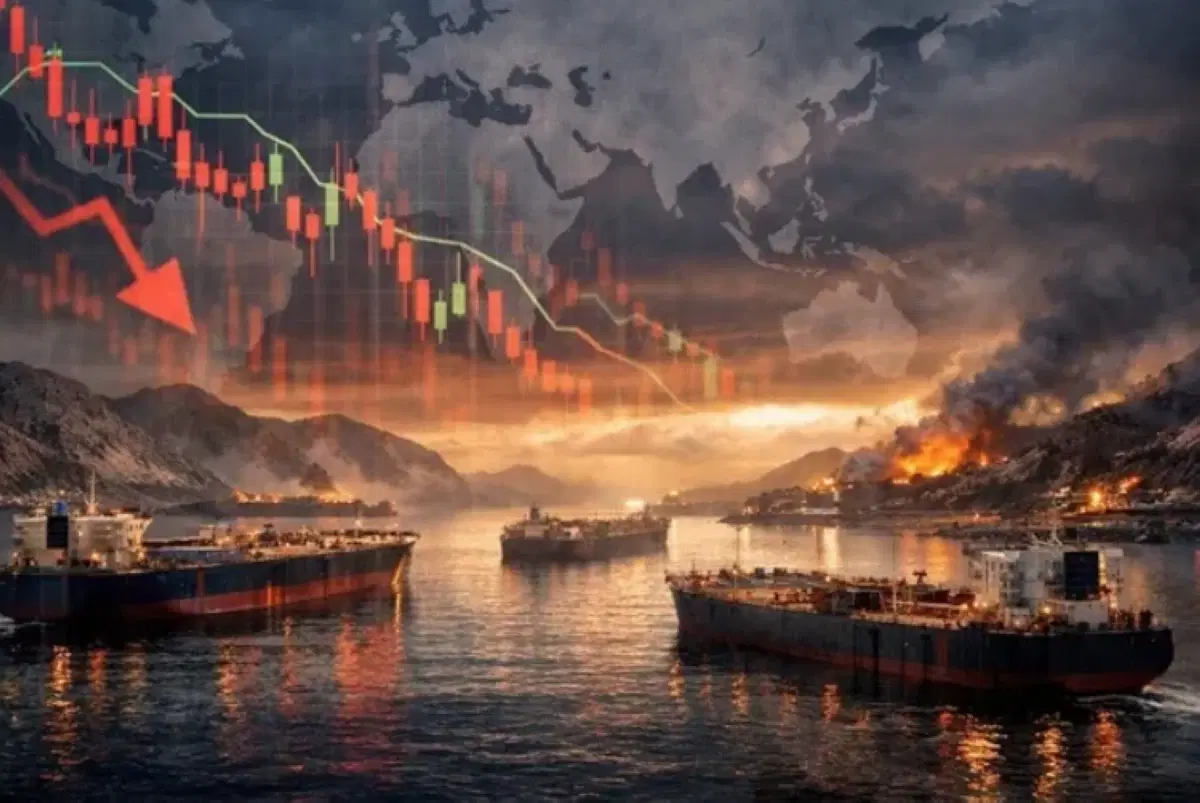
The Director of the Middle East and Central Asia Department at the International Monetary Fund, Jihad Azour, warned on Thursday that the prolongation of the war in the Middle East poses the greatest risk to the region's economies, in light of the disruptions affecting energy production, shipping routes, and critical infrastructure, noting that the conflict imposes an asymmetric economic shock and places directly affected countries under severe pressure.
Azour said, during a press conference on the sidelines of the annual meetings of the International Monetary Fund and the World Bank in Bangkok, that economic forecasts depend primarily on the speed with which energy production and trade return to normal, and the ability of countries to maintain macroeconomic stability.
He explained that the surplus of oil supplies available before the war, the resort to alternative routes, demand adjustments, and the withdrawal from inventories contributed to containing the repercussions of the attacks led by the United States and Israel on Iran, and the subsequent closure of the Strait of Hormuz by Tehran.
However, he warned of the limited nature of these resources, noting that declining inventories and reduced spare production capacity could lead to larger price adjustments if disruptions recur.
The International Monetary Fund expects the economies of the Middle East, North Africa, and Pakistan to contract by 1.3% in 2026, compared to a growth of 3.3% in 2025, followed by a strong but uneven recovery in 2027, with a projected growth of 6.6%.
Azour pointed out that oil-exporting countries directly affected by the war will witness a significant contraction in 2026, followed by a sharp recovery the following year as energy production returns to its normal levels, but output will remain below the pre-war medium-term forecasts.
He added that the economies of oil-importing countries in the region have shown resilience and are expected to continue to do so.
In the Caucasus and Central Asia region, Azour said that economies have weathered the shock relatively well, with inflation expected to continue declining from its high levels, and growth slowing to 5.2% in 2026 and 5% in 2027, compared to 6.2% in 2025.
Azour called on policymakers to prioritize price stability, rebuild fiscal buffers, tighten monetary policies, pursue prudent fiscal policies, and enhance the ability of economies to withstand future shocks.