From Assembly to Manufacturing.. 'Automotive Incentives' Chart a New Industrial Path
Government links incentives to investment volume and value-added
Amman9 min read
Share
Economic experts confirmed that the incentives approved by the government to attract investment in the automotive industry and assembly in Zarqa are the first to be granted to attract specialized industries such as automotive manufacturing and its associated support industries.
In statements to Alrai, the experts pointed out that the set of incentives is considered one of the important decisions supporting investment in the automotive sector and related technologies, in light of global competition to attract international companies in this field, noting that these decisions take into account specialization toward production and add a global manufacturing feature to the Kingdom on the automotive market map.
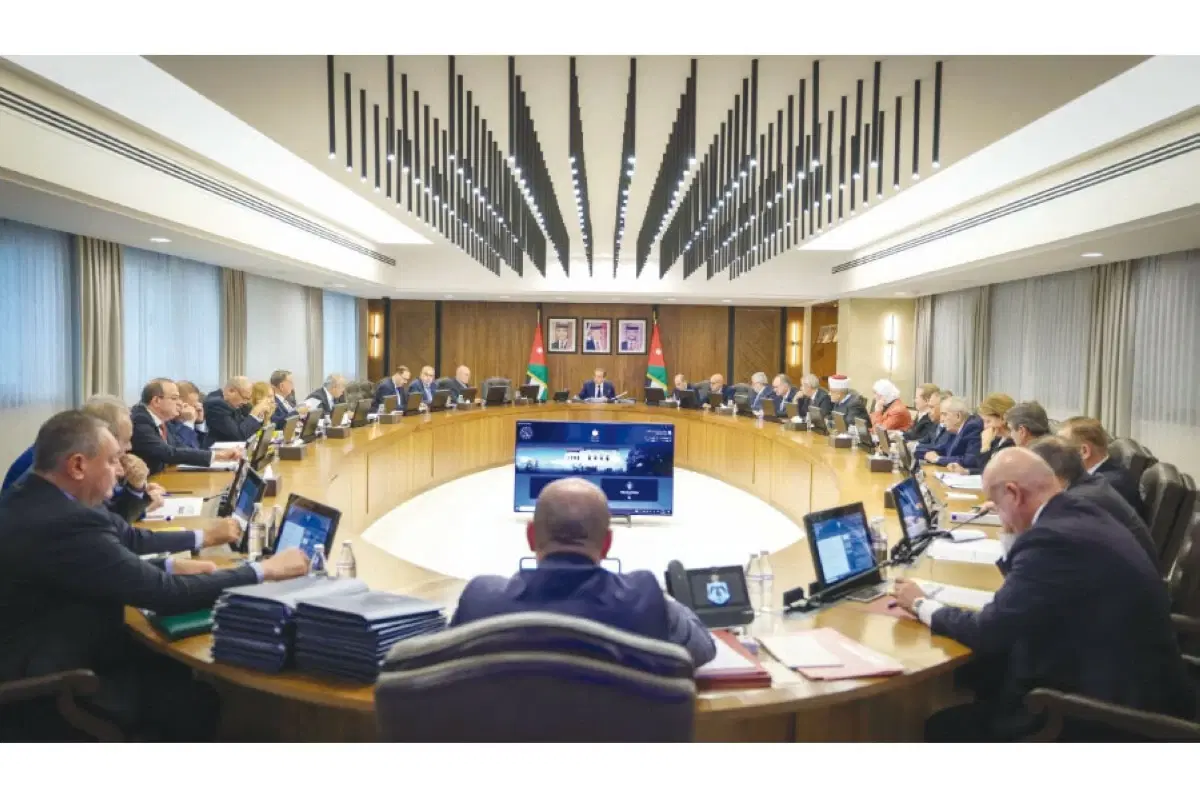
The Council of Ministers, in its session held on Tuesday chaired by Prime Minister Dr. Jafar Hassan, decided to approve a set of incentives and exemptions to attract investment in the automotive industry and assembly in the Zarqa Development Area.
These incentives and exemptions are linked to the volume of investment, the assembly or manufacturing operations that will be carried out within the Kingdom, and the job opportunities that will be provided to Jordanians, thereby increasing local value-added and enhancing the Kingdom's competitiveness in this sector.
In turn, the Chairman of the Zarqa Chamber of Industry, Engineer Fares Hammoudeh, confirmed that the incentives approved by the government to attract investment in the automotive industry and assembly in Zarqa are the first to be granted to attract specialized industries such as automotive manufacturing and its associated support industries.
Hammoudeh added that the set of incentives is considered one of the important decisions supporting investment in the automotive sector and related technologies, in light of global competition to attract international companies in this field, noting that these decisions take into account specialization toward production and add a global manufacturing feature to the Kingdom on the global automotive market map.
Hammoudeh indicated that investments in the automotive sector are considered large-scale investments, which will be qualified to absorb large numbers of Jordanian youth from various technical and engineering disciplines, due to the automotive sector's use of modern technology, which in itself is considered a transfer of technology from advanced economies to the Jordanian national economy.
Hammoudeh added that the nature of the incentives provided for full manufacturing and assembly, which exceeded the incentives provided for semi-complete manufacturing, certainly contributes to maximizing the value-added of the automotive industry and utilizing national resources optimally, especially since such industries, aimed at export, will increase growth rates in the national economy and are a key lever to reduce the trade balance deficit.
He also indicated that doubling exports, which is one of the main goals of the Economic Modernization Vision, only comes through attracting larger-scale industries, including the automotive industry, where international car manufacturers can benefit from free trade agreements with major countries and global blocs, whether by importing raw materials or exporting finished products.
Hammoudeh pointed out that the set of incentives was comprehensive, as it covered all aspects, starting from incentives related to infrastructure costs in the Zarqa Development Area, handling at the Port of Aqaba, tax exemptions on cars produced and sold within the Jordanian market, exemptions on support industries expected to flourish, and other exemptions across the entire value chain and production processes.
According to economic expert Wajdi Makhamreh, the government decisions recently taken by the Council of Ministers constitute an important step toward enhancing the competitiveness of the Jordanian economy and increasing its ability to attract productive investments, especially since the government's focus has shifted from providing general incentives to linking incentives to investment volume, value-added, job opportunities, and local manufacturing.
Makhamreh noted that the incentives directed at automotive manufacturing and assembly in the Zarqa Development Area represent a positive trend toward attracting high value-added industries, especially since the automotive sector is linked to broad supply chains including engineering industries, steel, plastics, electronics, logistics, and maintenance.
He added that the most important aspect in this field from an economic perspective is linking incentives to the degree of manufacturing, so that Complete Knock-Down (CKD) projects benefit more than Semi Knock-Down (SKD) projects, which, in his view, will limit the risk of Jordan becoming merely a simple assembly market and encourage the investor to localize larger stages of production. This could lead to the transfer of technology and expertise, the development of local suppliers, and the raising of Jordanian labor productivity.
He mentioned that the success of this policy requires that incentives be linked to clear performance indicators, such as the percentage of local components, the number of quality jobs for Jordanians, the volume of exports, and spending on training and technology transfer, so that exemptions do not turn into a cost to the treasury without sufficient economic return.
He pointed out that, regarding the National Export Strategy 2026–2029, adopting a strategy that targets export growth of 5 percent annually represents a shift from focusing on the volume of local production to the ability to access foreign markets. The importance of the strategy stands out in light of the improved performance of Jordanian exports recently, as expanding the base of products, markets, and exporting companies can reduce Jordan's reliance on a limited number of markets and sectors, and raise the economy's ability to generate foreign currency and improve the trade balance.
He added that what is also more important is the necessity of moving from an export strategy based on traditional products to industrial and service products with higher value-added, and here the automotive industry can integrate with the export strategy, so that the goal is not only to serve the local market, but to make Jordan a production and export base for regional markets.
Makhamreh also noted that extending the period for legalizing and regularizing the status of expatriate labor until the first of December gives employers and workers an additional period to correct their status, enhances the regulation of the labor market, and raises the level of compliance with regulations, as this could contribute to increasing official revenues and subscriptions, improving competition among workers, and reducing the informal economy. According to Makhamreh, this should also be accompanied by training and qualification policies for Jordanians, so that the process of regulating expatriate labor turns into an opportunity to increase the participation of Jordanians in sectors suffering from skill shortages.
Financial and economic expert Dr. Mohammed Al-Hadab Al-Sarhan confirmed that the package of incentives directed at the automotive industry and assembly carries an economic significance that goes beyond attracting a single factory or project, because it reflects a shift in investment policy from providing general incentives to linking the incentive to a specific economic result: larger investment volume, deeper local manufacturing, Jordanian employment, support industries, and export capability. Al-Sarhan believes that this type of policy serves the macroeconomy better, because it does not aim only to increase the number of projects, but to expand the production base, raise local value-added, and increase the contribution of industry to growth.
He explained that the decision is important for attracting foreign direct investment because it reduces part of the initial entry costs that an industrial investor looks at before making their decision, such as energy, land, logistics, infrastructure, and taxes. But more importantly, the investor sees a clearer equation before them today: the more manufacturing and value-added within Jordan, the more incentives they receive. This is an important message to international companies that Jordan is not looking for limited assembly lines, but for industrial investments capable of building broader production activity, transferring technology, and leveraging the Kingdom's location and trade agreements to reach foreign markets.
Al-Sarhan pointed out that the greatest impact of this policy might appear in domestic investment as much as it appears in foreign investment, because the entry of a major car factory can create demand for a wide network of suppliers in batteries, glass, seats, tires, spare parts, engineering services, maintenance, and transport. If the government succeeds in linking the global investor with existing Jordanian companies and encouraging the establishment of new local investments around it, then a single project can generate a series of other investments. This is precisely where incentives turn from a financial cost into a tool for building a new sector that creates jobs, raises productivity, and expands the activity of small and medium-sized enterprises.
Al-Sarhan indicated that the impact on the macroeconomy will be greater if the industry starts from the beginning with an export mindset, because Jordan needs investments that add to foreign currency inflows and do not rely only on the size of the local market. Also, manufacturing a larger percentage of vehicle components within the Kingdom can gradually reduce import content and raise the value of industrial exports. Therefore, success should not be measured only by the number of cars produced, but by the percentage of local content, the number of Jordanian suppliers, the volume of exports, the quality of technical and engineering jobs, and the value of additional investment that arises around the main factory.
Al-Sarhan added that this approach aligns with the path emphasized by His Majesty King Abdullah II in supporting national industry, enhancing its competitiveness, and focusing on value-added industries and export-oriented investments, alongside ongoing efforts to attract major foreign investments into priority sectors. The package also intersects with the follow-up by His Royal Highness Crown Prince Al Hussein bin Abdullah II on investment files and supply chains, and the transformation of international economic relations into actionable opportunities and projects. He believes that the government's actions in this regard represent a practical translation of one of the most important goals of the Economic Modernization Vision: moving from improving the investment environment in general to targeting specific sectors that can provide new engines for growth.
Al-Sarhan concluded that this package promises more serious tools for attracting industrial investment, but the real test begins now in the speed of turning them into actual projects on the ground, directly targeting global companies and specialized suppliers, and monitoring what is achieved in terms of employment, exports, and local manufacturing in exchange for incentives. If Jordan can attract a major factory followed by supporting industries, Jordanian companies, suppliers, and new investments, it will be a practical model of what the Economic Modernization Vision means when it moves from goals to production, and from attracting investment to building a new industry capable of exporting, growing, and sustaining itself.