Execution is 30 times more expensive than life imprisonment in America.. How much does the "lethal injection" cost?
Agencies4 min read
Share
The U.S. state of Tennessee has spent hundreds of thousands of dollars of taxpayer money to purchase execution drugs. However, these drugs failed their most important test on Wednesday.
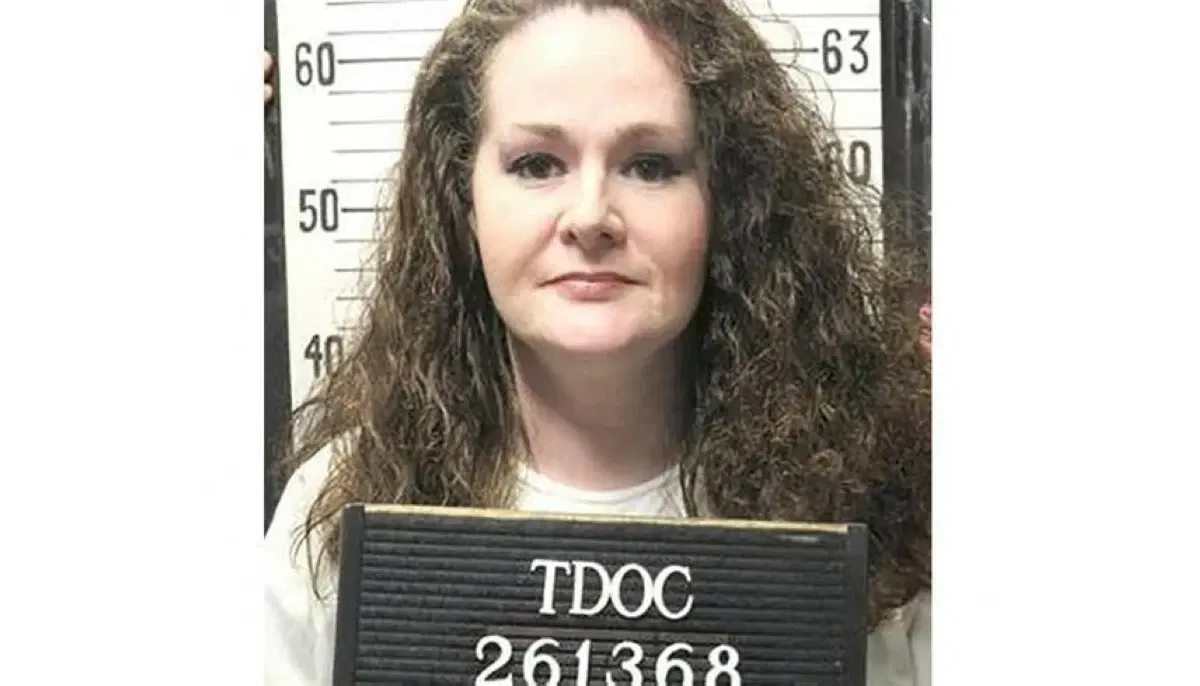
Christa Pike (50) was scheduled to become the first woman executed in Tennessee in over 200 years, following her 1994 conviction for the murder of her colleague Colleen Slemmer. Pike was injected with two doses of "pentobarbital," but she remained alive.
According to the "Associated Press," the sound of her snoring was audible inside the execution chamber for about an hour after the execution procedures began, and it continued for more than 30 minutes after she was administered the second dose of pentobarbital. She was subsequently transported by ambulance from the prison to a hospital for treatment, according to her lawyer.
Tennessee's execution protocol stipulates that a second dose should be administered if the condemned person does not die after the first dose, but it does not specify a clear procedure in the event they remain alive after the second dose.
The state's Governor, Bill Lee, ordered a comprehensive investigation and announced the suspension of all executions in the state until the end of the year. Robin Maher, Executive Director of the "Death Penalty Information Center," described what happened as "an unprecedented precedent, as no one has ever remained alive after receiving two lethal doses."
The incident raises humanitarian and legal questions, as well as direct economic questions: How much do Americans pay for each execution? And why are executions delayed in the United States?
How much does the lethal injection cost?
The "execution injection" is not a regular medicine purchased from a pharmacy; major pharmaceutical companies refuse to sell their products for use in executions, so states resort to anonymous suppliers and pay inflated prices.
Prashant Yadav, a lecturer at Harvard Medical School, says that states have paid profit margins reaching 1000% above the standard price for these drugs, according to the "Death Penalty Information Center."
One of the clearest examples is the state of Texas. According to documents reviewed by "NBC News," the state has spent more than $775,000 on "lethal injection" drugs since October 2024.
Records indicate that in September 2024, Texas purchased about 20 vials of pentobarbital, with a dose of one gram per vial, then purchased eight additional vials in February 2025, with a dose of 2.5 grams per vial. Thus, the total purchases reached 28 vials, totaling 40 grams of the drug, an amount sufficient, according to the state's protocol, to carry out about 8 executions.
As for Tennessee, according to an investigation by "The Guardian," the state spent about $190,000 between 2017 and 2020 on drugs used to carry out only two executions, which is equivalent to $95,000 per execution.
According to records published by the "Death Penalty Information Center," the total of 9 invoices for execution drugs in Tennessee reached $588,169.50.
Investigations revealed that Tennessee was not the only one; for example, the state of Virginia spent about $66,000 in 2016 to purchase drugs for a single execution, which illustrates the massive jump in the prices of these drugs compared to their actual value in normal medical uses.
Protocol Review
The bill does not stop at the injection. After previous failures in implementing the execution protocol, the protocol review cost the state of Tennessee more than $219,000, according to records obtained by the "Associated Press."
The failure of Pike's execution is not new. According to the agency, this is the second time this year that Tennessee has failed to complete an execution, after it canceled the execution of Tony Carruthers in May, following the team's failure for more than an hour to insert the intravenous line.
How much does the taxpayer bear?
The biggest cost does not come from the needle, but from the courts. Death penalty cases go through long stages of appeals, and the defendant receives two court-appointed lawyers instead of one in other cases, in addition to testimonies from doctors and psychiatrists.