European Bank: Jordan's economy showed remarkable resilience despite the repercussions of the conflict in the region
Monitoring5 min read
Share
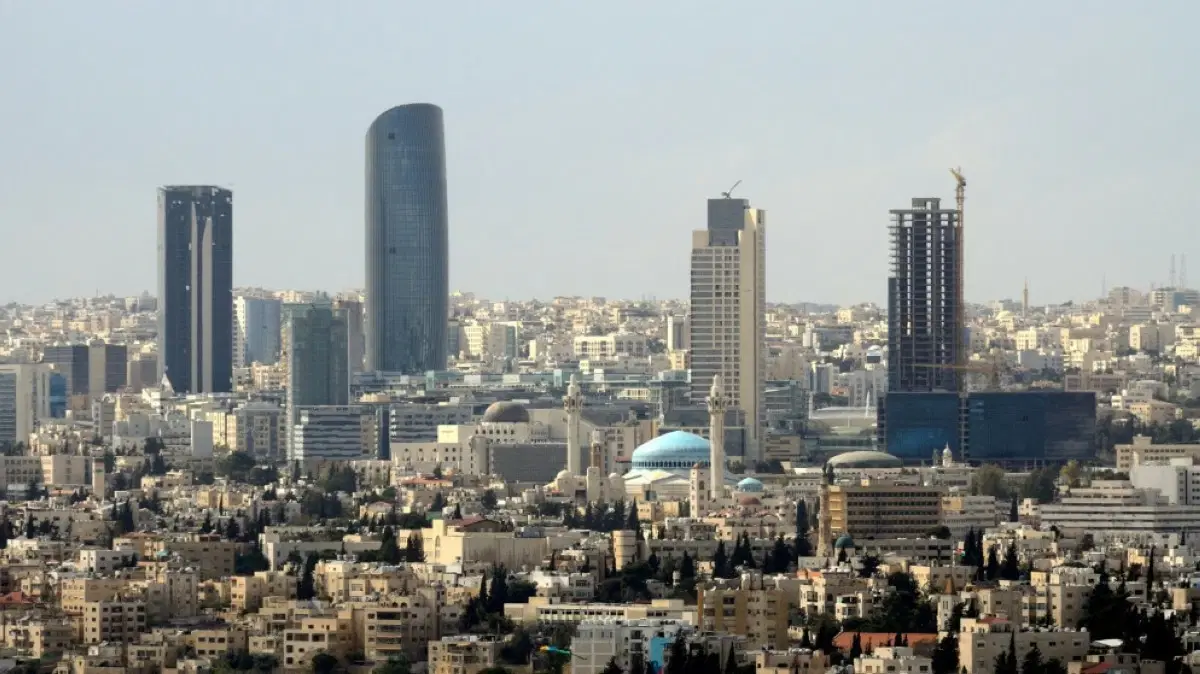
Jordan's economy showed "remarkable resilience" during the first half of 2026 despite the negative repercussions of the conflict in the Middle East, according to the European Bank for Reconstruction and Development, which noted that the economy grew by 2.9% year-on-year in the first quarter, driven by strong activity in the agriculture, manufacturing and trade sectors.
The Bank said, in its latest report on regional economic prospects, that the Jordanian economy maintained its ability to withstand temporary disruptions in energy supplies and the tourism sector in March due to the conflict in the Middle East.
It explained that the strong activity in agriculture, manufacturing and trade partially offset the slowdown in activity in the mining, construction and tourism-related services sectors.
The Jordanian economy had recorded growth of 2.8% in 2025, compared to 2.5% in 2024, before growth accelerated to 2.9% year-on-year in the first quarter of the current year.
- Reserves at comfortable levels
The report noted that Jordan's international reserves remained at levels described by the Bank as "comfortable", reaching $26.5 billion, equivalent to 23 billion euros, in July 2026, covering more than eight months of imports.
In the external sector, the current account deficit shrank in the first quarter of 2026 due to lower imports and strong worker remittances, despite a decline in exports and tourism revenues.
However, the trade deficit widened in a later period due to the revaluation of gold and higher spending on energy imports.
Regarding prices, the Bank said that rising fuel prices pushed inflation to a peak of 2.8% in May, before falling to 2.7% in July.
It noted that the Central Bank of Jordan raised the key interest rate by 25 basis points in September 2026 to 6%, reflecting the decision of the US Federal Reserve, as part of efforts to maintain the peg of the Jordanian dinar to the US dollar.
- Expected growth of 2.8% in 2027
The European Bank for Reconstruction and Development expects Jordan's economic growth to slow to 2.5% in 2026, a decrease of 0.1 percentage points from its June forecast, before accelerating to 2.8% in 2027, unchanged from previous expectations.
The Bank said that growth this year is affected by regional instability, trade disruptions, increased uncertainty surrounding tourism and investment flows.
The report suggests that growth will recover in 2027, provided that trade bottlenecks are addressed and energy prices decline.
At the regional level, the Bank noted the varying performance of the economies of the South and East Mediterranean, with Jordan and Egypt showing remarkable resilience in the first half of the year despite the negative repercussions of the conflict in the Middle East.
In contrast, the report said that Lebanon was severely affected by wars within it and in the region, causing further damage to infrastructure, while Iraqi oil exports continued to be affected by the closure of the Strait of Hormuz in the absence of viable alternatives in the short term.
The Bank expects the economies of the South and East Mediterranean to contract by 0.7% in 2026, before recording growth of 7.1% in 2027, largely driven by the expectation that Iraqi oil exports will return to normal.
Excluding Iraq, the regional picture appears more stable, with the Bank expecting the region's economies to grow by 3.9% in 2026 and 4.3% in 2027.
- Growth of Bank's economies slows to 2.5%
More broadly, the Bank expects growth in the economies in which it invests to slow to 2.5% in 2026, before accelerating to 4% in 2027.
The Bank reduced its growth forecast for 2026 by 0.6 percentage points compared to its June forecast, while raising its forecast for 2027 by 0.4 percentage points.
The Bank attributed most of the adjustment to a deep recession in Iraq, where oil exports collapsed, to be followed by an expected recovery as oil shipments return to normal.
Excluding Iraq, the Bank reduced its growth forecast for the current year by only 0.1 percentage points, due to tighter financing conditions and the impact of drought in Europe and the blockade of shipping through the Black Sea, while keeping its forecast for 2027 unchanged.
The Bank's report, titled "Running dry", highlighted increasing pressures in three key areas: oil exports, water and global savings, revealing weaknesses in energy systems, food supply chains and financing conditions.
Oil prices rose from around $65 per barrel before the conflict in the Middle East to over $100 by April 2026, after seaborne crude exports from the region halved.
According to the Bank, oil prices remain 30% to 60% higher than their pre-conflict levels, while refined products, particularly diesel and jet fuel, have risen more than crude.
Gas prices have also risen by more than 70% since February, coinciding with a 40% drop in global liquefied natural gas exports as most shipments from the Middle East have stopped.
The disruptions have spread to food markets, with grain shipments from Ukraine and Russia through the Black Sea severely disrupted by military attacks on infrastructure and ships.
The Bank noted that Russia and Ukraine together account for about a quarter of global wheat exports, while wheat prices have risen by more than a third and are expected to remain high until 2028.
The European Bank for Reconstruction and Development's chief economist, Beata Javorcik, said that the shocks facing the economies in the Bank's areas of operation "show no signs of abating", noting that water scarcity, extreme weather and rising financing costs, combined with rising energy costs, are putting further pressure on growth.