Jordan's Growth Heading Upwards.. 2.7% in 2026 and 2.9% in 2027
The Kingdom Strengthens Its Bet on the Economy of the Future
Amman8 min read
Share
As economies in the region continue to face the repercussions of geopolitical developments, energy and trade market disruptions, the World Bank has maintained its forecast for the growth of the Jordanian economy at 2.7% during the current year 2026, with growth expected to accelerate to 2.9% in 2027, in indications reflecting the national economy's ability to maintain its cohesion in the face of external pressures and benefit from local and commercial activity drivers.
The maintenance of these expectations compared to the Bank's estimates issued in April last year, at a time when the economy of the Middle East, North Africa, Afghanistan, and Pakistan is expected to contract by 2.1% during the current year, after growth of 3.3% in 2025, placing the Jordanian performance among the economies most capable of absorbing the repercussions of regional circumstances.
The Bank estimated the growth of the Jordanian economy at about 2.8% in 2025, before slowing slightly to 2.7% in 2026, then accelerating to 2.9% in 2027, attributing the slight decline during the current year to lower tourism revenues and higher energy import costs, offset by the strength of local economic activity and trade through Aqaba, with expectations of improved regional trade and transport conditions during the next year.
Economic expert Engineer Mousa Al-Saqat believes that maintaining growth at 2.7% in 2026 and 2.9% in 2027 reflects the Jordanian economy's ability to absorb shocks, but does not mean that the economic situation is comfortable.
He said that Jordan has proven its resilience thanks to monetary stability, strong domestic demand, and improved trade activity through Aqaba, but rising energy and shipping costs and declining tourism are still putting pressure on growth.
He added that the real challenge is not maintaining a growth of 2.7%, but rather transitioning from limited quantitative growth to higher qualitative growth, explaining that Jordan needs to increase productivity, investment, and exports, especially industrial ones, so that growth becomes more capable of creating jobs and improving per capita income.
Al-Saqat pointed out that new sectors can be drivers of growth, provided that they are not treated as separate sectors or slogans, pointing to a good base represented by 113 Jordanian companies operating in artificial intelligence, alongside human capabilities and geographical location that qualify Jordan to be a regional center for digital and technological services.
He stressed the importance of linking technology with production, industry, and export, facilitating investment, improving the legislative and financing environment, developing youth skills, and turning universities into a real partner in research and development.
This reading is consistent with what the World Bank has reported regarding future growth drivers, as it noted that Jordan is performing relatively well in innovation and economic integration, despite gaps in digital infrastructure, and placed the Kingdom among the lower-middle-income economies that are performing better than the average of their income group in the maturity of digital government services.
In the same context, economic affairs writer and specialist Fayeq Hijazi said that maintaining growth expectations at 2.7% for 2026 and 2.9% for 2027, despite the pressures the region is going through, largely supports Jordanian expectations in this regard.
He pointed out that the gross domestic product achieved a growth of 3% in the second quarter of the current year 2026, expecting the growth rate to continue at this level until the end of the year, expressing optimism about achieving growth higher than 2.7% at the end of 2026.
Hijazi attributed this to the ability of the Jordanian economy and the prudent experiences it has gone through during numerous crises in the region, including the Corona crisis and the Russian-Ukrainian war crisis, up to the Israeli aggression on Gaza and its subsequent regional repercussions.
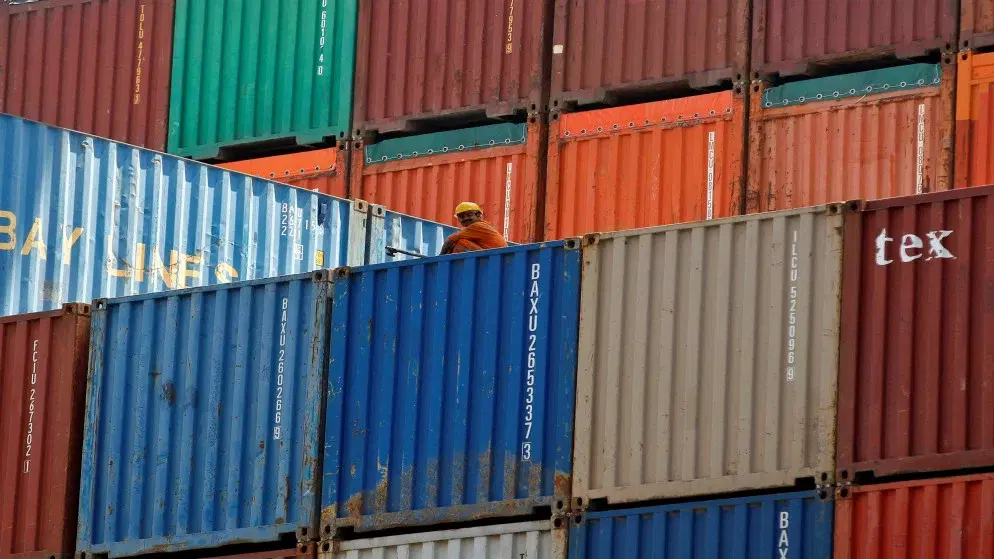
He pointed out that remittances from workers abroad are rising, tourism income is rising, and foreign trade is witnessing a noticeable improvement, especially after relying more on the port of Aqaba as a land source for transporting goods to the Gulf countries, away from blockade areas, which contributed to increasing transport activity.
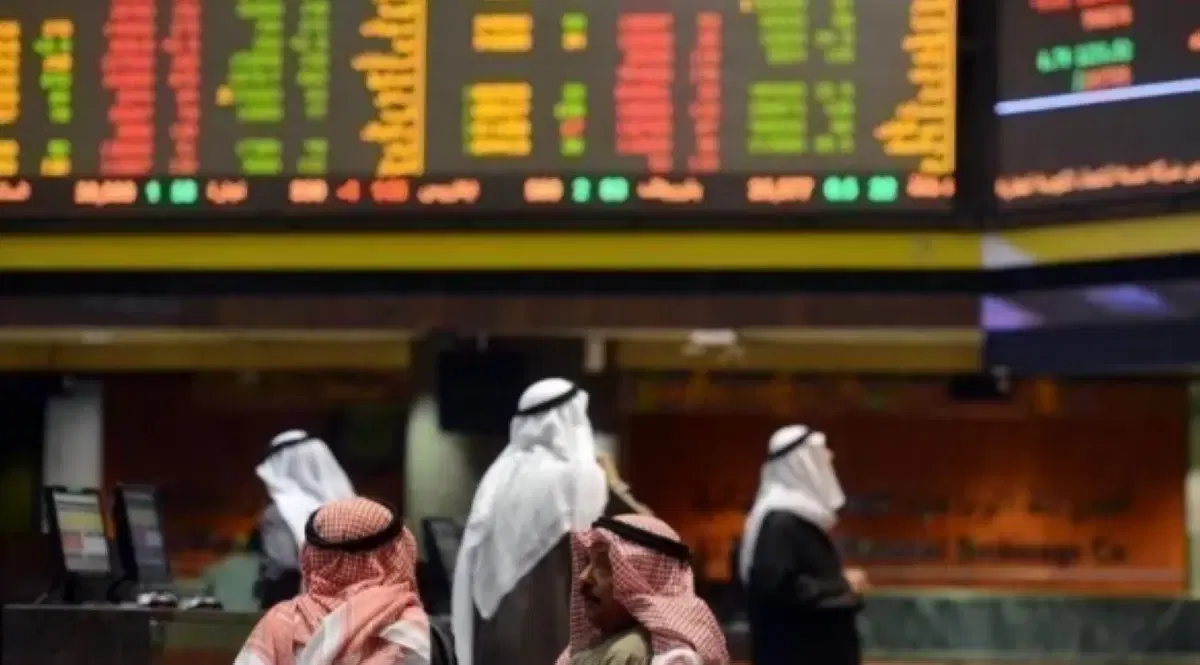
He also pointed to economic activities that witnessed growth, especially the agricultural sector and sectors linked to it, alongside the mining industries sector, confirming that the performance of the Jordanian economy in general is positive, and that the results of companies in the Amman Stock Exchange and national exports are recording positive indicators.
Regarding growth drivers, Hijazi said that Jordan is moving towards high-value industries that have been focused on within the growth drivers in the economic modernization plan and the second executive program, whether agricultural industries or industries oriented towards export.
He stressed the importance of developing the electronic content and communications and information technology sectors, as they enter most sectors and their impact is reflected on their efficiency, explaining that maximizing productivity, job opportunities, and exports provides a supportive environment for creating job opportunities.
He pointed out that the job opportunities created in 2025 exceeded 100,000 job opportunities, while the unemployment rate declined slowly, and exports grew by 10% in 2025, and export growth reached about 6% during the current year, according to the latest foreign trade data, expressing hope for achieving higher growth rates than the World Bank's expectations for 2026 and 2027.
For his part, economic expert Eias Al-Shuaibi described the maintenance of growth expectations as a testament to the resilience of economic indicators, considering it proof of Jordan's ability to withstand in the face of a regional crisis that led to a decline in growth in a number of economies.
He said that this matter is not a coincidence, but rather came as a result of what Jordan has taken in the field of economic modernization, reforms, and building bridges of trust with major institutions and economies, in addition to its use of the potential of Aqaba port, which was Jordan's lung in difficult circumstances.
He stressed that economic growth of 2.7% is good, but the next stage requires looking at the real challenge represented by the transition to higher growth rates, pointing out that the government has fixed energy and fuel prices despite their global rise.
Regarding growth drivers, Al-Shuaibi said that Jordan is capable of employing them, but on condition that this is within a serious, real, and practical national program, pointing out that the state has placed itself at a level above the average for digital services and technological trends, and that the existence of about 113 companies registered in the field of artificial intelligence is a good indicator.
He stressed that the young, open, and ambitious human capital represents the real capital of Jordan, explaining that employing growth drivers to move the economy from medium growth to high growth, and reaching the 5% it aspires to, requires a set of steps.
He explained that artificial intelligence needs data centers, and these centers, in turn, need energy and water, which requires providing clean, cheap energy and water in a sustainable manner, alongside clear legislation.
He pointed to the need to transfer artificial intelligence from technology companies to the depth of the economy, which means employing it in productive sectors, including mining, financial services, and trade sectors, alongside legislation that protects digital sovereignty and privacy and limits the negative effects and risks that may result from the employment of artificial intelligence.
He also stressed the importance of directing Jordanian expertise within a well-thought-out plan towards regional and international exports, considering that these factors can turn into growth drivers that serve the economy, provided that stable and balanced legislation is provided and partnerships are built between the government, the private sector, and the academic sector.
World Bank data indicates that Jordan is working to consolidate its position as a regional technology center, applying artificial intelligence technologies in the education and health sectors to support learning and provide preventive examinations and diagnosis in remote areas, while strategically focusing on developing the artificial intelligence system through research and development, reforming the business environment, building capacities, and expanding its applications in the public sector.
The report's data also showed the existence of 113 Jordanian companies active in the artificial intelligence technology market until July 2026, while the Kingdom's strategy targets increasing the number of researchers in the field of artificial intelligence by 30%.
In parallel, the World Bank expects the growth of per capita gross domestic product in Jordan to rise from 1.8% in 2025 to 2% in 2026 and then to 2.1% in 2027, while inflation is expected to reach 2.5% during the current year before declining to 2.3% in 2027, compared to 1.8% in 2025.
The expectations also show a gradual path for the decline of the general government deficit from 5% of gross domestic product in 2025 to 4.6% in 2026 and then to 4.3% in 2027, while the current account deficit is expected to reach 7.3% of gross domestic product in 2026 before declining to 5.9% in 2027.
On the air traffic front, the report showed a stronger recovery in cities outside the Gulf region, including Amman, where air arrivals returned by late August to pre-conflict levels or exceeded them.
These indicators, along with what the experts have proposed, reflect that the Jordanian economy's ability to withstand is an important base for the next stage, but the broader challenge is to turn this resilience into more productive and sustainable growth, led by industry, exports, technology, and investment, which raises the economy's ability to generate job opportunities, improve per capita income, and enhance its competitiveness regionally and internationally.