Environment: Start of Updating Green Growth Plans for the Second Phase for 6 Sectors
In Implementation of the Economic Modernization Vision
Amman4 min read
Share
The Ministry of Environment launched, today Wednesday, the technical support works for updating the green growth plans - the second phase for the energy, transportation, agriculture, water, tourism, and waste sectors, with the support of the European Union Mission to Jordan, and in continuation of the outcomes of the national green growth action plans for the years 2021–2026, and in line with the priorities of the economic modernization vision and the requirements of the coming phase.
National experts specialized in the six sectors were chosen to participate in the updating process, in coordination with the ministries and concerned authorities, with the aim of reviewing the previous plans and evaluating the achieved accomplishments, and developing updated and implementable plans for the second phase, enhancing the integration between sectors and national priorities.
The Minister of Environment, Chairman of the Green Growth Steering Committee, Dr. Ayman Suleiman, confirmed that Jordan is moving towards establishing green growth as a national strategic option to achieve sustainable development, through updating the green growth plans for the six priority sectors.
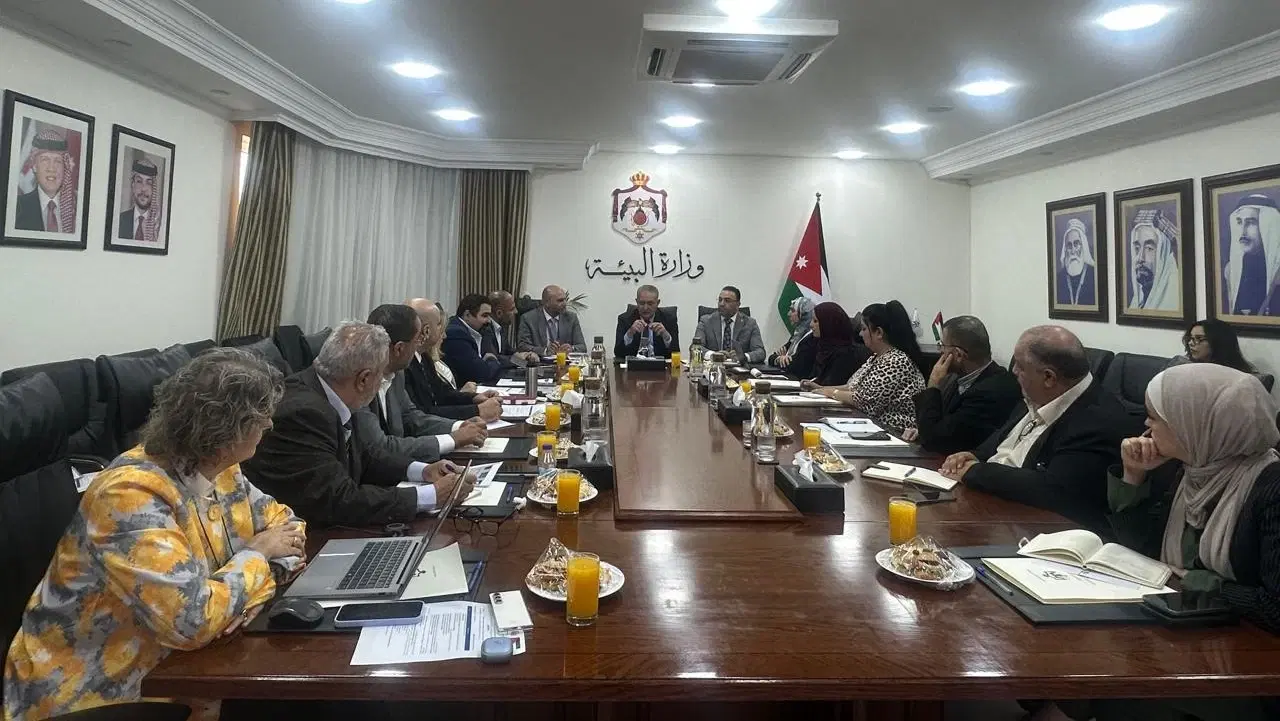
This came during his inauguration, today, of the meeting dedicated to starting the updating of green growth plans, in the presence of the Director of Energy and Environment Programs at the European Union Mission to Jordan, Engineer Omar Abu Eid, the Secretary-General of the Ministry of Environment, Chairman of the Technical Committee for Green Growth, Dr. Omar Arabiyat, the technical team at the Ministry, and the national experts for updating the sectoral plans.
Suleiman stressed that updating the plans represents a fundamental step towards transitioning from the general policies and frameworks of green growth to practical programs, projects, and procedures that are applicable, taking into account the national priorities and the actual needs of each sector, and enhancing integration between different sectors.
He pointed to the importance of including practical solutions in the plans that enhance the efficient use of resources and the protection of natural capital, support green investment and innovation, achieve social justice by creating green job opportunities, and contribute to addressing the effects of climate change, in line with the vision of economic modernization and the sustainable development goals.
Suleiman emphasized the importance of expanding partnership with various national entities, the private sector, and civil society institutions, to ensure the effectiveness of implementing the plans and monitoring their results, and converting their outputs into developmental and investment opportunities that contribute to supporting the national economy and creating job opportunities.
He explained that the work will be done in partnership with the concerned ministries to review the national plans and previous achievements, and develop and update the green growth plans for the second phase, in continuation of the outcomes of the action plans for the years 2021–2026, and to ensure the integration between sectors and national priorities.
He added that the updating process will take into account the priorities stipulated in the second executive program of the economic modernization vision 2026–2029, in addition to consulting with the private sector, the Central Bank, and the relevant authorities, to enhance the alignment of the plans with economic, investment, and financial priorities.
For his part, Abu Eid confirmed the strength of the strategic partnership between Jordan and the European Union, and the active role of the Ministry of Environment in leading the green transformation path, pointing out that the technical support provided to the Ministry for reviewing and updating the green growth plans in the energy, water, agriculture, tourism, waste, and transportation sectors, is in line with the European Union's orientations in green transformation, climate action, and the sustainability of the Mediterranean basin.
He explained that the European Union's support, within the green economy program in Jordan, focuses on enhancing the integration between the energy, water, food, and environment sectors, improving the efficiency of resource use, supporting nature-based solutions to address the effects of climate change, and turning environmental challenges into opportunities for sustainable development, noting the importance of partnering with the private sector and attracting European investments to implement priority developmental and economic projects.
The process of updating the green growth plans aims to establish an integrated framework for the coming phase, building on what has been achieved during the previous phase, and enhancing integration between the six sectors, contributing to supporting the transition to a green economy and achieving sustainable development in the Kingdom.