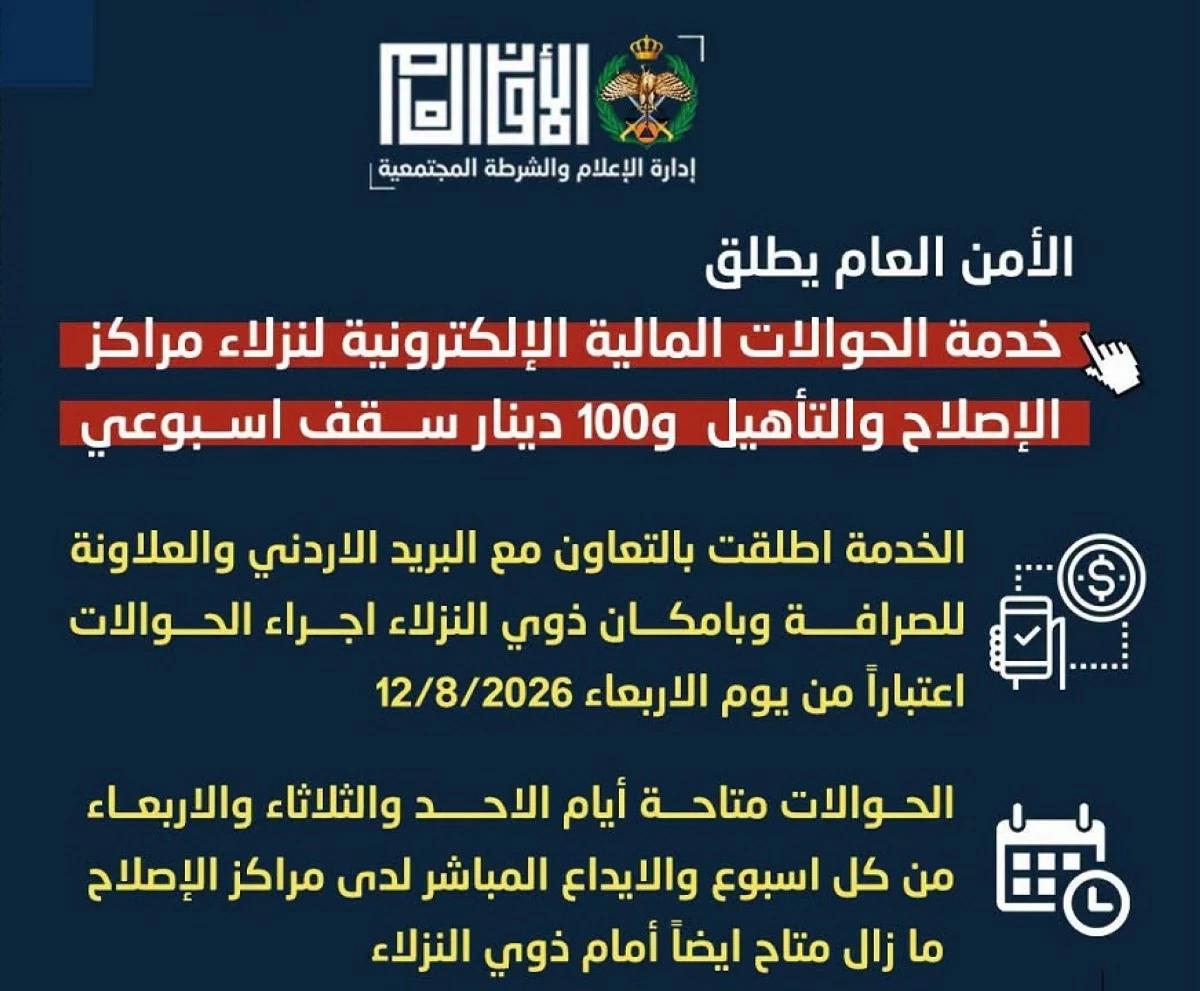
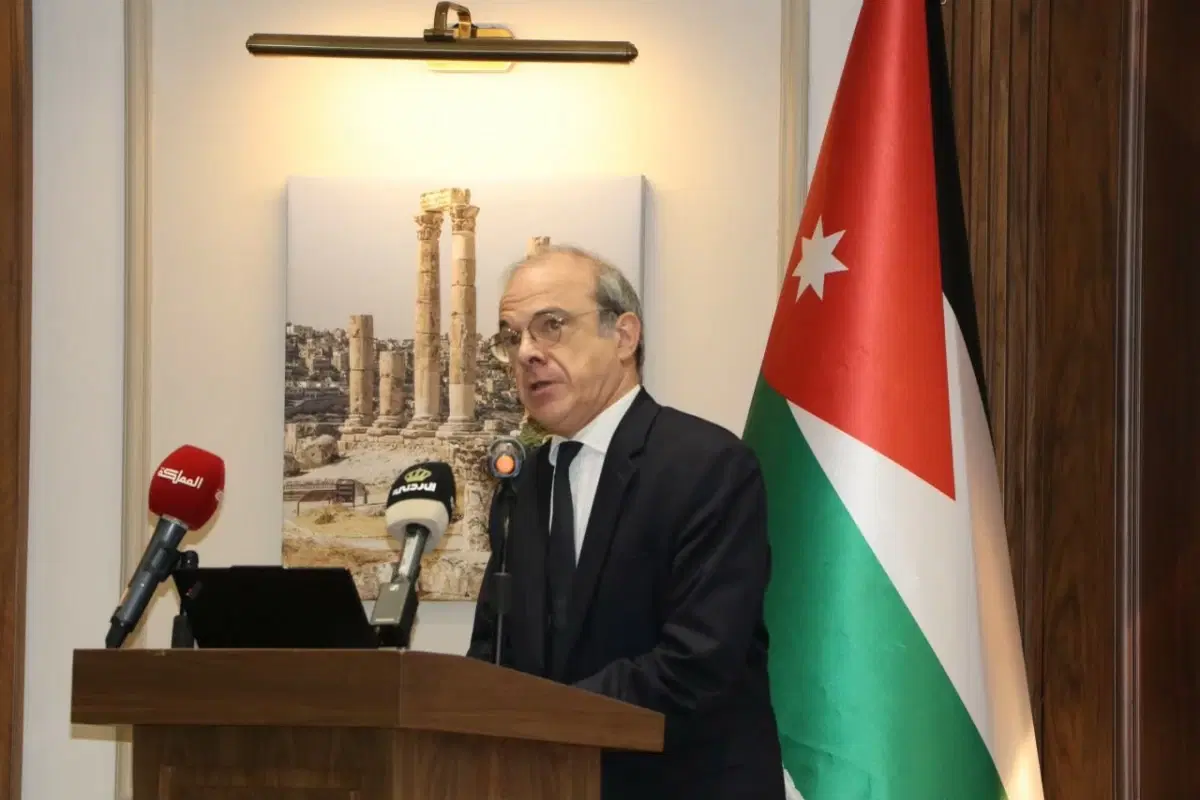
The director of the Mafraq Post Directorate, Ahmed Al-Khazaaleh, told (Al-Rai) that this step represents the beginning of a new phase of development and digital transformation and expanding the scope of financial inclusion and postal, financial and digital services.
Al-Khazaaleh explained that the service is provided through all postal offices spread across different parts of the Kingdom and 'malls', pointing to the necessity that the person dealing with the inmate must be a first-degree relative.
He pointed out that the post receives financial transfers for inmates on Sundays, Tuesdays and Wednesdays, while they are sent to rehabilitation and reform centers on Mondays, Wednesdays and Thursdays of each week, after organizing a list that includes the names of the dealers and the names of the inmates present in the rehabilitation and reform centers.
He pointed out that the transferred financial amounts are delivered to the inmates within a period of up to 24 hours, noting that the maximum transfer limit is 100 dinars per week.
Al-Khazaaleh pointed out that in the event of an emergency that prevents the delivery of the amount to the inmate, such as being transferred to another rehabilitation and reform center, the amount is returned to his relatives according to the approved procedures.
The inmates' relatives believe that the importance of the service is not limited to the financial aspect, but goes beyond that to reduce the daily burdens on families, especially those living in areas far from rehabilitation and reform centers, where sending amounts used to require time and travel costs that sometimes exceed the value of the amount to be sent.
The service also, according to social expert Khaled Al-Shurafat, contributes to reducing the number of visitors and pressure on rehabilitation and reform centers, by organizing the transfer and sending process according to specific lists and schedules, which enhances the efficiency of procedures and ensures the arrival of financial support to inmates in a more convenient and regular manner.
He explained that this service reflects a growing trend towards converting traditional transactions into more flexible digital services, which puts the needs of citizens and their families at the forefront of priorities, and turns technology from a mere electronic means into a practical tool for saving time, effort and cost.