Developmental and evolutionary disabilities vary significantly from one child to another; they may be mild and affect a specific aspect of development, while they can be more comprehensive and require ongoing support for many years. Early detection and appropriate intervention are among the most important factors that help children develop their abilities and improve their participation in the family, school, and community.
What are developmental and evolutionary disabilities?
The term developmental and evolutionary disabilities refers to a group of disorders that affect physical, mental, behavioral, or social growth and development, often beginning during the developmental period.
This term differs from simple developmental delay; some children may be temporarily delayed in acquiring a certain skill and then catch up with their peers, whereas developmental and evolutionary disabilities may persist for a long period and affect daily functioning.
Difficulties may appear in infancy or early childhood, or become more apparent as communication, learning, and independence demands increase as the child grows older.
Main types of developmental and evolutionary disabilities:
Developmental and evolutionary disabilities include a wide range of conditions, most notably:
1 - Autism spectrum disorders
Autism spectrum disorder is a developmental condition that primarily affects communication and social interaction, and may be accompanied by repetitive or restricted patterns of behavior and interests.
Some children may exhibit difficulties in verbal and nonverbal communication, understanding social cues, or forming relationships. Specific interests, repetitive behaviors, or unusual sensitivity to sounds, lights, or textures may also appear.
Symptom severity and support needs vary significantly among individuals.
2 - Intellectual disability:
Intellectual disability is characterized by difficulties in mental abilities, such as thinking, problem-solving, and learning, alongside difficulties in adaptive skills necessary for daily living.
These difficulties may appear in areas such as communication, self-care, managing daily tasks, social skills, and academic learning.
The degree of disability varies from person to person, and therefore support should focus on individual abilities and needs rather than diagnosis alone.
3 - Communication and language disorders:
These disorders include ongoing difficulties in understanding or using language, speech and sound production, or social communication.
A child may find it difficult to form sentences, understand instructions, express needs, or participate in conversation. These difficulties can affect learning and social relationships if not identified and addressed early.
4 - Movement disorders:
Motor development disorders include conditions that affect the acquisition of motor skills or the coordination of movements.
A child may face difficulty in sitting, walking, running, using hands, or performing fine tasks, such as holding a pencil or using tools.
An evaluation by physical therapy or occupational therapy specialists may be needed, depending on the nature of the problem.
5 - Learning disorders:
Learning disorders include specific difficulties in acquiring certain academic skills, such as reading, writing, or arithmetic, despite having adequate learning opportunities.
It is important to distinguish between a learning disorder and poor academic achievement resulting from other factors, such as hearing or vision problems, lack of appropriate education, or certain psychological and social circumstances.
6 - Attention deficit hyperactivity disorder:
Attention deficit hyperactivity disorder is characterized by a persistent pattern of attention difficulties and/or hyperactivity and impulsivity, affecting functioning at home, school, or other environments.
Symptoms may appear as difficulty concentrating, forgetting tasks, excessive movement, difficulty waiting, or acting impulsively.
Causes of developmental and evolutionary disabilities:
There is no single cause for all developmental and evolutionary disabilities. Some conditions may result from genetic factors or genetic changes, while others may be related to factors during pregnancy, childbirth, or early childhood.
Factors that may be associated with certain conditions include: certain genetic disorders, very premature birth, certain pregnancy or childbirth complications, exposure to infections or harmful substances, and certain diseases affecting the brain and nervous system.
In a large number of cases, a single clear cause may not be identifiable, and the disorder may result from the interaction of a combination of genetic and environmental factors.
Signs that require attention:
Normal development varies among children, but there are signs that require evaluation when observed, such as failing to acquire age-appropriate skills, or a child losing a skill they had previously acquired.
Potential signs include:
- Noticeable delay in speech or communication.
- Persistent difficulty understanding simple instructions.
- Poor social interaction or difficulty with eye contact.
- Obvious difficulty in movement or coordination.
- Persistent learning difficulties.
- Repetitive behaviors or highly restricted interests.
- Significant difficulty performing age-appropriate daily skills.
- Loss of previously acquired skills.
The presence of one of these signs does not necessarily mean a developmental disability exists, but it may warrant a specialized evaluation.
Diagnosis and evaluation:
The diagnosis of developmental and evolutionary disabilities does not rely on a single test. Instead, it usually requires a comprehensive evaluation of the child's development, abilities, behavior, and functioning in various environments.
Evaluation may begin through a pediatrician or family physician, and the child is then referred to appropriate specialists, such as a developmental-behavioral pediatrician, neurologist, speech-language pathologist, psychologist or educational specialist, and occupational or physical therapist.
The evaluation process may include reviewing medical and developmental history, interviewing parents, observing the child, using standardized developmental assessment tools, in addition to evaluating hearing and vision when necessary.
In some cases, additional genetic or medical tests may be needed to help determine the cause.
The importance of early intervention:
Early intervention is a fundamental element in supporting children with developmental delays or disabilities. Intervention aims to enhance existing skills, help the child acquire new skills, and improve their ability to communicate, learn, and be independent.
Services may include:
- Occupational therapy.
- Physical therapy.
- Speech and language therapy.
- Specialized educational interventions.
- Behavioral and psychological support.
- Training for parents and caregivers.
- Social and family support.
The program should be individualized and based on the child's needs and family goals, with regular progress reviews.
The role of family, school, and community:
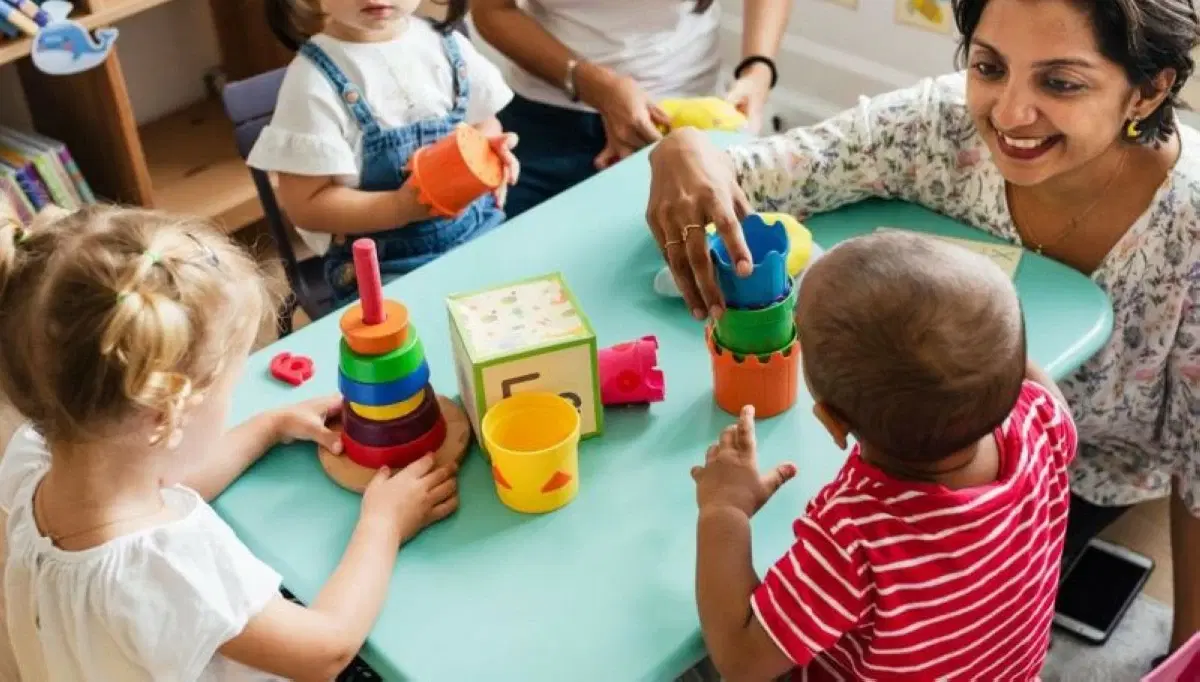
The family plays a pivotal role in supporting the child. Providing a safe and organized environment, encouraging communication and independence, and reinforcing acquired skills in daily life help achieve better outcomes.
Collaboration between the family, school, and healthcare providers is also essential to ensure the continuity of intervention. Some children may need special educational arrangements or modifications to the educational environment to suit their needs.
Services should focus on the child's abilities and potential, avoid stigma and discrimination, and promote social participation and independence as much as possible.