Chairman of the Turkish Capital Markets Board resigns amid a crisis affecting 455,000 investors
Amman4 min read
Share
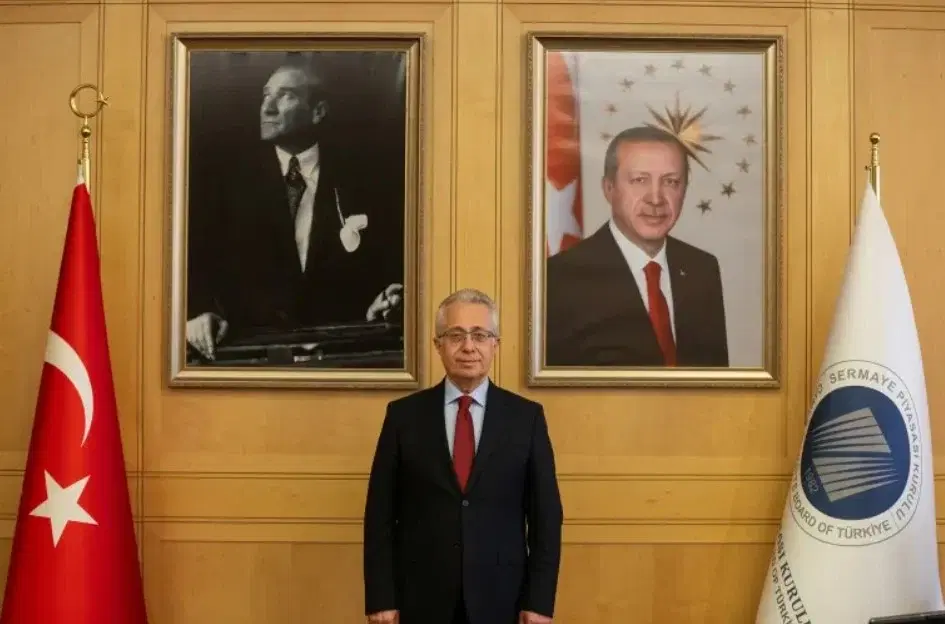
The Chairman of the Turkish Capital Markets Board, Mahmut Sütcü, submitted his resignation on Monday for health reasons, at a time when Turkish capital markets are witnessing a crisis related to the liquidation of 131 investment funds involving more than 455,000 investors.
The Turkish Anadolu Agency reported, citing information obtained from the Ministry of Treasury and Finance, that Sütcü submitted his resignation due to health problems, without an official announcement regarding the acceptance of the resignation or the naming of a successor.
In a simultaneous development, the Turkish Deputy Minister of Treasury and Finance, Osman Çelik, submitted his retirement request to the Minister of Treasury and Finance, Mehmet Şimşek, effective Monday.
Sütcü had assumed the chairmanship of the Turkish Capital Markets Board on May 9, 2026, pursuant to a presidential decree published in the Official Gazette, after having served as the second deputy chairman of the board.
The resignation comes in conjunction with a crisis currently affecting Turkish investment funds, after the Capital Markets Board decided on September 17 to liquidate 131 investment funds belonging to 7 portfolio management companies.
According to official data released by the Board on September 23, the number of individual investors in the funds subject to liquidation decisions reached 455,758, based on records from the Central Securities Depository of Turkey.
The funds subject to liquidation constitute 4.6% of the total number of investment funds in Turkey and represent 7.7% of the total value of investment fund portfolios, according to data announced by Turkish Vice President Cevdet Yılmaz on October 7.
Yılmaz explained that the crisis is concentrated in a limited part of the investment fund market, confirming that there are no systemic risks threatening the Turkish financial sector.
The Capital Markets Board had announced on September 18 that its review of the investment fund market revealed unusual price movements in some low-liquidity stocks through funds affiliated with specific portfolio management companies, which were not justified by the fundamental financial indicators of the companies concerned.
The Board indicated that the regulatory amendments it announced last August aim to curb manipulation through investment funds, enhance transparency, protect investor savings, and limit risks that could affect financial stability.
In the context of addressing the crisis, the Board decided to extend the period designated for the liquidation of funds from 3 months to 6 months to allow for the sale of assets under more favorable conditions, with the possibility of completing procedures before the deadline.
At the beginning of October, the Board announced the adoption of a mechanism to disburse phased payments to investors in a number of funds subject to liquidation, provided that the payment does not exceed one million Turkish liras per investor in each fund, to be deducted from their final entitlements.
In parallel with the regulatory measures, the Turkish Parliament discussed a draft law related to the liquidation of investment funds and the protection of investor rights, with the aim of ensuring that liquidation operations are managed fairly and transparently, recovering funds that left fund assets through illegal means, and collecting losses from those responsible.
The Turkish Vice President emphasized that the government will not use public treasury resources to compensate for private losses resulting from the crisis, stressing the necessity of protecting investor rights through fund assets and funds that can be recovered.
Turkish authorities also announced the continuation of judicial and administrative investigations regarding potential irregularities in investment fund transactions, in parallel with oversight measures aimed at protecting investors and enhancing confidence in capital markets.
Turkish authorities did not announce any direct link between the resignation request of the Capital Markets Board Chairman and the crisis related to the liquidation of the funds, while information reported from the Ministry of Treasury and Finance confirmed that the resignation request was for health reasons.