((CAS)) to decide the fate of the African final between Morocco and Senegal
Amman4 min read
Share
After about ten months of a crazy final, the end of the Africa Cup of Nations football story is finally on the horizon, as the Court of Arbitration for Sport (CAS) will examine on Thursday in Lausanne the Senegal appeal against the victory awarded to Morocco by administrative decision.
Sports law researcher at the University of Lausanne, Thibault Ulrich, told AFP that it is an "exceptional case," as no national team has previously been subjected to "being stripped of a title achieved on the pitch and validated by the referee."
Frenchman Gérald Simon, Italian Luigi Fumagalli, and German Ulrich Haas will listen, starting at 9:30, on the shores of Lake Leman in Switzerland, in a closed hearing, to representatives of the Senegalese and Moroccan federations and the Confederation of African Football (CAF).
The court warned that no decision will be issued on Thursday, but "the arbitration panel will begin its deliberations" as soon as the hearing concludes, heralding a swift end after months of controversy.
Administrative daylight robbery
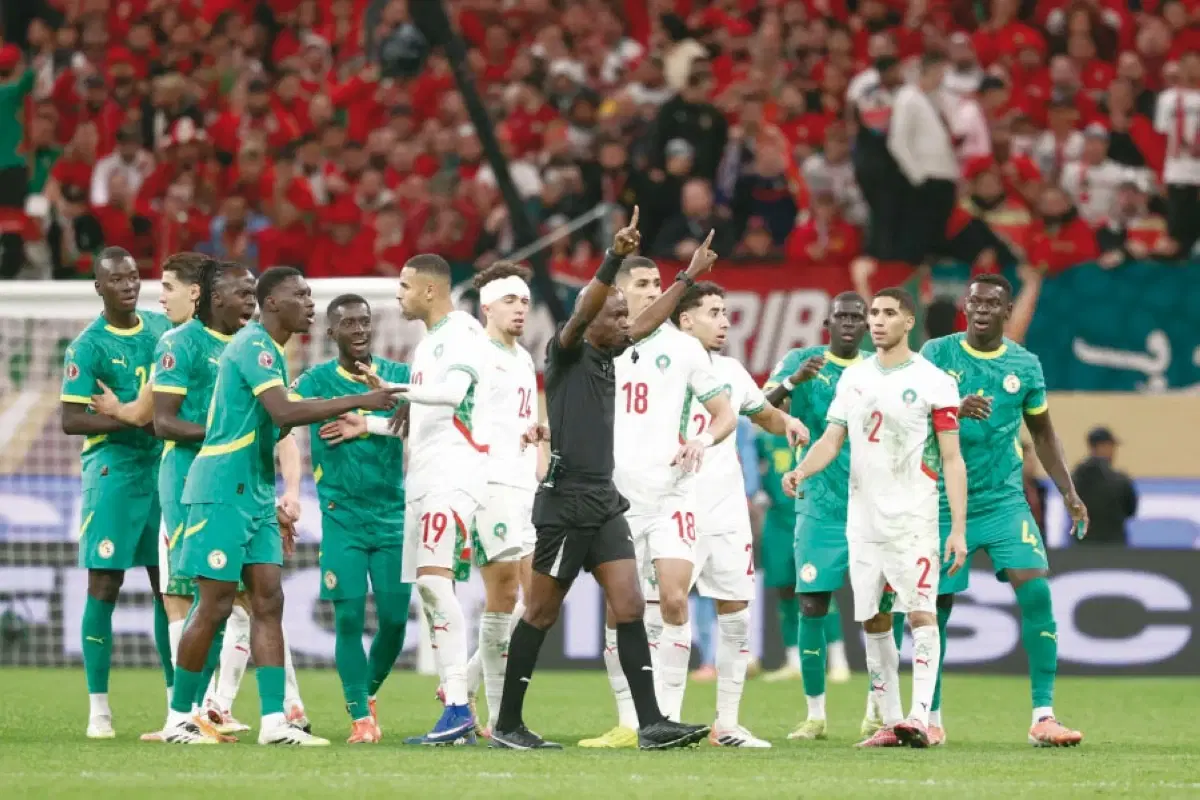
Senegal was crowned African champion on January 18 in Rabat by defeating Morocco 1–0 after extra time, amid chaotic scenes.
A large portion of the Senegalese players left the pitch in protest against a penalty kick awarded to the Moroccans in stoppage time, which Brahim Diaz missed, and they did not return until a quarter of an hour later to score the winning goal in extra time.
The CAF Appeal Committee announced, after an appeal by the Royal Moroccan Football Federation on March 17, that Senegal had forfeited the match 3-0 due to its players walking off the pitch, citing Articles 82 and 84 of the Africa Cup of Nations regulations, which prohibit "leaving the field of play before the legal end of the match without the referee's permission."
The Senegalese Football Federation condemned what it called "the most egregious administrative robbery in the history of our sport," kept the trophy, and even displayed it to supporters of the Senegalese diaspora in late March at the Stade de France in the Parisian suburbs.
The Senegalese Federation denounced it as "the gravest administrative daylight robbery in the history of our sport," kept the trophy, and even displayed it to fans of the Senegalese community in late March at the Stade de France in the outskirts of Paris.
By turning to (CAS), Senegal seeks to reclaim its title as African champion, and more broadly opens a debate touching upon the fundamental principles of sports and refereeing authority.
Thibault Ulrich believes that the CAF Appeal Committee adopted a "very strict reading" of the tournament regulations, failing to take into account that Congolese referee Jean-Jacques Ndala allowed the match to resume after the Senegalese returned.
Corruption suspicions
Law 5.2 of the International Football Association Board (IFAB) rules, which apply to all football stakeholders, states that "decisions of the referee regarding facts connected with play, including whether or not a goal is scored and the result of the match, are final."
Echoing even more closely the final's scenario, the Board adds that "the referee may not change a restart decision" upon realizing "that it is incorrect."
According to Ulrich, this rule reinforces the "doctrine of the field of play" long established by CAS jurisprudence, whereby the referee's sporting decisions cannot be challenged unless proven to be corrupt or in bad faith.
He explains: "The objective is to preserve the interest of competitions. Their outcome must be decided on the pitch and at the very moment, not by judges afterwards, otherwise we will lose all fans."
Parallel to this legal debate, the Senegalese government demanded on March 18 the opening of an international investigation into "suspicions of corruption within the governing bodies" of the African Confederation. In response, the continental body praised the "independence" of its disciplinary bodies.