Al-Sharaa expects Syria's economy to reach $50 billion in 2026
Anadolu5 min read
Share
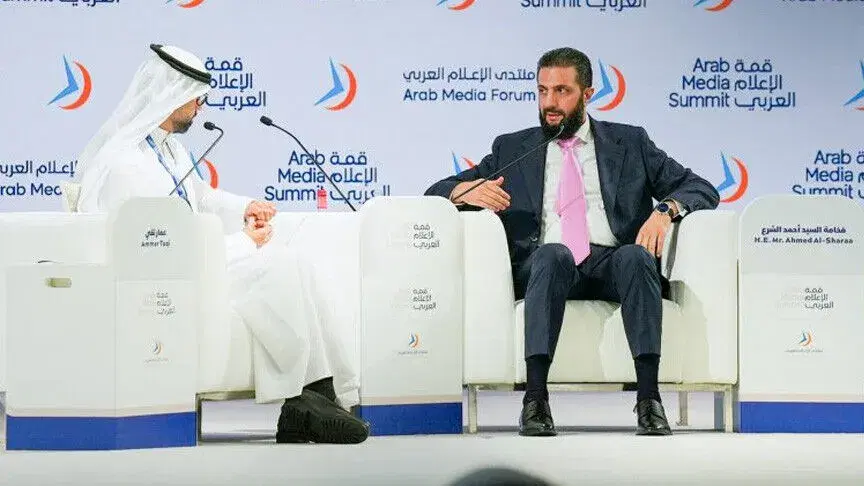
Syrian President Ahmed Al-Sharaa predicted on Tuesday that the size of his country's economy will reach $50 billion by 2026, compared to $32 billion last year, pointing to wide investment opportunities for Arab and European countries.
This came during a dialogue titled "Syria's Future", as part of the 2026 Arab Media Summit held at the Dubai World Trade Center in the UAE.
Al-Sharaa said that the size of the Syrian economy reached $20 billion when "Damascus was liberated" from the Assad regime in 2024, and rose to $32 billion in 2025, adding: "Our expectations are that it will reach $50 billion this year".
He added that Syria may reach the size of its economy recorded in 2010, which he said was about $60 billion, by 2027.
Al-Sharaa pointed out that investment memorandums of understanding have begun to take effect, and that his country is discussing huge projects with Emirati investors, describing the lifting of sanctions as a "new birth for Syria".
Speaking about investment, he said: "Syria now has great opportunities for the Gulf countries, the countries around us, and Europe, and there are projects for huge investments".
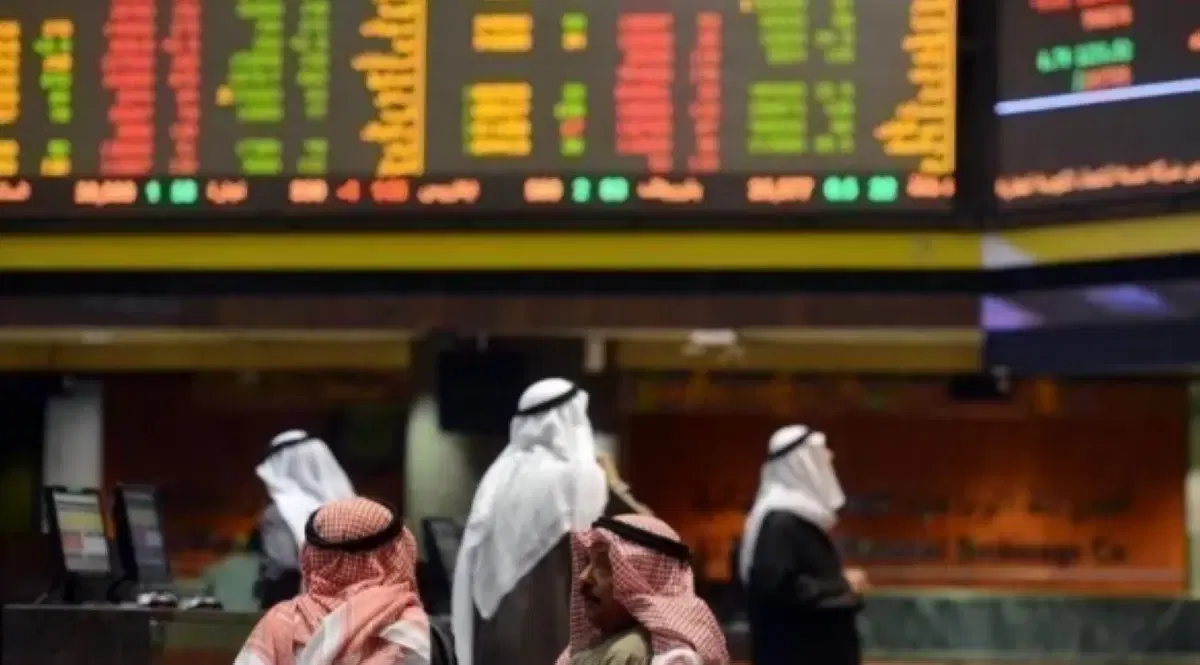
He explained that the UAE, Saudi Arabia, Qatar, Kuwait, and other countries have started investing in Syria, along with European investors, pointing to wide opportunities, especially in the real estate and tourism sectors.
He pointed out that the UAE was one of the first countries to take the initiative to invest in his country's opportunities, citing the investment of Dubai Ports in the port of Tartous.
On the agricultural sector, he said that "modern agricultural technologies may increase Syria's ability to provide food for more than one hundred million people", considering that the development of this sector can contribute to achieving food security for the region.
He also believed that Syria could be an important part of the strategic alternatives in the field of energy supplies.
Al-Sharaa touched on the course of the Syrian economy, saying that his country is going through a transition from a system "similar to a socialist, all corruption and bureaucracy" to a system that supports the private sector and the free economy.
He continued: "We are now in a transitional phase in which shocks may occur, and we need important decisions that will show their positive effects over time".
He pointed to the multiple sanctions that were imposed on Syria, some of which date back to 1979, saying that entire generations have not been familiar with financial transaction mechanisms and banking guarantees.
He stressed that Syria is rebuilding itself and its institutions after decades of administrative corruption and poor planning, explaining that this phase has special circumstances in which the country seeks to benefit from different experiences.
Al-Sharaa said that "Syria, which the world and the media saw as a big problem, has turned into a great opportunity that everyone benefits from, and has returned to its regional and international role".
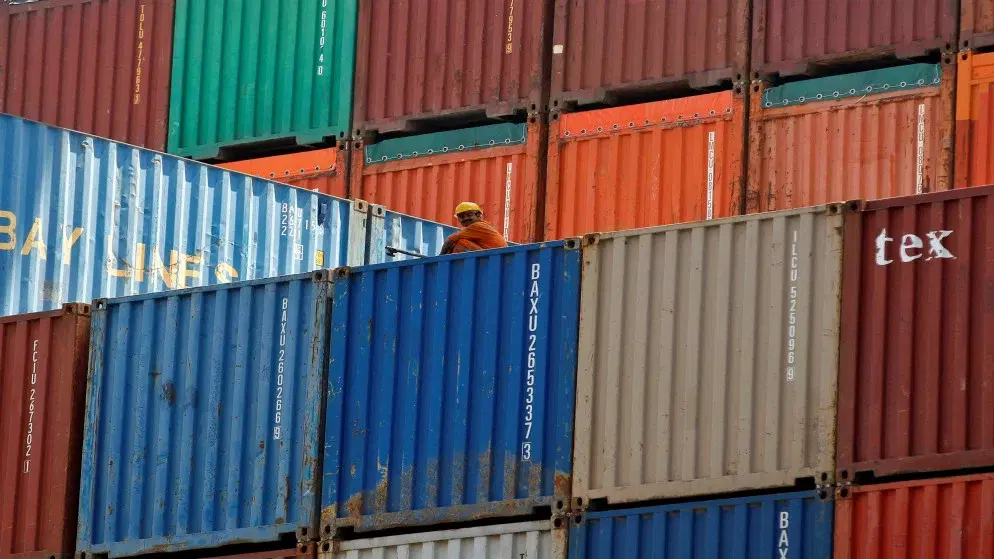
He considered that his country has turned from a state exporting (captagon) and a conflict zone into a region of stability, and that the world has started talking about it as a "safe trade route for supply chains between the East and the West".
He stressed that "Syria's location serves the region, and its stability is a common interest for everyone".
He reviewed the challenges his country faced after the "liberation of Damascus", including the threat of internal division and sectarian wars, and infrastructure, energy, and sanctions problems, saying: "We overcame them very quickly".
He believed that the liberation of Damascus brought hope to the Syrians and the entire region after years of injustice, corruption, and suffering.
On the regional level, Al-Sharaa said that "Syria is open to everyone, and relies heavily on the support of Arab brothers, and has been able to build relations with multiple parties".
He stressed that his country is working to achieve stability in the region, with fears of expanding wars, pointing out that regional unrest directly affects Syrian economic growth.
He said: "Exiting the conflict circle alone is not enough to maintain the sustainability of stability in the region".
He added: "We are working with our Arab brothers to reduce the effects of war and avoid the expected risks in the future".
On his vision for the country, he affirmed that Syria will be a country that witnesses strong and sustainable economic growth, and preserves the dignity, independence, and pride of the citizen.
Speaking about the role of the media, he said that "the minds of the people are a trust in the mouth of the media", considering them to be one of the most influential groups in public opinion and its direction.
He stressed the need to present the facts to the public, saying: "People must be informed of the facts so that they can endure this path despite the challenges".
He called on media professionals to strengthen their direct connection with the people "to convey the facts and information as they are".