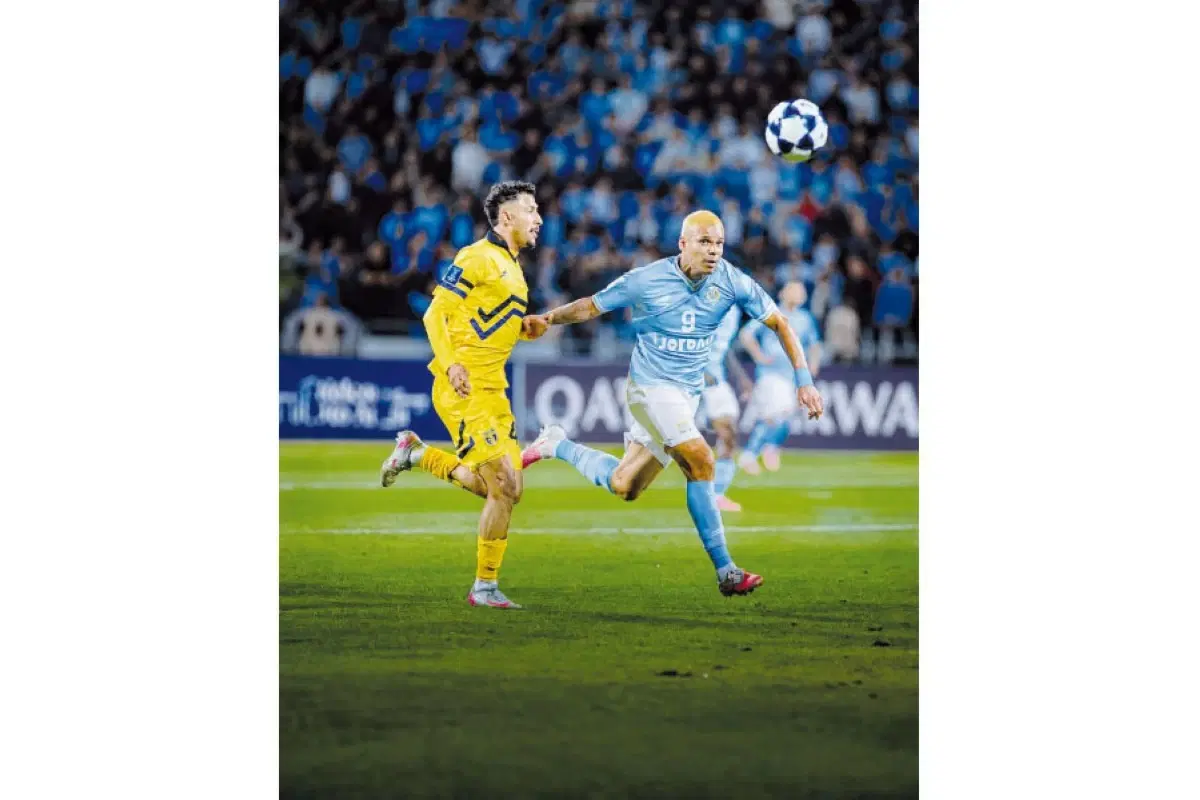
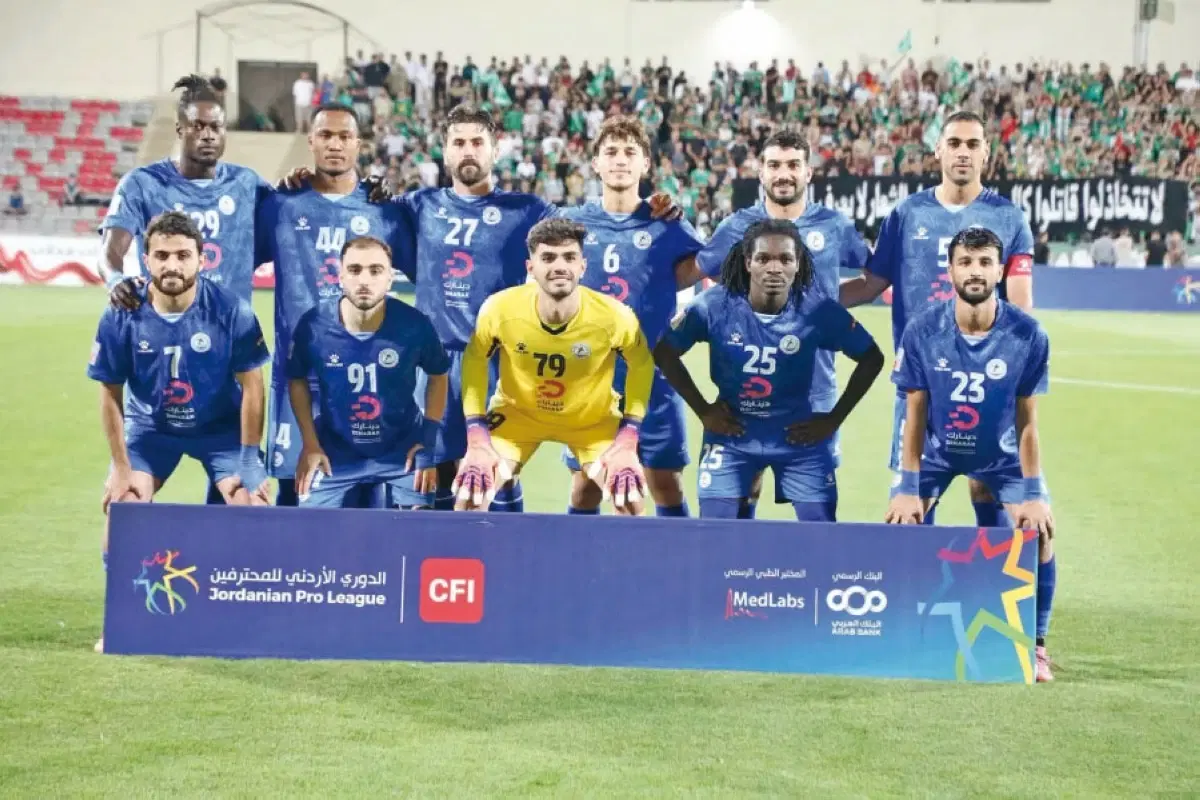
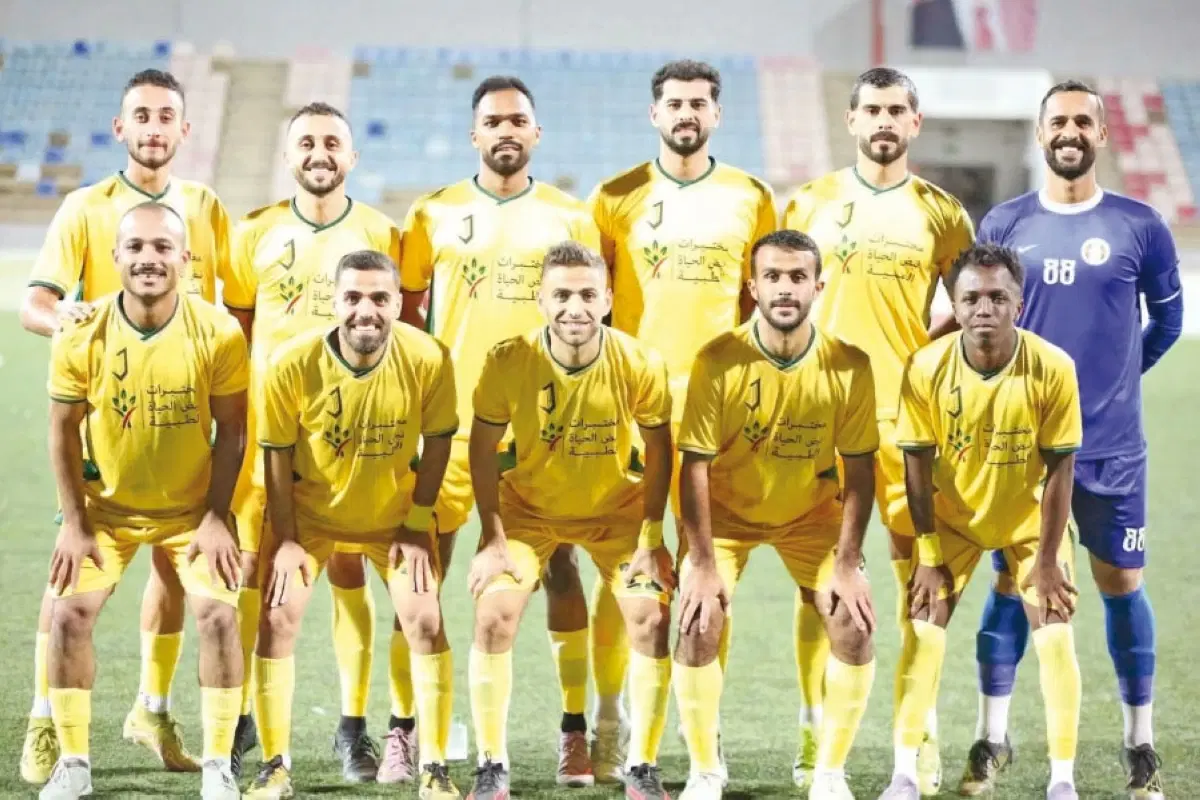
This pressure was not merely physical exertion, but rather a reflection of a good reading of the opponent, by attempting to disrupt key playmakers and forcing them to commit errors, which helped the Jordanian team impose its rhythm and control the flow of the game.
Tactical discipline and compactness between the lines contributed to strengthening Al-Hussein's advantage, as it showed clear boldness in attacking transitions and succeeded in reaching its opponent's goal and threatening it on more than one occasion. The performance also reflected the players' confidence in their abilities and their capacity to exploit spaces and move forward without abandoning defensive balance, with the team translating its advantage into a well-deserved goal, which at the time seemed a natural result of what it had presented throughout the first half.
However, the picture changed remarkably after the break, as Al-Hussein gradually lost the ability to maintain pressure at the same level, and its attacking presence receded, while Al-Shorta regained the initiative and began increasing its pressure on the Jordanian team's defensive zones. Here, a set of technical questions arose regarding the reasons that led to this shift, especially since the team had succeeded in imposing its character during the first half.
A decrease in physical levels is at the forefront of the possibilities that could explain the decline, as high pressing requires great physical readiness and the ability to continue moving, pressing, and closing spaces throughout the minutes of the match. When this ability declines, maintaining the same approach becomes more difficult, and spaces appear between the lines, giving the opponent a chance to regain control and build attacks more effectively. Nevertheless, asserting that fitness was the primary reason requires a broader reading of the match's events and the players' physical indicators.
As for the other factor, it is represented by the excessive retreat to the back zones, a choice that may seem logical to preserve a lead, but it turns into a burden when the team abandons its ability to retain the ball and exit its zones in an organized manner. Giving Al-Shorta more space to move and advance led to increased pressure on Al-Hussein's defense, which found itself required to defend for long periods, at a time when its ability to threaten the opponent's goal or force it to retreat had declined.
It would have been possible for ball retention and the execution of organized counter-attacks to serve as a means to alleviate pressure, rather than settling for absorbing Al-Shorta's attacks, especially since Al-Hussein possessed the tools in the first half that enabled it to reach the goal and threaten it.
In conclusion, the match revealed two different faces of Al-Hussein; a bold, organized team capable of imposing its rhythm in the first half, and another that retreated and lost part of its initiative in the second half. Between the two images, the necessity of reviewing match management, dealing with technical and physical shifts, and maintaining a balance between defensive and offensive duties stands out.
Maintaining a lead is not achieved by defense alone, but requires a character capable of dealing with the opponent's pressure, and technical decisions that restore balance in difficult moments. Hence, the most important lesson for Al-Hussein is the necessity of converting technical superiority into a complete result, and not allowing the effort exerted by the team in an ideal first half to dissipate as a result of retreating and losing the initiative in the second half.