"Adam's Balcony" by Hussein Jalad.. Documenting Cultural Memory
Amman6 min read
Share
What more could a journalist, poet, and writer see if they stood on a balcony than anyone else? Would they choose a view they carefully selected, or would their journalistic instinct—with its curiosity and desire to grasp the details of things while others pass them by without interest—compel them? Yet, one journalist, bound to journalism as he is to poetry, witnessed the view from a balcony overlooking the universe since the first creation, watching what remained of the fruit that fell to earth after the first two humans discovered the gravity of their disobedience to the divine command, "Do not approach this tree."
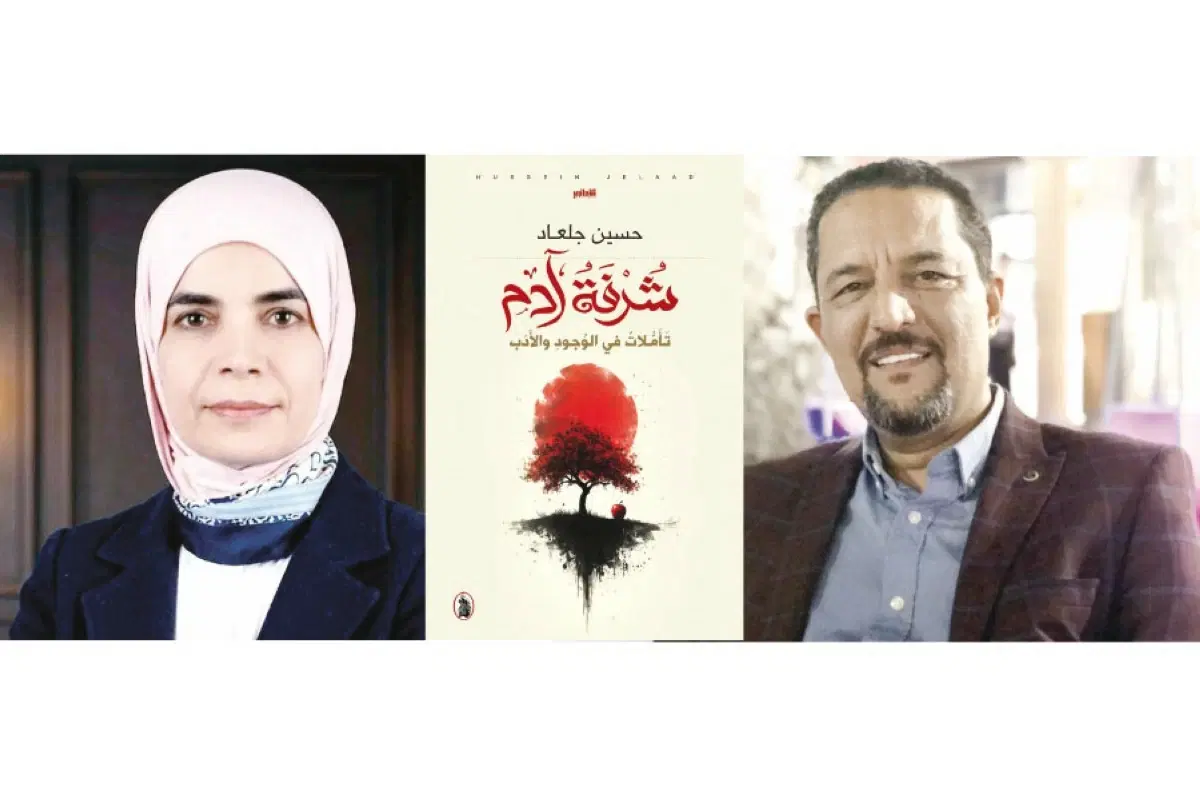
In his book "Adam's Balcony: Reflections on Existence and Literature," published by the Arab Institute for Research and Publishing (2025), writer, journalist, and poet Hussein Jalad says that the bright side of the story after the first descent to Earth is the search for knowledge and wisdom that answers the questions that descended with Adam and Eve. The descent of humanity's parents to Earth and the first human's standing on a balcony overlooking a forest of intertwined questions—many of which later turned into conflicts and disputes whose effects extend to our present day—saw the proliferation of balconies from which to view humanity, the most important of which was the balcony of literature. Through literature, we recognize our multiple identities and our ability to trace that water flowing through the veins of society.
In his book "Adam's Balcony," Hussein Jalad illuminates a space wide enough to view the world from multiple angles, reviewing what is learned, acquired, and rooted in the depths of the human being in an attempt to reclaim the lessons of the past and foresee the horizons of the future. "Adam's Balcony" is part of the archive of someone who worked in cultural journalism for a quarter of a century, and an acknowledgment that the writings of a journalist engaged with issues of consciousness, literary ideas, and personal preferences are not his private property; there are those standing under the balcony to catch the articles he wrote and the dialogues and interviews he conducted.
The book began with an article titled with a question: "Why does a writer steal his own autobiography?", and within it are answers from literary figures who possess a cultural history that qualifies them to answer the question, such as novelist and short story writer Elias Farkouh, novelist Samiha, writer Nader Rantisi, and others.
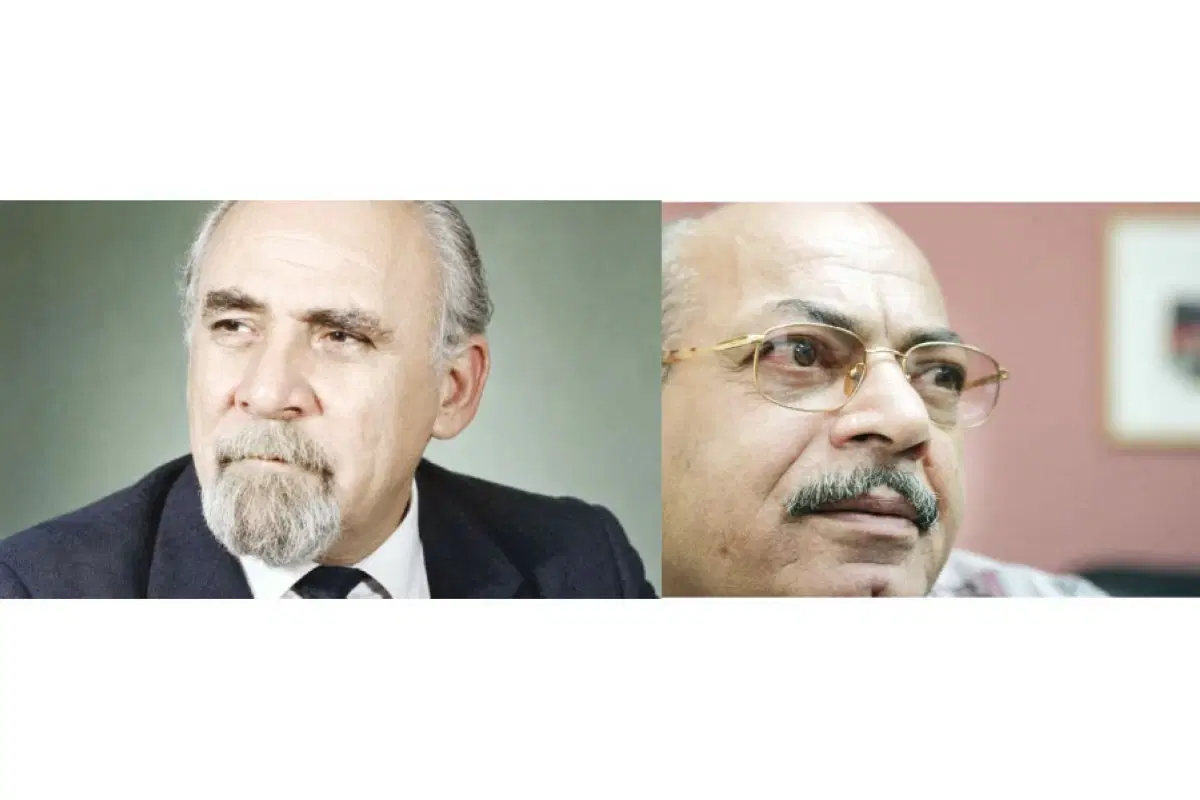
In "Adam's Balcony," Hussein Jalad documented important joints in the history of his work in cultural journalism. We find an article on philosophy and literature (Ghalib Halasa as a model), another on the poetry of Amjad Nasser, and a third on the scandal of poets and the popularity of poetry in the "good old days," where Jalad decides that popularity is not a priestly standard for measuring the beauty of poetry and the poetic nature of its authors—a brave declaration from a poet standing before the masses.
Al-Mutanabbi takes his place in "Adam's Balcony," as Hussein Jalad's pen analyzes studies that approached his poetry, concluding that linguistic formation, artistic radiance, and the construction of the poem like a painting are what immortalized Abu al-Tayyib's poetry.
What Hussein Jalad collected in this cultural-journalistic archive is distinguished by the diversity of titles and approaches, and an openness to propositions and topics that some might pass by fleetingly, but the eye of the journalist and poet captures them to pause and place them under a magnifying glass.
His article on the translation of Jordanian literature caught my attention; this is a topic few talk about, even the writers themselves, as the ambition of translation seems out of reach for many. Jalad wonders about the reason for the bleak image of statistics or studies concerned with researching the subject of translating Jordanian literature, and the horizon of soaring with it far from the narrowness of localism.
Among the interesting articles is one titled "(The Poor Man's Seclusion) by Ibrahim Aslan: The Exposure of the Intellectual," in which he talks about a book by the Egyptian short story writer and novelist Ibrahim Aslan, in which he reveals a different image of the late Iraqi poet Abd al-Wahhab al-Bayati, which I will leave for the reader of "Adam's Balcony" to discover, as a teaser and provocation to read the article.
The book documented many names in the Arab and global cultural arena through what Hussein Jalad wrote about them throughout his journalistic career, including: Elias Farkouh, who was mentioned in more than one article, Mahmoud Darwish, Ibrahim Nasrallah, Khalil al-Sawahri, Fakhri Qa'war, Moayad al-Otaili, Edward al-Kharrat, Pablo Neruda, and Ramadan al-Rawashdeh.
In an article titled: "Aisha al-Ba'uniyya.. A Luminous Path in Knowledge," Jalad deals with a glimpse of the biography of the Jordanian poet, jurist, and mystic, who is a model in the history of Arab and Islamic civilization to whom many books and poems were attributed in an environment that closed its doors to women. However, al-Ba'uniyya found her window to freedom, receiving religious, literary, and linguistic sciences, and her fame spread until it reached the time of writing the article.
This book, which looks out from "Adam's Balcony" at issues of literature and culture, reminds me of the articles of Anis Mansour, the famous Egyptian journalist, in which he recorded his readings and observations and documented his thoughts on many figures of his era, his ideas, and what is circulated in the salons of intellectuals and unofficial meetings of politicians, where the journalist's ear catches every word and places it in its proper place in reading the scene.
The reader of the book by Jordanian journalist and poet Hussein Jalad, "Adam's Balcony: Reflections on Existence and Literature," concludes that this type of book falls under the literature of journalists and the poetry of the cultural article, whose writer cannot abandon the cloak of the poet, which appears in his vocabulary at times and in his style many times. Many have preceded him in documenting their journalistic articles, such as Elias Khoury, who collected his articles in the cultural supplement of "An-Nahar" newspaper, Mahmoud al-Saadani in his book: "Unforgettable Faces," and Ghazi al-Gosaibi did the same when he collected his journalistic articles in his two books: "Words Words" and "Thoughts in a Time of Silence."
"Adam's Balcony: Reflections on Existence and Literature" is a book that combines the sensitivity of a poet and the objectivity of a journalist. The writer of the articles in it is not content with conveying information or news, but goes beyond that to the language of intensive criticism charged with aesthetic visions, so his articles become a literary genre in their own right. Jalad's archiving of a portion of his literary articles remains an attempt to deny the quality of death and extinction to his words when the archive becomes a cultural and historical document that resists oblivion in a world that is hastening to get rid of the questions of the first apple.