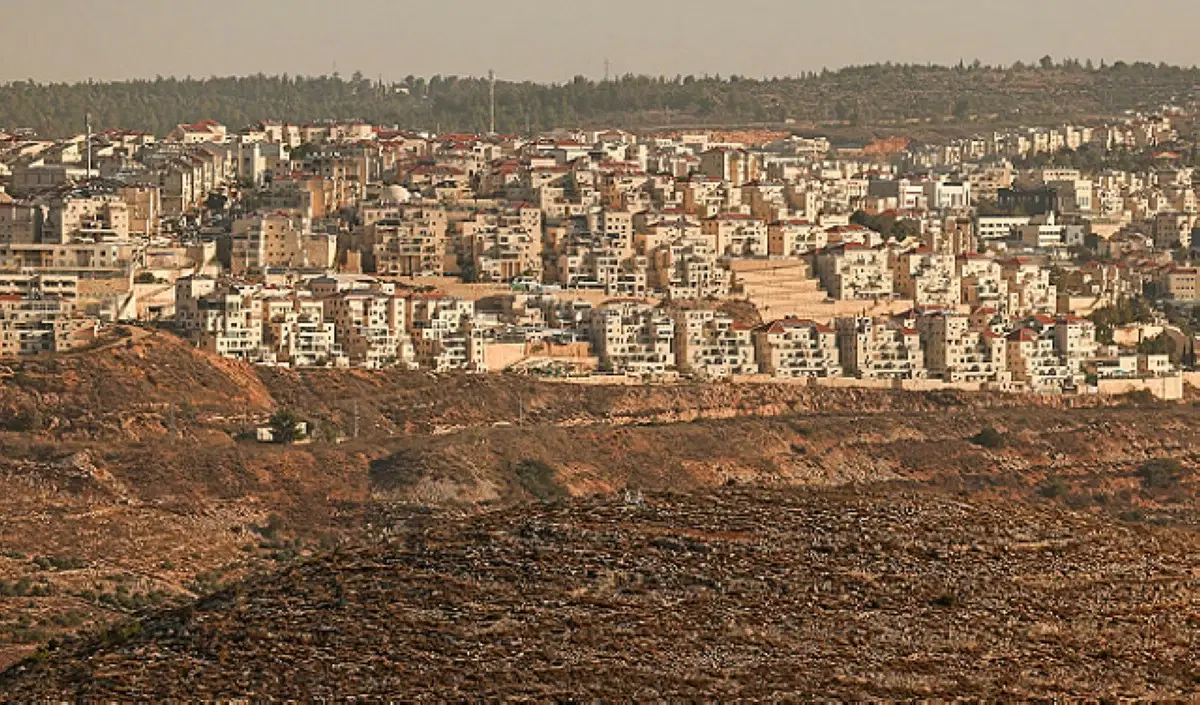
The District Committee for Planning and Building in the Israeli occupation municipality in Jerusalem deposited a new settlement plan named "Nofei Rachel" (TABA 1159920) to build approximately 650 settlement units on an area of 27.33 dunams at the main entrance of the Um Tuba neighborhood, in the southeast of occupied Jerusalem, on August 7th.
The "Bimkom - Planners for Planning and Human Rights" and "Ir Amim" associations, alongside a large number of Um Tuba residents, submitted an official objection pointing out a host of procedural and legal flaws, most notably the failure of the plan's submitter to meet the ownership conditions stipulated by law.
"Nofei Rachel" comes among three major settlement projects pushed forward by the occupation authorities within a few weeks, ahead of the Israeli elections, including the establishment of about 450 settlement units in the heart of the Palestinian Um Tuba neighborhood, and the expansion of the "Gilo" settlement by more than 2,300 units, bringing the total of targeted units in the three projects to over 3,400 units, in a move that reflects the acceleration of settlement expansion in occupied East Jerusalem.
Aviv Tatarsky, a researcher at the "Ir Amim" association, stated that what is happening is not limited to isolated planning decisions, but rather represents an integrated policy implemented by the Israeli government at a calculated timing by pushing three of the largest settlement projects in East Jerusalem within a few weeks and ahead of the elections, with the aim of imposing new facts on the ground that reshape the city's landscape, reinforce its separation from the West Bank, and make reaching a future political settlement more difficult.
The "Nofei Rachel" plan is implemented jointly by the General Custodian Office in the Israeli Ministry of Justice and a real estate company controlled by far-right activists. Among the participating companies is "Topodia", whose management includes Yehuda Rachones, known for his real estate activity in Jerusalem, who previously served as the spokesman for the "Elad" settlement association and editor-in-chief of the "Makor Rishon" newspaper. Its board of directors also includes Australian businessman Kevin Bermeister, known for his support of settlements in the city's east.
According to Ir Amim's analysis, "Nofei Rachel" is considered the fourth settlement project of its kind pushed by the General Custodian Office in East Jerusalem in recent years, following similar projects in Um Tuba, Beit Safafa, and Ras al-Amud.
The association points out that these projects enjoy exceptional procedures and rapid approvals, at a time when Palestinian plans take many years within the Israeli planning system, before many of them end in rejection.
The association warns that land settlement procedures are managed in many cases without notifying or involving Palestinian residents, which deprives them of the opportunity to submit ownership documents and evidence refuting claims of Jewish land ownership. It cites a case in the Sheikh Jarrah neighborhood, where settlement procedures were completed in April 2021 and included 40 homes inhabited by 43 Palestinian families, before being registered in the names of Jewish owners, according to what the association documented, without the residents' knowledge.
In the same context, the Israeli news website "Rashuiot" indicated that the Ministry of Justice has in recent years become a key entity in pushing construction and settlement plans for Jews in occupied East Jerusalem, through the General Custodian Office and the land settlement official, and in some cases in partnership with real estate companies controlled by right-wing activists.