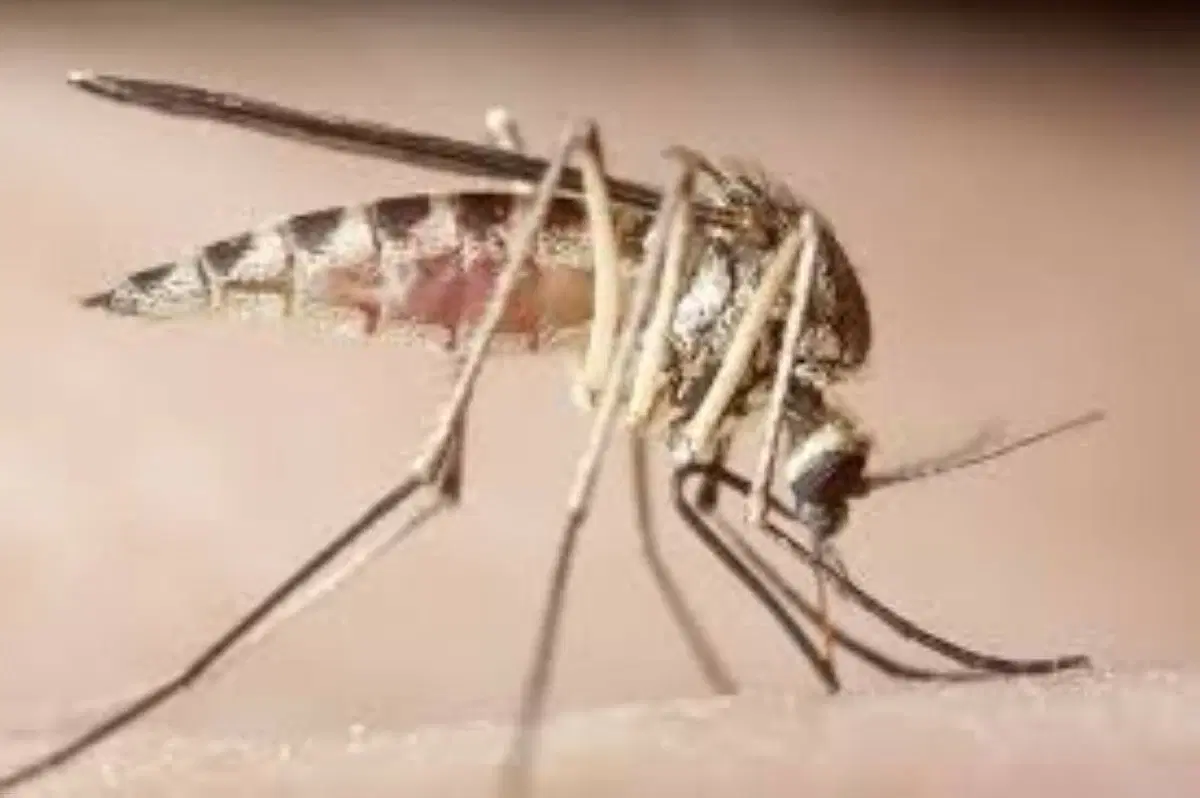
Ross says that feeding the mosquitoes her own blood is the "easiest, fastest, and least expensive way" to conduct these experiments.
The laboratories house several colonies that feed on the blood of researchers and staff, while the mosquitoes used in these experiments are raised inside the lab and do not carry the pathogens the researcher is studying. As for the colonies that may pose a risk to volunteers, they are fed using a membrane system without exposing humans to their bites.
Ross explains that the feeding process is usually carried out once a week, with intervals between feeding sessions. During the experiment, she places her hand in front of about 250 mosquitoes in each cage, and she may be exposed to up to 500 bites a day, while the number of feeding sessions can be increased to four times a week when larger numbers of insects are needed.
Regarding her body's reaction to the bites, the researcher says she has become accustomed to them, and their effects usually subside within hours. She adds that the red spots that appear after being bitten often disappear within four hours, according to her personal experience.
Ross's research is not limited to feeding mosquitoes, but includes studying their environment and the conditions that help them survive, reproduce, and transmit diseases. She also conducted a large-scale genomic study in which she compared different groups of mosquitoes in Australia.
The researcher says she found groups that are completely isolated from each other, and is currently working to verify whether they differ in characteristics such as the number of eggs they lay, their ability to withstand different temperatures, and the extent to which they are affected by water quality.
Ross began posting videos from behind the scenes of her research work on social media, with the aim of introducing the public to the nature of scientific work and showing aspects that people do not usually see.
She points out that feeding mosquitoes with blood is only part of her work, but it is the aspect that has sparked the most interest. She also expressed her happiness at turning her page into a space that brings together those interested in science, considering that social media can be a fun way to spread knowledge away from content aimed at selling products or inciting fear.
After her clips went viral, one viewer expressed interest in participating in these experiments, noting that he does not feel any reaction to mosquito bites.