
26% increase in goods arriving at the zone to 467 million dinars.
516 million dinars is the value of exported goods, an increase of 22%.
Follow Al Rai

26% increase in goods arriving at the zone to 467 million dinars.
516 million dinars is the value of exported goods, an increase of 22%.
A 9% increase in the number of commercial sales (transfers) of goods, reaching 2,961 transactions.
A 22% increase in the weight of arriving goods, reaching about 190 thousand tons.
A 23% increase in the number of outgoing (transit) electric vehicles.
Completion of the automation of 64 electronic services to be launched over the coming months and in 2027.
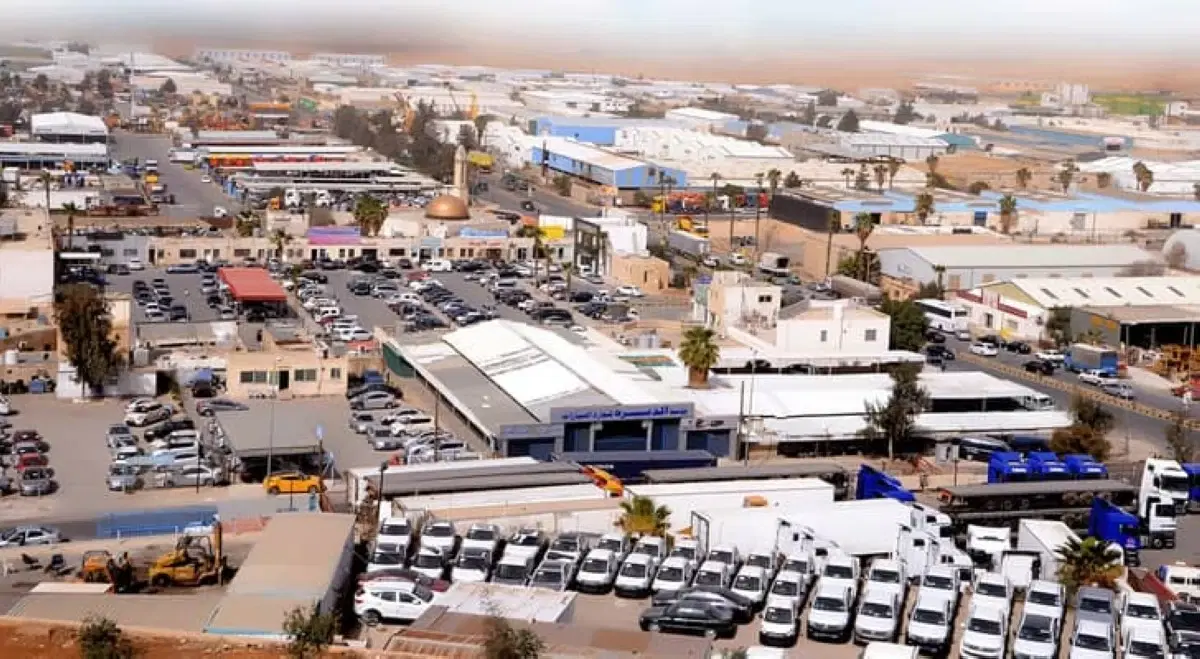
The Zarqa Free Zone is one of the largest free trade zones in the Arab world.
Modern and integrated infrastructure to attract various types of investments.
The Zarqa Free Zone constitutes one of the important economic pillars in the Kingdom’s investment and trade environment system, due to the diverse commercial, industrial, and service activities it hosts, in addition to the car dealership sector and its supporting logistics services.
This system contributes directly to stimulating the movement of goods trade and strengthening Jordan’s position as a regional hub for transit and regional and international trade, thanks to the Kingdom’s geographical location, which makes it a vital artery for the transport and transit of goods between neighboring countries and global markets.
The overall economic performance in the Zarqa Free Zone since the beginning of the current year reflects a state of escalating commercial and investment momentum, as the logistics movement for transporting and shipping goods integrates with various commercial and industrial activities and a chain of clearance and storage services.
The escalating activity in the zone regarding the movement of goods is consistent with the positive indicators achieved by the national economy in its various sectors since the beginning of the current year, as various economic activities operate within a single integrated system, benefiting from a package of government measures and decisions aimed at improving the business environment, facilitating investment movement, and raising the efficiency of logistics, executive, and regulatory services in the Kingdom.
Shipping traffic in the free zone reflects the volume of commercial activity it hosts, as the number of loaded trucks entering the zone since the beginning of the current year until today reached 31,841 trucks, while the number of loaded trucks leaving it reached 18,217 trucks loaded with various types of goods destined for neighboring countries and foreign markets.
During the past nine months of the current year, the value of goods and vehicles entering the Zarqa Free Zone reached 1.420 billion dinars, distributed across numerous activities including transit, re-export, and others.
Conversely, the value of goods and vehicles leaving it reached 1.369 billion dinars, including 762 million dinars in value of goods and vehicles destined for neighboring countries and foreign markets, bringing the total trade volume in the zone to about 2.789 billion dinars.
Indicators of goods movement in the zone until the end of last September of the current year recorded a noticeable growth compared to the same period in 2025, as the value of goods arriving at the zone increased by 26 percent, reaching 467 million dinars, compared to 371 million dinars at the end of September of last year.
The value of goods exported from the Zarqa Free Zone also increased by 22 percent until the end of September of the current year, recording a value of 516 million dinars, compared to 423 million dinars for the same period in 2025.
The largest growth was in internationally exported goods (transit), as their value increased by 36 percent to reach 324 million dinars compared to 238 million dinars, while the value of goods entering the local market until the end of last September of the current year increased by 4 percent, reaching 192 million dinars, compared to 185 million dinars for the same period last year. In terms of weights, the weight of arriving goods increased by 22 percent to reach about 190 thousand tons compared to 156 thousand tons, and the weight of exported goods increased by the same percentage to reach about 204 thousand tons compared to 167 thousand tons, of which 110 thousand tons were for internationally exported goods, an increase of 25 percent, and 94 thousand tons for goods entering the local market, an increase of 19 percent.
The number of investment agreements in the Zarqa Free Zone also increased until the end of last September of the current year to 2,483 agreements compared to 2,464 agreements for the same period last year, while the number of commercial sales (transfers) of goods increased by 9 percent to reach 2,961 transactions, compared to 2,717 transactions.
The number of commercial sales of vehicles in the Zarqa Free Zone until the end of last September of the current year reached 22,541 transactions, benefiting from the Council of Ministers' decision regarding the restructuring of the vehicle sector, which entered into force at the beginning of last November 2025, and aims to raise the quality of imported vehicles and ensure their compliance with approved technical specifications.
Electric vehicles leaving the Zarqa Free Zone (transit) recorded an increase until the end of last September of the current year by 23 percent to reach 1,877 vehicles, compared to 1,523 vehicles for the same period last year.
The number of vehicles entering the Zarqa Free Zone during the past nine months of the current year reached 71,558 vehicles with a value of 953 million dinars, while the number of vehicles leaving it reached 65,014 vehicles with a value of 853 million dinars, of which 26,130 vehicles entered the local market with a value of 415 million dinars, and 38,884 vehicles were exported outside the Kingdom with a value of 438 million dinars.
These data indicate the significant role played by the Zarqa Free Zone in the movement and circulation of goods and vehicles, and the associated transport, clearance, storage, and supporting commercial activities.
The zone includes 2,483 investment agreements, including 1,826 agreements for commercial purposes, of which 1,431 agreements are for car dealerships, the rest for logistics activity, 191 investment agreements in the industrial sector, and 466 agreements in the service sector, in a diversity that reflects the breadth of the economic and investment activity base in it, and provides an environment for the operation of establishments of various sizes and specializations.
Furthermore, these activities contribute to stimulating sectors related to trade, transport, and services, providing job opportunities, and strengthening the interconnectedness between various economic activities.
In the automotive sector, the importance of continuing to develop the import and trade environment stands out; which is in line with government trends aimed at raising the quality of imported vehicles and ensuring their compliance with approved technical specifications and general safety requirements for users.
This trend stems from the fact that citizen safety and consumer rights protection are a priority, and that facilitating trade and investment must go hand in hand with compliance with technical and regulatory requirements, in a way that enhances confidence in the local market and maintains the safety of road users.
According to statistical data, the number of commercial sales (transfers) in the Zarqa Free Zone during the past nine months of the current year reached a total of 25,502 transactions, of which 22,541 were vehicle transactions and 2,961 were goods transactions.
The role of the free zone is not limited to importing and trading goods, but extends to supporting industrial, commercial, and service activities, and enhancing logistics services related to transit and re-export movement.
This diversity gives the zone opportunities to continue attracting investments, developing services, and raising the efficiency of commercial operations, which supports the competitiveness of the national economy and enhances its ability to benefit from the Kingdom’s location in regional trade movement as an active and distinguished center for re-export.
This commercial activity in the Zarqa Free Zone indicates the importance of continuing to work on developing it and improving the investment environment within it, through the implementation of a package of infrastructure projects including maintenance of storage unit centers, road rehabilitation, development and maintenance of the water system, and improvement and development of entry gates and the creation of green spaces that have contributed to improving the zone’s environment in a way that enhances readiness to attract more qualitative investments.
In parallel with this, work has been done to complete the automation of 64 electronic services that will be launched in several packages by the end of the last quarter of the current year and the beginning of next year 2027, in addition to developing an advanced Enterprise Resource Planning (ERP) system that achieves integration between different systems; which contributes to simplifying procedures, accelerating the completion of transactions, and improving the investor experience.
The goal of the zone is not limited to increasing the volume of commercial activity, but includes achieving sustainable economic value, protecting the consumer, raising product quality, and providing job opportunities, which reflects positively on the national economy and the citizen alike.
Within the framework of its social responsibility and its keenness to enhance its social and environmental role, the Zarqa Free Zone has implemented a number of initiatives aimed at serving the local community and improving the surrounding environment, including expanding green spaces and increasing afforestation works inside the free zone, in addition to beautifying and improving the general appearance of the facade extending along the international road adjacent to the zone, which contributes to upgrading the urban and environmental landscape.
The zone has also implemented a number of community initiatives aimed at supporting the local community and strengthening the bonds of cooperation and communication with it, based on its commitment to social responsibility.
The Zarqa Free Zone, which was established in 1983 with the aim of promoting international trade, is one of the largest free zones in the Arab world, and is characterized by its strategic location on an international road network that connects Jordan with neighboring countries, and has been equipped with modern and integrated infrastructure aimed at attracting various types of investments.
Know more about this story?Send us a tip
Ask about this report — answers stay grounded in its text.




