Saadi Shua'th... When a Teacher Carries the Memory of Aqaba
Amman5 min read
Share
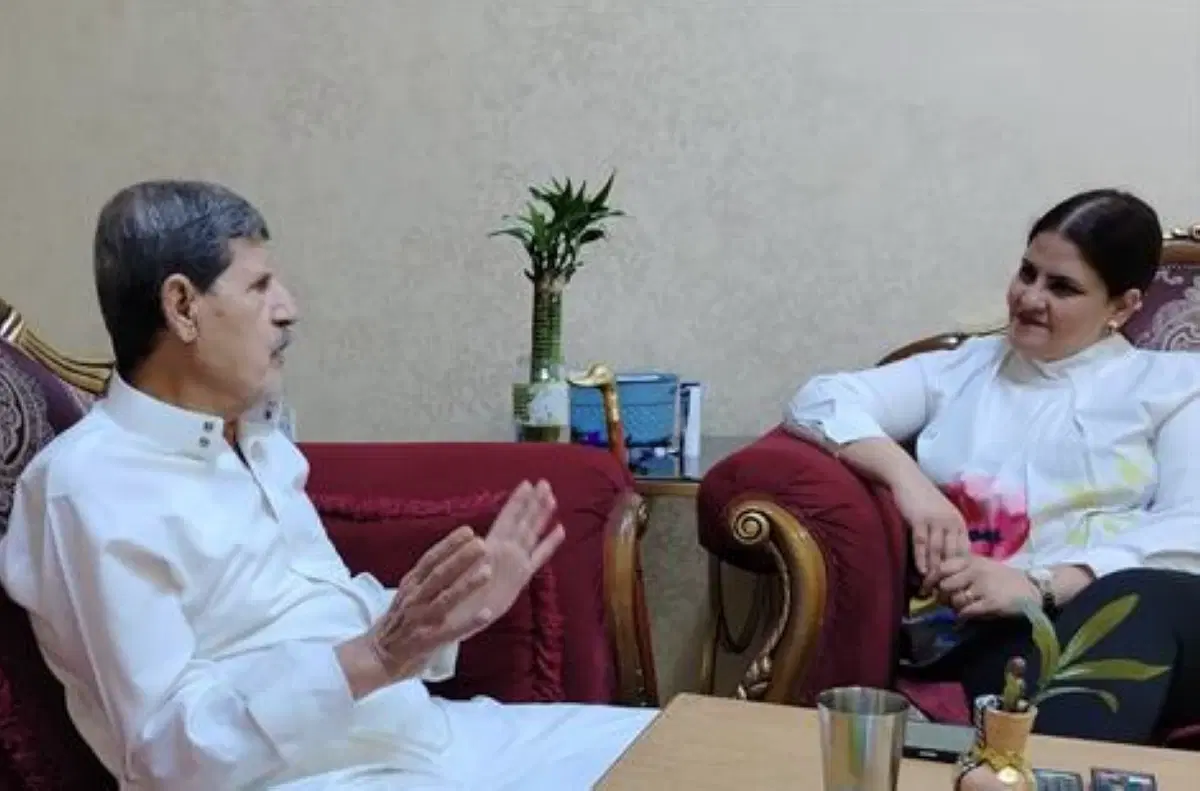
When Professor Saadi Shua'th sits and speaks, you do not feel that you are in front of a teacher recalling only the years of his work, but in front of a complete memory walking on two feet; the memory of old Aqaba, with its details that are still present in his memory, from its streets and schools to its sea and people.
Shua'th, a son of Aqaba and born in 1948, belongs to a generation that lived the city in its beginnings, and knew education in a time when the possibilities were limited, but the desire to learn was great.
Shua'th recalled the beginning of his relationship with education from within his family, saying that his father believed that educating his children was the path they should follow, and out of six children, three of them became teachers, turning the father's wish into a reality lived by his children.
As for his mother, she was illiterate and could not read or write, but she knew the value of school well, and Shua'th said that his mother endured a lot of hardship and difficulty in poor conditions so that her children could continue their education, and she was keen on their going to school despite the limited possibilities.
He added that the family saw education as a future for their children, and the hardship of his parents for their education remained present in his memory to this day.
After obtaining his agricultural diploma from Shubek, Shua'th said that he was appointed a teacher in 1968, leaving Aqaba heading to Amman, before moving after years between a number of schools and villages in the south, and then returning to his city in 1973 as a teacher. In a period that carried a lot of political tensions.
Shua'th recalled the schools he worked in, pointing out that they were very different from today's schools, as it was not strange for students from more than one grade level to sit in the same classroom; third, fourth, and fifth, with different ages and levels.
He explained that the teacher would enter the classroom and deal with students from different stages, and he had to explain to everyone within the available possibilities, without educational means or techniques as they are today.
He said that the classes relied mainly on the blackboard, chalk, and book, while the teacher relied on his explanation, experience, and ability to convey the information to the students.
Shua'th added that the teacher at that time was required to teach more than one subject according to the need of the school, explaining that he taught sports and science, while teachers in some villages taught other subjects, such as Arabic language and social education.
This is why Shua'th describes the teachers of that generation with an expression that summarizes the nature of the stage: "We are war professors," and said that the expression reflects the reality of the teacher during that period, when the responsibilities were great and the possibilities were limited, and he had to deal with more than one stage and subject, and perform his task with what is available.
Shua'th also recalled the dignity and prestige of the professor, pointing out that the teacher was respected by the students and their parents, and his status did not stop at the limits of the school, but extended to the community.
He added that the dignity of the teacher was not based on fear, but on respect for science and the professor, pointing out that the teacher carried the trust and responsibility of educating the children of the people, and therefore the profession had a special status.
He said that his goal as a teacher was clear: to make the student enter the classroom, understand, and then leave having gained new knowledge, confirming that this idea remained the essence of education for him.
Throughout his career, Shua'th worked at Abu Ayoub Al-Ansari School, then the Comprehensive Boys' School, before moving to administrative work, and then to the Office of Education, which later became a directorate.
Shua'th recalled those years, saying that the positions and responsibilities changed, but one title remained closest to his heart: "Professor," and explained that this title was more precious to him than the titles of other professions, because the professor is the beginning, from in front of the teacher came out the doctor, engineer, scientist, and all other professionals.
After many years of work, he said that the years of education remained the richest in his life, because they were the years when he felt that he was performing a mission that goes beyond the limits of the job.
Today, Shua'th looks at education from the position of someone who lived it in two times, and said that schools have evolved, and the means and possibilities have changed, but there are values that must not change, foremost of which are patience, endurance, dignity, and noble morals.
After becoming a father of three children and a grandfather of twelve grandchildren, his memory remained linked to the city where he was born, to the schools where he worked, and to the students who passed before him.
Today, when he recalls those years, he recalls with them a part of the history of Aqaba and its national and educational narrative; the story of the first schools, the simple classrooms, the dignified teacher, and the student who saw in his professor the beginning of the path to success.