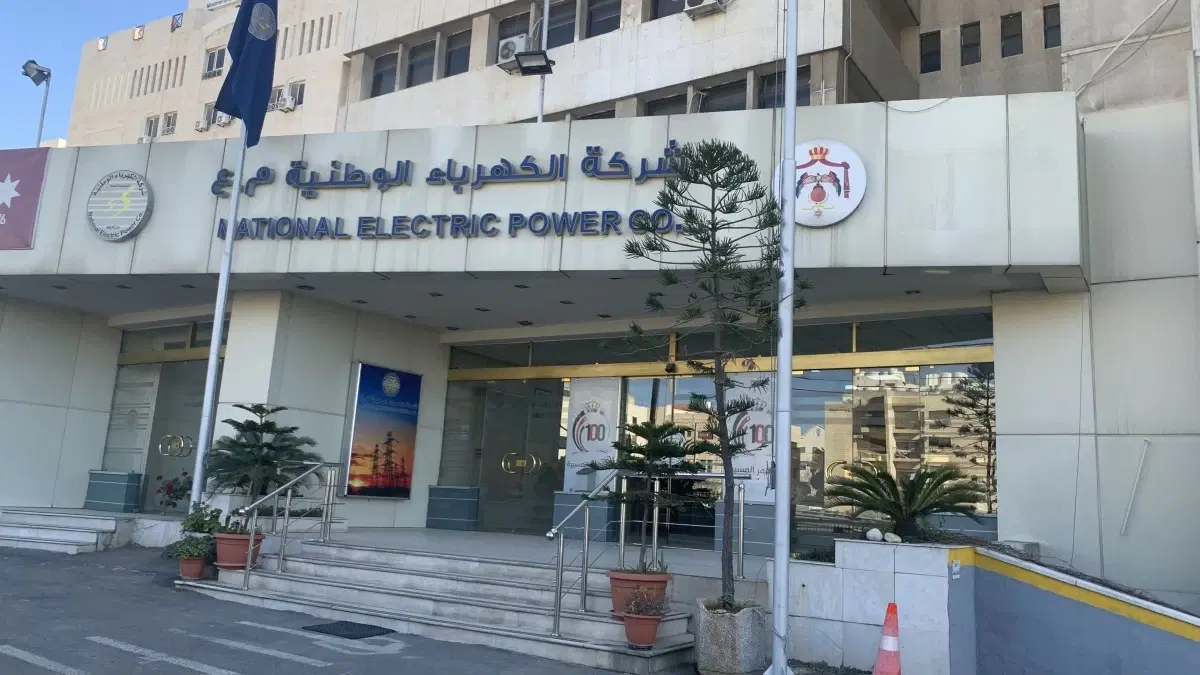
Rising Fuel Costs Aggravate Financial Pressures on the National Electricity Company
Amman4 min read
Share
The Director General of the National Electricity Company, Dr. Sufyan Al-Bata'ineh, said that Jordan's strategy in the energy sector focuses on enhancing supply security and diversifying sources of supply, which limits the impact of fluctuations in fuel and energy prices in global markets and enhances the reliability of energy supply.
He added that the Kingdom's energy needs are met through a diverse mix of flexible and sustainable sources and alternatives, ensuring the continuous fulfillment of the electrical system's requirements under various circumstances, noting that purchasing operations are subject to contractual frameworks and trade agreements that regulate quantities, prices, and supply mechanisms, contributing to the stability of supplies and reducing the risks of price fluctuations.
Al-Bata'ineh explained that the national approach focuses on increasing the contribution of local energy sources in the energy mix, particularly renewable energy, and enhancing water storage projects, in addition to expanding the exploitation of natural gas produced locally from the Risha field, pointing out that these measures have contributed to enhancing the resilience of Jordan's energy sector and improving its ability to deal with changes in global energy markets.
Regarding losses and indebtedness, Al-Bata'ineh clarified that the financial data of the National Electricity Company is available to the public and published on the company's official website, including annual financial statements and related reports.
He said that the data indicates that the company's accumulated losses have exceeded 6 billion Jordanian dinars, while the indebtedness reached approximately similar levels.
He attributed the main reasons for these losses to the gap between the costs of purchasing electrical energy and its selling prices, which arose due to policies supporting the electricity tariff for consumers, noting that this impact significantly worsened after the interruption of Egyptian natural gas supplies starting from 2010.
Al-Bata'ineh affirmed that the government and the company are working to enhance financial sustainability and control indebtedness by diversifying fuel and energy sources and benefiting from long-term contracts to reduce price fluctuation risks, alongside increasing reliance on local and renewable energy sources and enhancing the use of domestic natural gas production from the Risha field.
He added that the plans also include enhancing revenues, reducing costs, improving debt conditions, and managing borrowing.
In an economic reading of the impact of rising fuel costs, economic expert Hossam Aaish said that rising oil and gas prices alone do not explain the accumulation of losses and indebtedness of the National Electricity Company, but it becomes a contributing factor when the cost of generation increases without a corresponding increase in electricity sales revenue.
He explained that rising fuel costs increase the cost of producing a kilowatt-hour, and if the selling price remains fixed, the gap between cost and revenue widens, increasing pressure on the company's cash flows.
Aaish pointed out that energy market disruptions, regional tensions, and risks of navigation through the Strait of Hormuz add other burdens to energy costs, through higher shipping, insurance, financing, and supply risk costs.
He noted that accumulated indebtedness increases the company's sensitivity to any new shocks in energy prices, as liquidity shortages resulting from rising costs may lead to additional financing, adding the cost of debt service to existing burdens.
He said that addressing indebtedness should not be limited to rescheduling debt but should target the factors leading to its accumulation, primarily the gap between generation costs and revenues and electrical losses.
He pointed out that losses range between 8 and 10 percent, sometimes reaching 12 percent, while technical losses range between 1.5 and 2 percent, explaining that reducing losses through updating networks, improving transformers, combating theft, and expanding the use of smart meters can help alleviate financial burdens.
Aaish emphasized the importance of having periodic data that shows the cost of fuel purchase, generation cost, selling price, the gap between them, the cost of debt service, and the volume of losses, which helps accurately identify the sources of the deficit.
He pointed out that reducing losses is not only a technical issue but can also be a tool for limiting the accumulation of indebtedness, alongside improving network efficiency, diversifying energy sources, managing fuel price risks, and addressing the debt structure.
He noted that rising energy costs also affect the broader economy, through increased production costs in energy-intensive sectors, impacting export competitiveness and investment costs.
He concluded that addressing the National Electricity Company's indebtedness requires focusing on the causes of its accumulation, not just the debt balance, to limit the ability of new energy price shocks to generate additional financial burdens.