Princess Sumaya patronizes the launch of the 2027 Erasmus+ call
Amman5 min read
Share
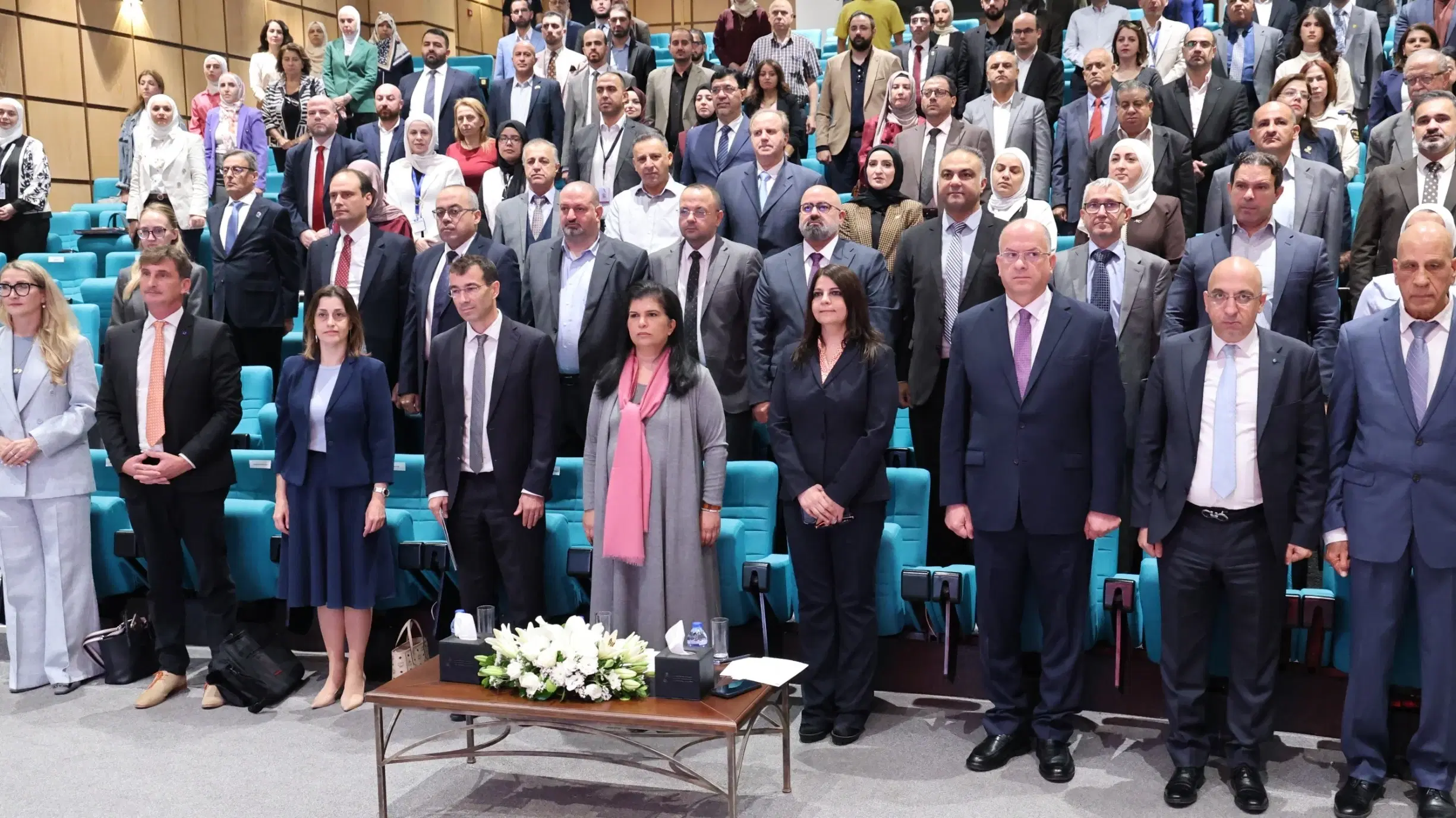
Her Royal Highness Princess Sumaya bint El Hassan, Chair of the Board of Trustees of Princess Sumaya University for Technology, patronized the Erasmus+ introductory day held by the National Erasmus+ Office in Jordan to launch the program's call for proposals for 2027.
The introductory day was held at Princess Sumaya University for Technology, with the participation of the European Union Ambassador to Jordan, Pierre-Christophe Chatzisavvas, University President Dr. Wejdan Abu Al-Haija, representatives from higher education institutions, a number of academics and experts, and EU representatives in Jordan.
In a speech delivered during the occasion, Her Royal Highness emphasized the importance of international academic cooperation in empowering youth, broadening their cognitive horizons, and enhancing their capacities for creativity and innovation.
The Princess explained that investing in future generations goes beyond providing knowledge to cultivating self-confidence, critical thinking, openness to cultures, and the exchange of experiences, especially in light of rapid global challenges that call for strengthening international cooperation and building effective partnerships that open new horizons for students and academics.
Her Royal Highness pointed out that the university was founded based on a vision aimed at employing science, technology, and innovation in the service of national development, and preparing generations capable of contributing to a rapidly changing world, noting that the university's affiliation with the El Hassan Science City embodies an integrated vision to enhance the interconnection between education, scientific research, innovation, and the industrial sector.
She noted that academic cooperation with European institutions has formed an important part of the university's journey, pointing out that its early adoption of the European Credit Transfer and Accumulation System (ECTS) reflects its commitment to international academic standards and its keenness to enhance the compatibility of its programs with their counterparts in European universities.
Her Royal Highness stressed that the partnership between Jordan and the European Union is based on the exchange of knowledge and expertise and cooperation to achieve common goals, affirming that Jordan is not merely a beneficiary of the opportunities provided by these partnerships, but an active partner possessing academic, research, and creative competencies that enable it to contribute to their enrichment and development, while emphasizing the importance of expanding cooperation horizons in the fields of scientific research, innovation, entrepreneurship, and emerging technologies.
The Princess affirmed that rapid developments in the fields of artificial intelligence and emerging technologies place a responsibility on universities to prepare generations capable of contributing to technology development and shaping its future, rather than merely using it, stressing the importance of cultivating critical thinking and ethical awareness among youth, and ensuring that scientific and technological progress is employed to serve humanity and meet society's needs.
She stated that knowledge knows no borders and that science should be in the service of peace, understanding, and humanity, noting that this conviction aligns with her personal vision and mission as a UNESCO Goodwill Ambassador for Science for Peace, and her belief in the importance of building bridges of communication between peoples through education, science, and knowledge exchange.
Her Royal Highness called upon students to seize academic exchange opportunities and remain open to different experiences and cultures, while maintaining their connection to their homeland, Jordan, and employing the knowledge and experiences they acquire in the service of their communities and contributing to their progress, to be opportunity-makers for future generations.
Her Royal Highness concluded by emphasizing that the bridges we build through education are among the most robust and sustainable, and that the true value of knowledge lies not only in what we acquire from it, but in how we employ it to make a positive impact on the lives of others, expressing her hope that the partnership between Jordan and Europe will continue to open new horizons for youth and empower them to build a better future.
For his part, the Director of the National Erasmus+ Office in Jordan, Dr. Ahmad Abu Al-Haija, emphasized the importance of the program as an engine for development and change in the education sector by enhancing academic mobility, cultural exchange, elevating the quality of education, and expanding horizons of cooperation between Jordanian institutions and their European counterparts.
He pointed out the impact achieved by the program in Jordan over the past 11 years, as nearly 9,000 students, faculty members, and staff benefited from academic opportunities, as well as the program's role in capacity building and institutional development in the sectors of higher education, vocational and technical education and training, and youth, through nearly 200 funded capacity-building projects.
Abu Al-Haija stressed the importance of preparing for the launch of the 2027 Erasmus+ call for proposals, calling on higher education institutions and partners to benefit from available opportunities and develop qualitative projects that enhance innovation, knowledge exchange, and support education development priorities in Jordan.
Abu Al-Haija and Engineer Asmaa Al-Smadi from the Erasmus Office also delivered an introductory presentation on the program, which included an overview of its axes, opportunities, and participation mechanisms, followed by a discussion with participants to answer their inquiries.
In turn, the Director of the External Relations Unit at the university, Dr. Omar Al-Qawasmi, emphasized the importance of the university hosting the event, which enhances academic cooperation and openness to international partnership opportunities.
For his part, Pierre-Christophe Chatzisavvas emphasized the importance of cooperation between the Union and Jordan in supporting higher education, enhancing academic partnerships, and exchanging expertise to develop educational institutions and expand international cooperation opportunities.
A specialized session addressed the topic of artificial intelligence in higher education, chaired by the Head of the Higher Education Reform Experts (HEREs) team, Dr. Mahmoud Al-Shiab, which included presentations on employing artificial intelligence in developing medical education, the ethics of its use and governance, and prompt engineering.
The event witnessed a session on modern trends in higher education reform, which addressed exploring innovative methods for developing future skills, enhancing science, technology, engineering, and mathematics (STEM) education, university development, and vocational and technical education and training.