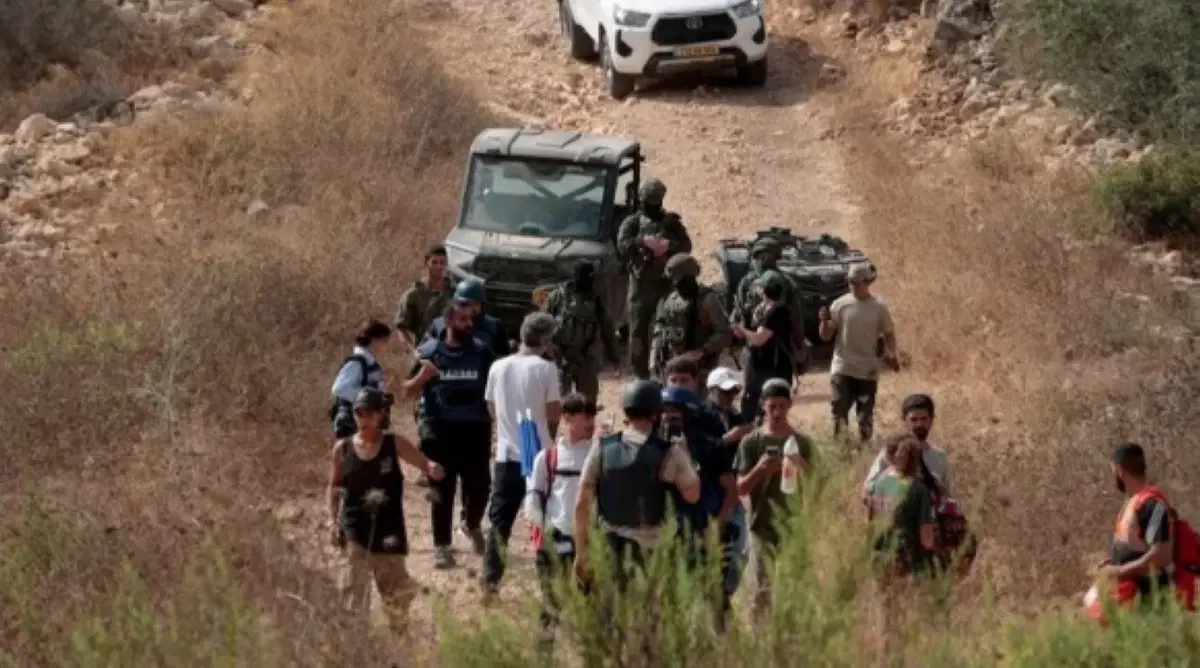
In the southern Hebron Governorate (southern West Bank), the Al-Baydar human rights organization stated that settlers from the Susya settlement attacked a Palestinian family while they were harvesting olives, without reporting any injuries.
In the same governorate, human rights activist Osama Makhamreh told Anadolu Agency that settlers stormed a Palestinian home in the Khallat al-Hummus area, south of the town of Yatta.
Makhamreh explained that the house belongs to citizen Khairi Abu Tuhfa, and that the settlers provoked the family members during the raid.
For its part, the Palestinian Wall and Colonization Resistance Commission (governmental) announced in a statement that its teams documented 18 attacks and violations on Sunday carried out by the Israeli army and settlers against farmers, their lands, and their property.
It clarified that the attacks were distributed across the governorates of Ramallah and Al-Bireh, Nablus, Salfit, and Jenin (north), as well as Hebron and Bethlehem (south).
It added that these included "assaults by beating, arrests, expulsion from lands, theft of crops and equipment, burning of property, and destruction of trees."
Attacks by Israeli settlers against Palestinians and their lands are escalating during the olive harvest season, which began in early October and serves as a primary source of income for thousands of Palestinian families.
According to the Wall and Colonization Resistance Commission, more than 45,000 trees were cut down or damaged in the West Bank during the first half of 2026, including more than 26,000 olive trees.
Official Palestinian data indicates the presence of approximately 750,000 Israeli settlers in the West Bank, including occupied East Jerusalem, distributed across 194 settlements and about 400 settlement outposts.