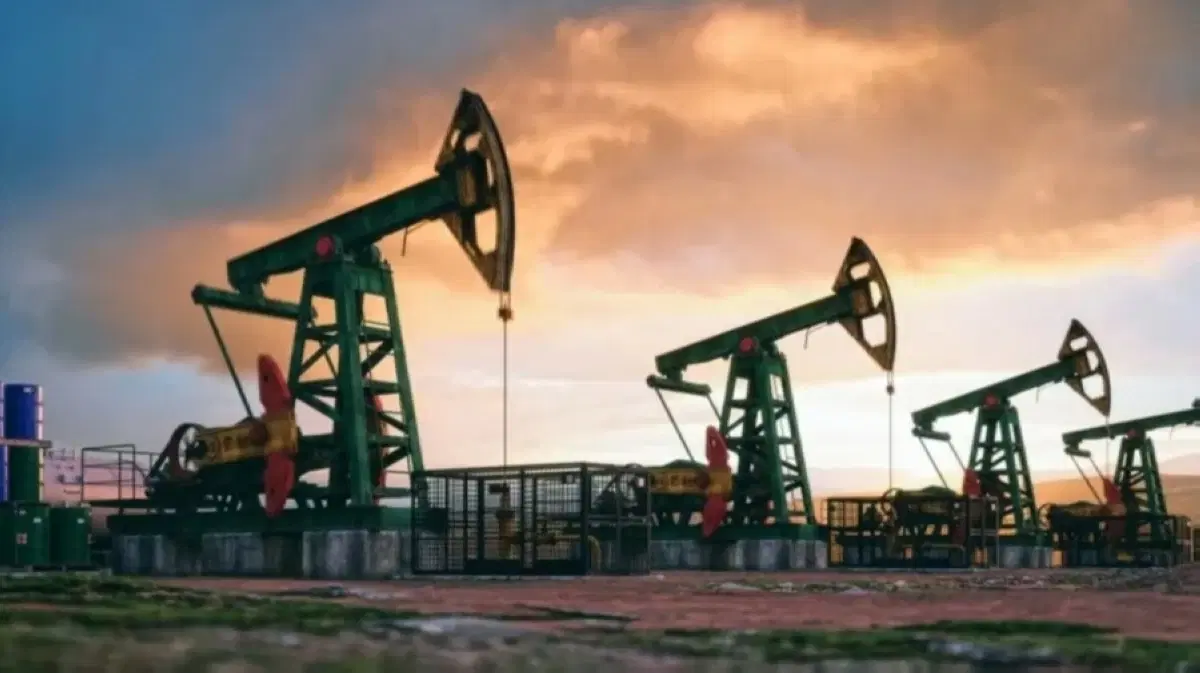
Oil surpasses $100 after US-Iran exchange of strikes in the "Strait of Hormuz"
Amman4 min read
Share
Oil prices continued to rise on Thursday, with the price of a barrel of Brent crude stabilizing above the $100 threshold, a day after Iran targeted ships attempting to cross the Strait of Hormuz in response, according to Tehran, to the United States targeting Iranian oil tankers.
North Sea Brent crude, which crossed the $100 threshold on Wednesday for the first time since July, recorded an additional rise of about 0.5% on Thursday during early Asian trading, surpassing the $101.60 level.
In this context, President Donald Trump is attempting to rally his camp during an extraordinary Republican conference in Dallas, Texas.
He said during the conference, "Immediately after the election, oil prices will go down."
The sharp rise in fuel prices and the decline in purchasing power in the United States and around the world are likely to play a decisive role in the midterm elections scheduled for November.
This new rise in oil prices comes as talks to end the war, which began with US-Israeli strikes on Iran on February 20, have stalled.
The Iranian Revolutionary Guard announced on Wednesday that it had attacked two American ships, eight oil tankers, and ten "violating ships" that were attempting to pass through the Strait of Hormuz.
Tehran said it carried out these attacks in response to the strikes launched by the United States on Tuesday against five Iranian oil tankers, noting that they were carried out in the context of "self-defense."
In a move that could impose additional complications on maritime traffic, the Revolutionary Guard announced the expansion of the "prohibited zone" that ships are forbidden from entering without coordination with Tehran.
For its part, the United Kingdom Maritime Trade Operations (UKMTO) said on Wednesday that "several commercial vessels in the northern Persian Gulf and the Gulf of Oman" had caught "fire in the context of ongoing military activity in the region."
On Thursday morning, the official Iranian news agency "IRNA" reported hearing new explosion sounds coming "from the direction of the sea."
- "Influencing the elections" -
Military confrontations between Iran and the United States continue in the Strait of Hormuz and its surroundings, even after the ceasefire agreement reached in April put an end to the first campaign of intensive shelling.
The strategic strait has turned into the main point of contention between Tehran and Washington since the start of the war. Iran insists on overseeing and managing maritime traffic in the strait, which Washington rejects.
Negotiations between Tehran and Washington have stalled as both parties compete for control of the Strait of Hormuz, through which about one-fifth of the world's oil and liquefied natural gas exports passed before the war began.
Iran has imposed a requirement for ships to obtain prior permission to cross the strait, a move opposed by Washington and several countries in the region.
Washington responded to Tehran's move by imposing a blockade on Iranian ports. It also recently resorted to tightening its economic sanctions on Iran and those who deal with it.
Six months after the start of the war, the US President expressed his belief on Wednesday that the war would end "immediately" after the November elections, saying, "I think the war will end immediately after the election" because Iran is "not able to hold out any longer," accusing Tehran of "trying to influence" the elections.
At the Republican Party conference in the evening, he did not offer any timetable, merely saying that fuel prices would be lowered "as soon as we win the war."
However, the "Wall Street Journal" quoted US officials as saying that Trump's top advisers are warning in private conversations that the war could last for the remaining two years of his term.
The Revolutionary Guard had previously confirmed that the war could end if Washington stopped threatening Iran and accepted a number of its demands, including the withdrawal of the Israeli army from Lebanon, the release of billions of dollars in frozen Iranian assets, and "refraining from any interference in the country's nuclear and ballistic capabilities."
At a time when the issue of the Iranian nuclear program has been fueling ongoing tensions for years between Iran and Western countries, the American "Center for Strategic and International Studies" confirmed that construction work has intensified over the past year at Mount Kolang in central Iran, which is suspected of housing an underground nuclear complex.
On Wednesday, the Board of Governors of the International Atomic Energy Agency voted to refer Tehran to the UN Security Council against the backdrop of its "non-compliance" with its nuclear obligations.