In such an atmosphere, the mission of the Kuwaiti media professional in Jordan was not merely to represent his country or convey its official positions, but required a deep understanding of the complexities of the internal Jordanian scene, and the ability to deal with differing viewpoints without turning them into permanent barriers between journalists in both countries.
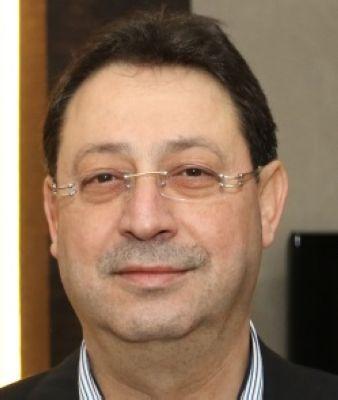
And here precisely lies one of the most prominent features of Mansour Al-Ajmi, as I came to know him through my experience with him. He possessed a remarkable ability to build distinguished professional relationships with Jordanian media figures at a time when overcoming the effects of the crisis was no easy task. Mansour Al-Ajmi did not deal with political differences as a final verdict on individuals; through this understanding of his mission, he succeeded in separating the political stance from the professional relationship, paving the way for communication, dialogue, and joint work, even in an environment characterized by the sensitivity of positions and their divergence. Conversely, this separation was neither a denial of what happened, nor a minimization of the scale of the harm inflicted by the Iraqi occupation on Kuwait and its people, but rather an expression of a mature understanding of the distinction between the state's right to defend its positions and national memory, and the necessity of keeping the doors of communication open with a brotherly Arab society within which opinions and interpretations vary.
This, in my estimation, is one of the most difficult skills in foreign media work: to be loyal to your country, clear in expressing its interests, without making political disagreement a reason to close the channels of communication with others.
This experience gained additional importance in light of the nature of Mansour Al-Ajmi's work in the Kuwaiti media, including his experience in Jordan and his work alongside a large number of ministers of information in brotherly Kuwait. Introducing Kuwait and serving its civilized image are not achieved through official discourse alone, but also require individuals capable of building trust and creating sustainable ties with media figures and intellectuals in the Arab sphere.
Through this experience, the professional relationships built by Al-Ajmi appear to be more than just personal assets; they are part of media work that leaves an impact on relations between countries. Forums and meetings are important, but their true value emerges when they succeed in overcoming sensitivities and opening the way for cooperation that is neither nullified by differences nor disrupted by the fluctuations of politics.
As I write about Mansour Al-Ajmi, I am not recalling the career path of someone I accompanied and still do, as much as I am recalling a lesson in media practice based on the principle that serving the homeland does not mean self-isolation.
In our Arab region, politics often succeeds in erecting barriers, while it falls upon media professionals to search for windows that allow them to communicate once again. Mansour Al-Ajmi, in his experience that I have known, was among those who realized this truth and practiced it in one of the most sensitive phases of Jordanian-Kuwaiti relations.
Perhaps this is the testimony I want to leave here: that some media professionals serve their homelands by what they say, while others also serve them by the relationships they build, the estrangement they prevent, and the mutual respect they leave behind that transcends crises.