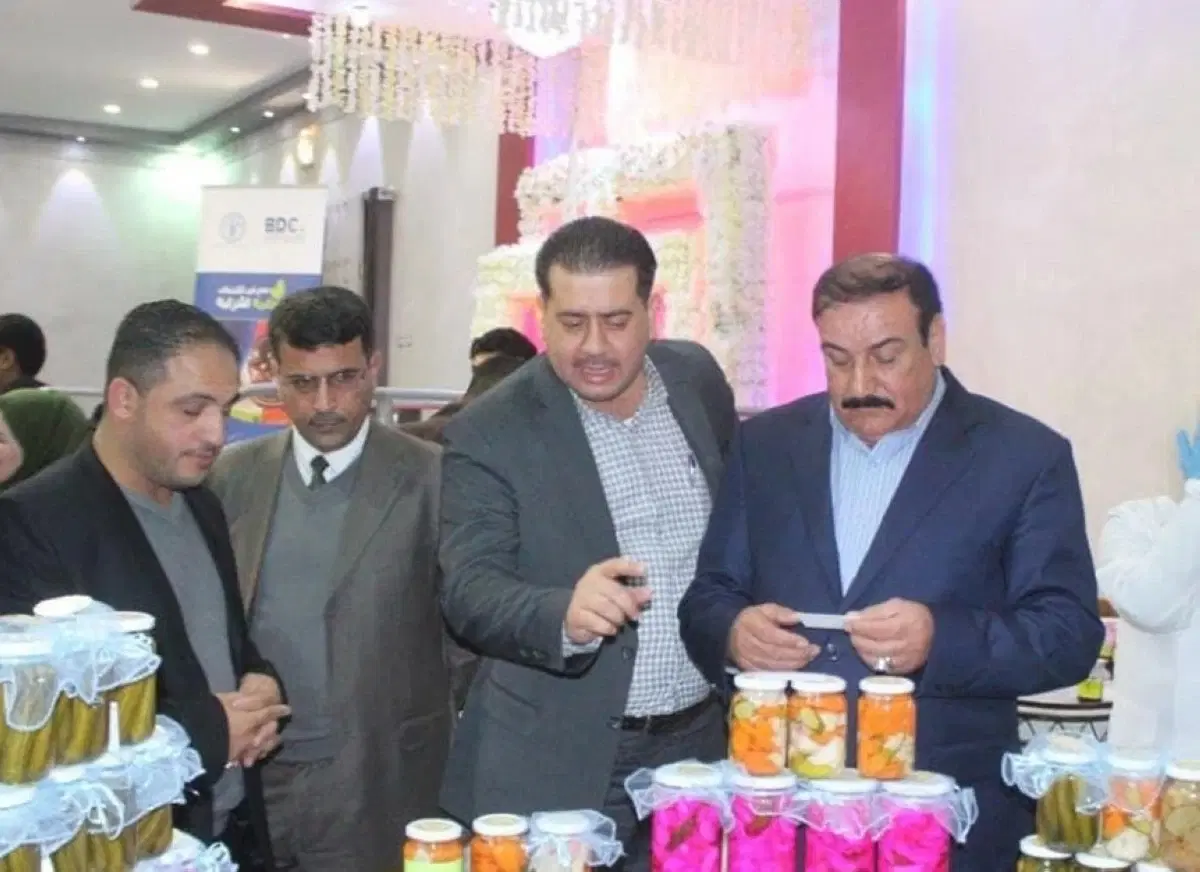
These products arrive at a critical time when there is a strategic need to reduce reliance on foreign imports and secure local food stocks with natural products that have a long shelf life and are easy to store without the need for complex technologies.
These goods do not stop at being merely complete food; they go beyond that to hold deep popular and cultural significance. They reflect values of social solidarity and mutual support, and are linked to the memory of families during agricultural seasons and the "Mouna" (pantry supplies) that shape the conscience of the Jordanian countryside and Badia, in addition to being a symbol of the domestic effort that gentle hands and productive families transform into a decent and sustainable source of income.
In this context, economic expert Dr. Ibrahim Awad explains that home economics and small local projects are no longer just marginal activities, but have become a fundamental pillar in the national strategy for economic recovery and strengthening food security.
Awad believes that marketing and manufacturing these products, such as pomegranate molasses and dried fruit delicacies, enhance the added value of local agricultural produce and increase the efficiency of the economic cycle for villages and rural areas by reducing poverty and ensuring the fair distribution of wealth, emphasizing that self-sufficiency is formed gradually, starting from the household pantry basket up to major sectors.
For her part, manufacturing expert Rima Abu Dalbouh confirms that "homemade" products are now competing strongly in the quality market, given the families' commitment to traditional, clean methods that preserve the natural properties of food without chemical additives or artificial sugars, noting that converting surplus grape, pomegranate, and apricot harvests into Malban, molasses, raisins, and dried figs ensures the preservation of nutritional value and reduces agricultural waste to the lowest levels.
Abu Dalbouh adds that supporting these home industries with technical expertise and modern packaging techniques contributes to moving them from the framework of limited local consumption to exporting and competing in regional markets.
Regarding institutional and field work, the Director of the Cooperative Corporation in Mafraq Governorate, Engineer Lamia Shdeifat, confirms that economic empowerment begins with gathering and coordinating these individual and family energies under organized cooperative umbrellas.
She explains that the Cooperative Corporation strives through its directorates to provide the necessary facilities and training for cooperatives and productive women to ensure the sustainability of these local projects, and to provide permanent sales outlets that help them market sumac, molasses, and dried goods of high quality.
Engineer Shdeifat concluded by pointing out that protecting and developing these authentic popular products represents an actual step toward building an agricultural cooperative system capable of achieving social and economic stability for families and strengthening the national food security system in the governorates.