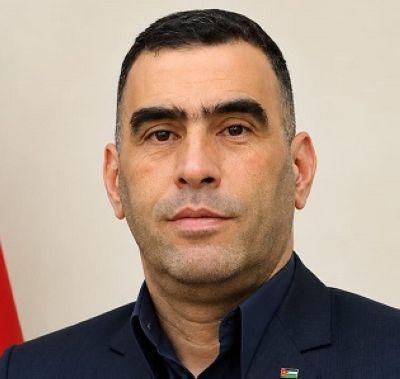
Development plans have long suffered from slow pace and reports piling up in cold storage, but the government scene under Dr. Jaafar Hassan's tenure as Prime Minister has seen a quiet and strict turnaround; a turnaround that has made the nickname (Bulldozer) a hallmark not only of speed but also of the political decision's ability to clear bureaucratic obstacles and transfer the wheel of management directly from the comfort of offices to the reality of the field.
The latest follow-up report is a true reflection of this approach; where the language of strict numbers and hundreds of completed sites has become practical evidence that the state is no longer content with diagnosis, but is steadily moving towards real implementation that the citizen feels in the details of his day.
Since taking over the government, field presence has been a prominent aspect of Hassan's approach to managing public files, as his tours were not limited to inspecting institutions and service facilities, but extended to listening to citizens, understanding the reality of services, and reviewing the challenges facing productive and developmental sectors, allowing for decisions based on what is happening on the ground, not just on office reports alone.
The figures of the periodic follow-up report for field visits, during the period from September 25, 2024, to September 28, 2026, reveal the extent of this presence, as the Prime Minister's tours covered 183 sites in various regions of the Kingdom, with procedures completed in 125 of them in full, while procedures in 58 sites are still in progress. A total of 413 procedures were taken, of which 312 were completed, with 101 procedures under implementation, figures that reflect the transition of visits from mere field inspection to a path that includes specific procedures and monitoring of achievement levels.
These figures gain their importance from the nature of the sites and sectors covered by the tours, which extended to all governorates of the Kingdom, 46 municipalities, 37 districts, and five sub-districts, in a scene that reflects the breadth of government follow-up and attention to local needs in cities, towns, and villages, away from limiting work to major centers or files with a central character.
What distinguishes this approach is that the field visit does not end with the tour, but rather begins a more important phase, represented by converting observations and demands into practical procedures, and identifying the concerned parties to monitor them, up to their completion. The real value of any government tour is not measured by the number of sites it covers, but by the impact it leaves on the level of services and the response it achieves to the needs of citizens, which makes subsequent follow-up an essential part of field work.
In the health sector, interventions included 15 hospitals and 26 health centers, serving more than 6.5 million citizens in various governorates, while in the education sector, they included the construction and rehabilitation of 31 schools, benefiting more than 23,000 students. These interventions are linked to two essential sectors in the lives of Jordanians, and the quality of services provided in them is a direct factor in improving the quality of life and enhancing development opportunities.
The tours extended to the productive sector, where the government provided support and facilities to 33 factories and establishments operating in the agricultural and industrial production sectors, benefiting more than 27,000 workers, in addition to the development of eight vocational and technical training centers and institutes, benefiting about four thousand young men and women. This reflects the link between field work and economic development priorities, through supporting production, enhancing employment opportunities, and expanding vocational training and qualification paths in line with labor market needs.
In the tourism sector, the visits included 19 sites frequented by more than 162,000 visitors annually, including the Dead Sea tourist beach and the Dead Sea Corniche, the Jerash Eco-Tourism Village project, the Azraq Reserve, and projects for developing tourist, historical, and environmental sites in eastern Jordan, and the Afrah Baths in Tafila Governorate.
The interventions also included the establishment of the Nshami and Mafraq Gardens, and the rehabilitation of three gardens in Al-Zarqa, Al-Rasifa, and Ain Al-Basha, serving a total of more than 1,910,000 citizens, in addition to work on establishing public gardens in various governorates, most of which are scheduled to be completed by 2027.
The youth and social care sectors were not absent from these tours, as they included 16 youth centers and sports clubs benefiting more than 262,000 young men and women, in addition to the Hussein Youth City, which is visited by more than two million visitors annually. They also extended to 35 centers, associations, institutions, and facilities in the field of social care, with support for their programs and expansion of their services, allowing access to about 236,000 citizens.
These interventions are not separate from the priority-setting mechanism on which the government relied, as they came based on the results of field communication with citizens, verifying their needs and demands, in addition to the observations received from deputies, governors, administrative rulers, and municipal councils. This communication gives the tours a dimension beyond traditional inspection, by involving local parties in identifying challenges and directing efforts towards issues most closely linked to people's daily lives.
In conclusion, the concept of field management stands out as a tool for reducing the distance between government decisions and the reality of citizens, as the official who stands directly on the needs of the regions has a broader opportunity to understand the nature of challenges and their variation between one governorate and another, and continuous follow-up allows for monitoring obstacles that may impede implementation, and working to address them in coordination with concerned institutions.