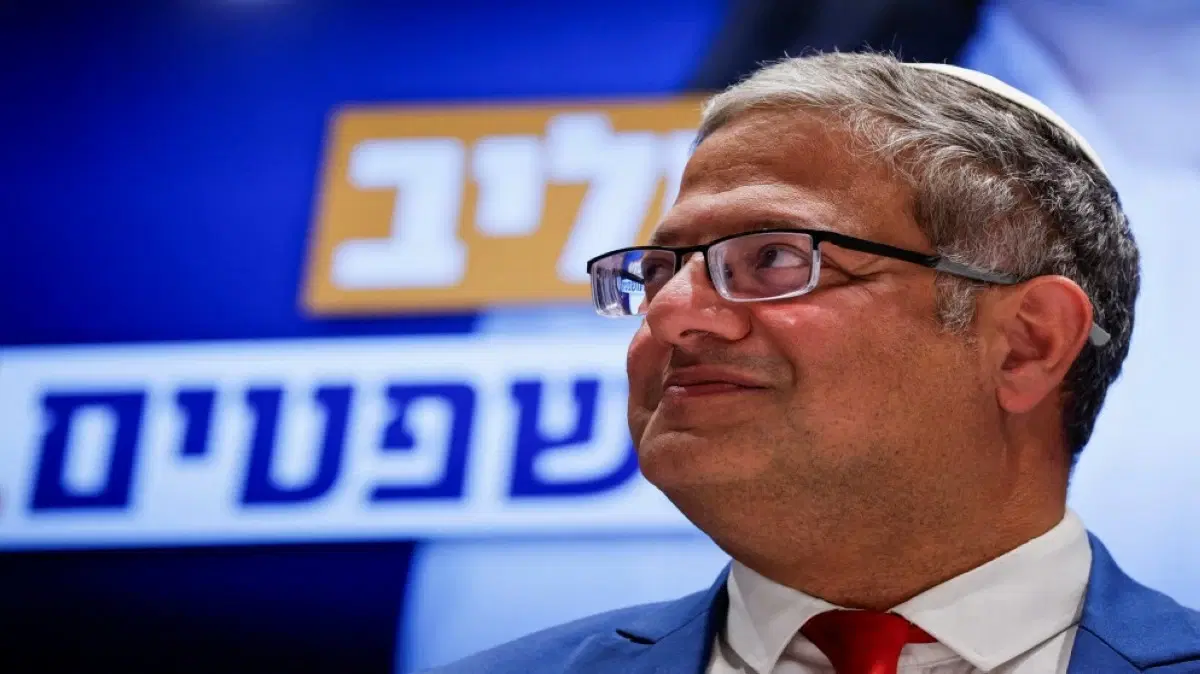
The representative of the legal advisor, lawyer Neta Oren, said that the accumulation of evidence is "very alarming," while noting at the same time that the "critical mass" of evidence required by previous Supreme Court rulings for striking off an electoral list has not been formed. She particularly pointed to Ben Gvir's actions during his tenure as Minister of National Security, but distinguished between his behavior and the rest of the party's 35 candidates.
The committee is also considering requests to strike off the "Religious Zionism" alliance led by Bezalel Smotrich, the "Zehuto" party led by Moshe Feiglin, and the "Democrats" party led by Yair Golan, while "Otzma Yehudit" has submitted a request to strike off the "Democrats" party.
The deliberations come after the committee voted to strike off the Arab lists "Joint List" and "United List," as well as the head of the National Democratic Assembly Sami Abu Shahadeh and Knesset member Ofer Cassif.
The process of striking off lists and candidates is based on Article 7a of the "Basic Law: The Knesset" law, which prohibits participation in elections in cases that include incitement to racism or denial of Israel's existence as a "Jewish and democratic state," while the Supreme Court remains the final judicial decision-maker in disqualification files.
The "Haaretz" newspaper reported that "Otzma Yehudit" received the largest number of disqualification requests submitted against lists and candidates so far.
Judicial Disqualification Process
The prevention of a list or candidate from running in the Knesset elections is based on Article 7a of the "Basic Law: The Knesset" law, which specifies the cases of disqualification, including denial of Israel's existence as a Jewish and democratic state, incitement to racism, and support for armed struggle against Israel by a hostile state or a terrorist organization.
The decision of the Central Elections Committee is not final in these files; if the committee decides to prevent a list from participating, the matter is transferred to the Supreme Court for approval of the decision, and it is also possible to appeal to the Supreme Court if the committee approves the participation of a list despite requests to disqualify it. As for the lists, the Supreme Court considers appeals related to electoral participation with a panel of nine judges or a larger odd number determined by the president of the court, and its decision is final. In the case of a candidate, if the committee decides to prevent him, it refers its decision and justifications to the Supreme Court for approval, and if the court approves the decision, the candidate's name is removed from the list of candidates.
This mechanism means that the decision of the Elections Committee regarding "Otzma Yehudit" does not finally determine the party's eligibility to run in the elections, as the judicial process in the Supreme Court remains, which is the last word in the disqualification file.