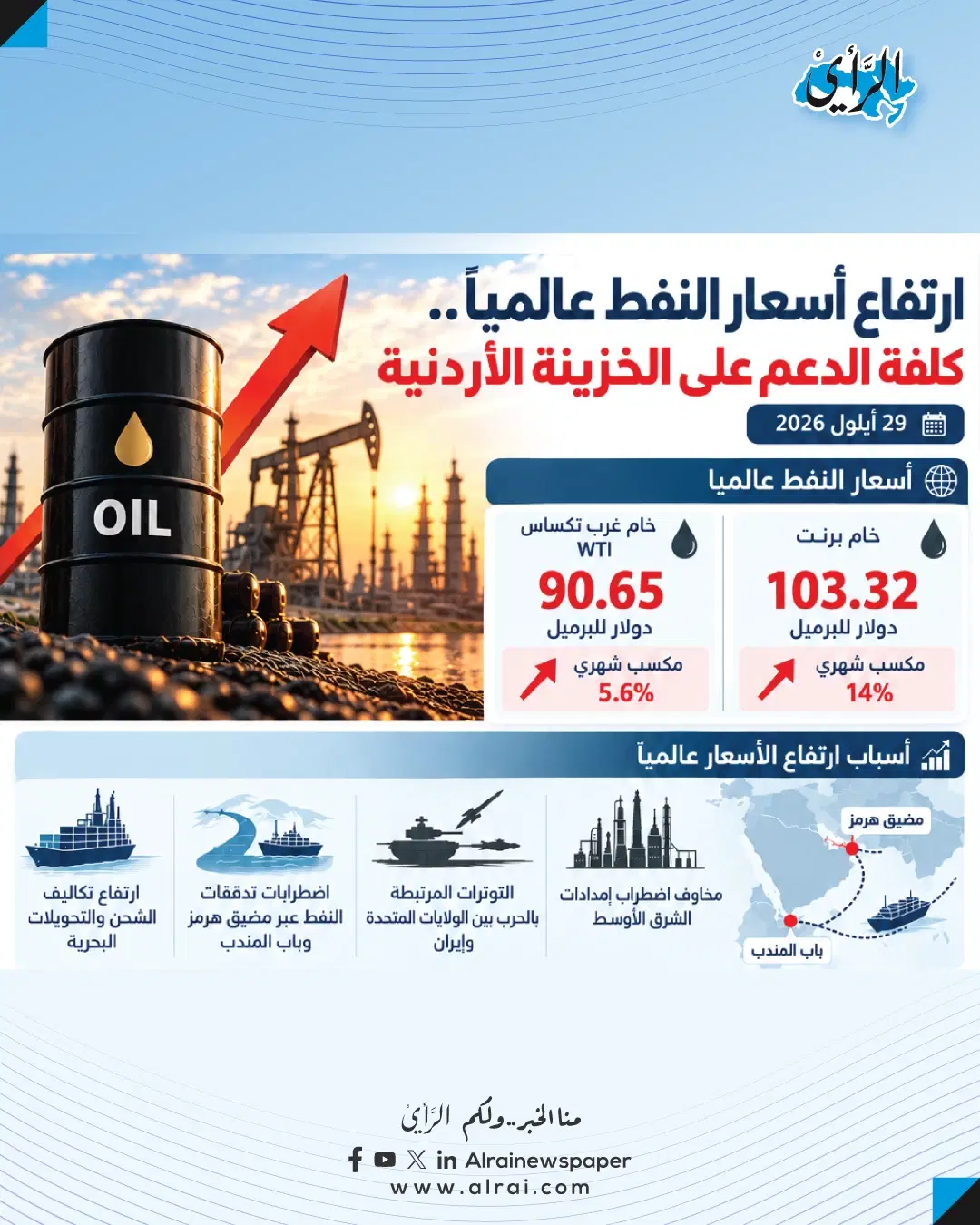
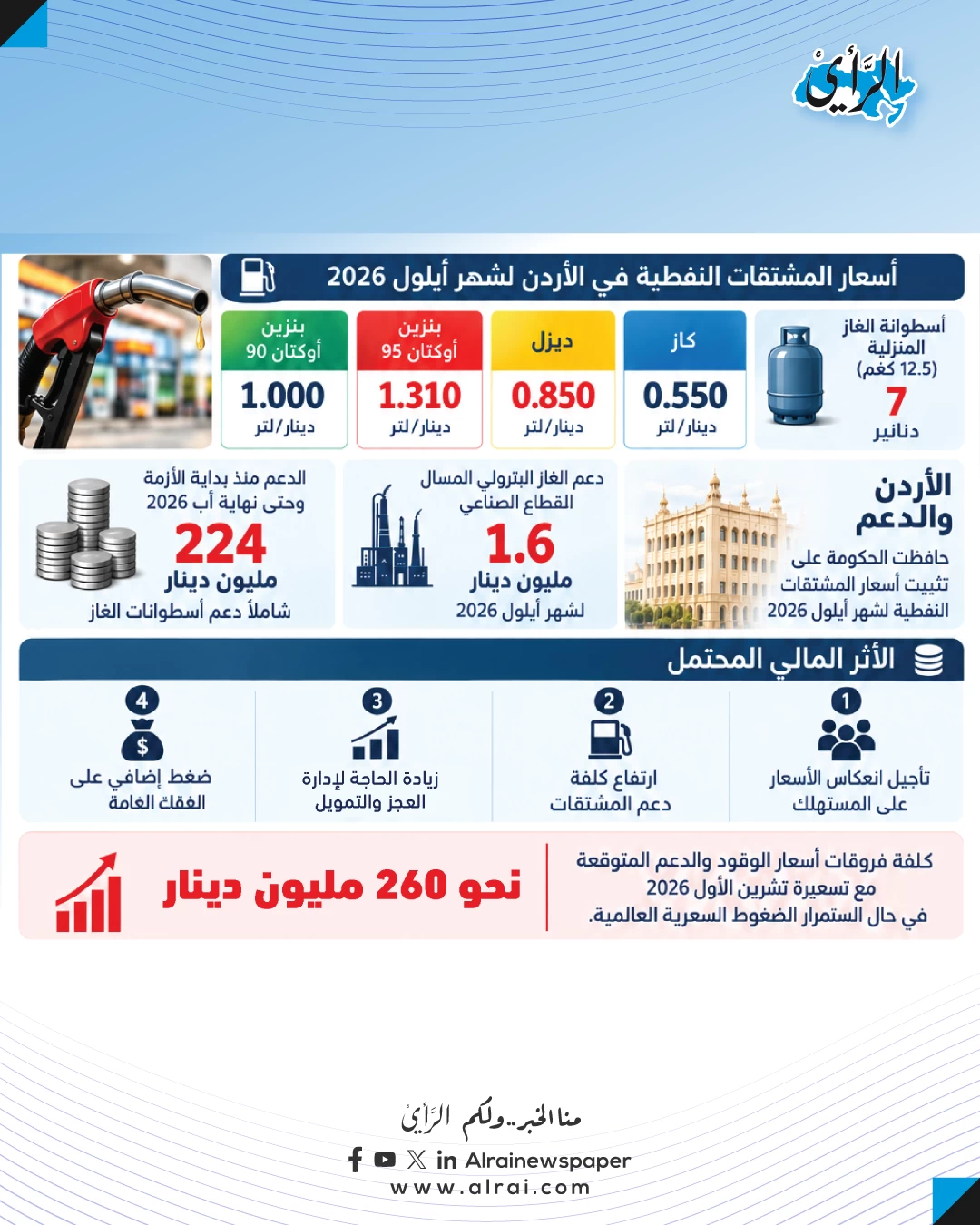
The importance of this policy lies in the fact that fuel is not an isolated commodity; diesel specifically is used in transportation, shipping, agriculture, industry, and services, and any sharp increase in its price quickly translates into production and transportation costs and prices of goods. Therefore, mitigating the impact of the increase not only protects the consumer from direct increases but also limits the transmission of the inflationary wave to the rest of the economy.
Over the past months, the government has gradually passed on costs, fixing key prices during periods of rising global prices, including diesel, kerosene, and domestic gas. This approach has given households and productive sectors space to adapt, instead of burdening them with a sudden price shock that is difficult to absorb in the short term.
The importance of the decision is highlighted by the fact that the government did not treat pricing as a mathematical process that directly transfers every global change to the consumer, but as a tool for managing economic stability. When energy is a major input for most activities, controlling the speed of transmission of its increases becomes part of protecting purchasing power and production costs together.
The benefit of this approach is not limited to the citizen; keeping fuel costs within an adjustable range helps companies, factories, farmers, and the transport sector to control operating costs and reduces the need to quickly pass on increases to the prices of goods and services. Thus, absorbing part of the shock becomes an economic measure that limits its cascading effects.
Conversely, the government is aware that this protection has a cost on the treasury, and that price differences not borne by the consumer are transferred in part to the public finances. Therefore, the challenge is not to fix prices indefinitely, but to manage the balance between protecting citizens from sudden shocks and maintaining the state's ability to bear the cost of this policy.
This equation is particularly important in an energy-importing economy, which cannot control global prices but can control how their effects are transmitted domestically. Hence, the value of gradualism; it does not eliminate the real cost of fuel but distributes it over time and gives the economy a chance to absorb it instead of receiving it all at once.
In summary, the fuel pricing policy during this phase represents more of a shock management than just price stabilization; it has contributed to protecting purchasing power, reducing the costs of productive sectors, and limiting the transmission of energy increases to other prices. Its long-term success is linked to maintaining a balance between this protective role and the absorption cost on public finances, according to global energy price developments and the state's financial capacity.
The most important economic message is that the government has chosen, in the face of external increases it cannot control, to manage their impact on the domestic front rather than passing them entirely onto the citizen; an approach that reduces the severity of the shock and maintains a broader space for economic and social stability.