Experts: Balanced Management of Oil Derivatives Prices Despite Financial Consequences on Treasury
Amman4 min read
Share
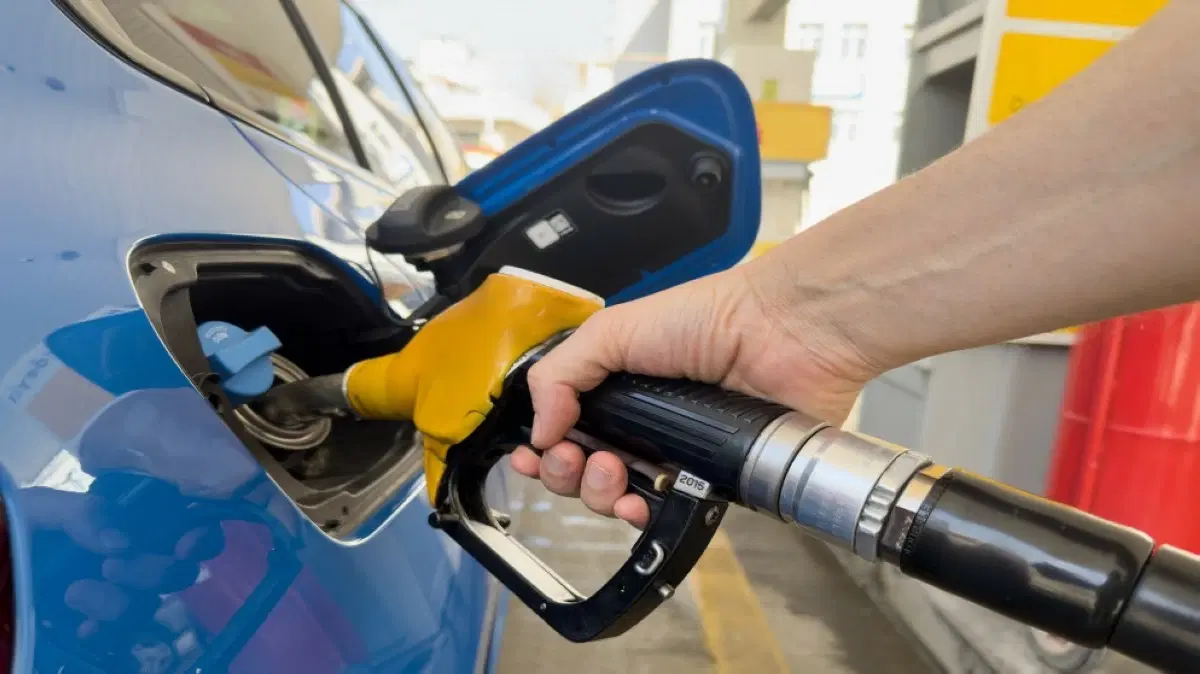
Since the start of regional tensions in the region, the government has worked to absorb the shocks that affected oil prices and reached record levels exceeding $120 per barrel, in order to limit their direct impact on citizens and various economic sectors.
Since the start of regional tensions, the government has borne a large part of the increase in global oil derivatives costs through a balanced management that focused on not fully reflecting these increases in local prices, with the aim of limiting their impact on citizens and various economic sectors.
In the framework of protecting economic sectors, the government worked to provide direct support for liquefied petroleum gas allocated to the industrial sector, amounting to 1.6 million dinars per month, in order to maintain the competitiveness of national products and control local production costs amid global market fluctuations.
Energy expert Hashem Aqil believed that the approach to dealing with oil derivatives prices prevented sudden "price shocks" that could deplete the purchasing power of citizens, deepen inflation rates, and ensure relative stability in transportation and production costs.
He said, "When oil and oil derivatives prices record significant increases globally, monthly decisions do not go to meet the full increase, but reflect a partial percentage of it, with the remaining differences being deferred or absorbed through the general budget".
He added that "the policy followed by the government to confront the wave of global energy price increases achieves relative stability in local prices and protects purchasing power and production sectors in the short term, despite it bearing cumulative burdens on the treasury"
He pointed out that the treasury has borne cumulative price differences due to the gradual approach to prices and not reflecting the actual prices in the monthly pricing since the beginning of regional tensions, amounting to 224 million dinars, while it is expected to reach a quarter of a billion dinars by the end of this month.
For his part, the Engineer of Petroleum Stations Owners Syndicate, Nahar Al-Saidat, confirmed that oil prices since the start of regional tensions have risen at high rates accompanied by a three-fold increase in insurance and transportation costs.
He explained that despite this, the energy system in the Kingdom was managed wisely, as the government worked to diversify sources of imported oil, which provided a sufficient stock, while many neighboring countries were suffering from shortages and others followed a rationing policy.
He stressed that the crisis management also affected local prices and remained at "acceptable" levels due to not fully reflecting global prices and alleviating the burden on citizens and economic sectors, confirming that the government bore the full burden through the policy of gradualism and stabilization.
Engineer Al-Saidat pointed out that the government is dealing with oil derivatives prices positively and worked to stabilize prices during the last month despite the global increase, which is still escalating during the current month.
For his part, economic expert Munir Deih confirmed that the decision to stabilize oil derivatives prices for several months came as a continuation of the government's approach aimed at limiting the impact of sharp increases and fluctuations in global markets on citizens and economic sectors, as the government followed a policy of gradualism in reflecting global increases and bore a large part of the price differences.
He said that oil derivatives prices in the Kingdom witnessed a state of gradual balance in dealing with oil derivatives prices since the start of regional tensions in the region last March, where price stabilization was the prevailing feature and the common denominator throughout the past months.
Deih explained that the government's approach to prices was based on the principle of applying limited gradual adjustments to gasoline and diesel prices, in parallel with the stabilization of basic derivatives prices such as kerosene and domestic gas.