Health Research in Jordan.. Towards Sustainable Quality
10 Universities Included in the Index Data for the Year
Amman5 min read
Share
Bal'awi: Reviewing Publication Mechanisms Enhances the Reliability of Scientific Research
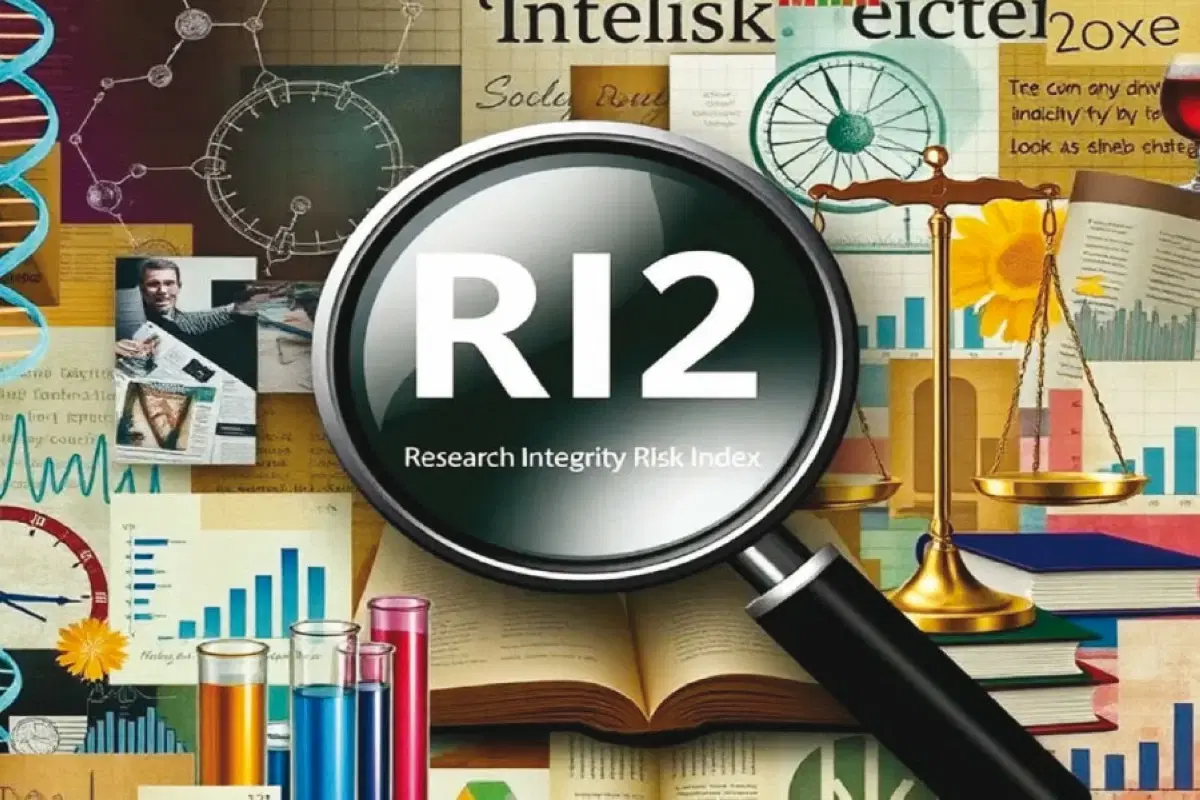
Clinical Professor and researcher Dr. Darar Bal'awi confirmed that the results of the 'Scientific Research Integrity Risk Index' (RI²) for 2026 can be treated as a tool that helps universities review some aspects of the scientific research and publication system and identify areas that need more scrutiny and development, away from considering them as judgments on universities or researchers.
He explained in a statement to 'Al-Rai' that reading the index results should start from the fact that it is a means of evaluation and improvement, clarifying that a high score does not alone prove the occurrence of a research violation and does not determine responsibility for it, as factors related to databases, linking research to institutional affiliations, or changes in the status of scientific journals after publishing research may be involved.
Bal'awi added that the benefit of these indices lies in reviewing and verifying research records and then determining the measures that can contribute to raising the quality of research and enhancing its reliability.
The database for Jordan included 10 universities, six of which were classified in the 'Red Alert' category, and four in the 'High Risk' category, according to the index classifications, while emphasizing that these results do not represent evidence in themselves of the occurrence of research violations.
According to the data, Amman Ahliya University scored 0.91, followed by the Private University of Applied Sciences 0.81, then Al-Zaytoonah University of Jordan 0.77, and Middle East University 0.75.
Hashemite University and Al-Zarqa University scored 0.61 each, while Jordan University scored 0.52, Yarmouk University 0.51, Al-Balqa Applied University 0.49, and Jordan University of Science and Technology 0.43.
These numbers represent the ten universities present in the Jordan file used in the data and do not constitute a comprehensive classification of all universities operating in the Kingdom.
Jordan's average in the index was 0.641. At the regional level, after excluding institutions classified in South Asia, the analysis included 193 institutions in West Asia and North Africa, 53.9% of which fell into the 'Red Alert' or 'High Risk' categories.
According to Bal'awi, comparisons between countries, as per the data reading, require caution due to the difference in the number and nature of universities included from one country to another.
The 'RI²' index is based on four equally weighted components, including the percentage of recent research published in journals that were later removed from the 'Scopus' or 'Web of Science' databases, the number of retracted publications per thousand recent research, institutional self-citations, and the percentage of recent research that cited studies withdrawn from publication for at least 12 months.
At the Jordan level, the component related to research published in journals later removed from the scientific indexing databases was the most prominent, with a mean score of 0.845, followed by citing retracted research at 0.691, then the rate of retracted research at 0.574, and finally institutional self-citations at 0.456.
Publishing research in a journal later removed from indexing does not mean the research was weak or that the researcher deliberately chose a journal that raises suspicions, as indexing cancellation may occur after the research is published, and there may be errors in institutional records.
Bal'awi considered that these results, on the other hand, indicate the importance of reviewing the mechanisms for selecting scientific journals, developing advisory services provided to researchers, and strengthening the controls related to paying fees for processing and publishing scientific articles.
He emphasized that the difference in risk patterns between universities means that the required measures cannot be the same in all institutions.
He explained that a university that needs to enhance the verification of scientific journals requires a different intervention than a university that shows indicators related to the withdrawal of research or citation patterns, or reliance on previously withdrawn studies.
He continued that the first step is to verify the accuracy of the records, then diagnose the mechanism that led to the result, and publish an improvement plan that is commensurate with the size and nature of the problem.
He called for enhancing cooperation between university libraries and scientific research offices to verify the status of journals when submitting and publishing research, reviewing the accuracy of institutional affiliations, and setting clear rules for verification before approving payment of publication fees.
Bal'awi also pointed out the importance of examining references to detect retracted research before submitting studies to journals, with the need to distinguish between unintentional errors, methodological shortcomings, authorship disputes, violations by other parties, and intentional misconduct.
He proposed developing a joint national protocol for examining scientific journals, along with a system to help monitor indexing cancellation decisions, publisher warnings, and changes in journal ownership, to support researchers in making informed decisions about where to publish their research.
He also stressed the importance of reviewing academic incentive systems so that evaluation and promotion criteria are not limited to the number of publications or citations, but include research quality, methodological rigor, transparency, and scientific responsibility.
Bal'awi noted that the integrity of scientific research should be an integral part of the research process, not a procedure added after a crisis, emphasizing the importance of rewarding methodological rigor, correction transparency, authorship responsibility, and real scientific value.
He stressed that institutional handling of indices, verification of their data, and the development of publication and evaluation mechanisms can contribute to enhancing the reliability of Jordanian scientific research, especially in health and medical fields, where the quality of research is linked to the development of evidence-based health knowledge and practice.