Global interest rate hike cycle looms to counter inflation
Amman5 min read
Share
A new global cycle of monetary policy tightening is currently on the horizon, as major central banks raise interest rates and signal the potential need for more measures to curb inflation fueled by the war in Iran.
Key interest rates have already risen to levels much higher than the ultra-low levels seen in the previous monetary tightening cycle that began in 2022.
The Bank of Japan became the latest major central bank to take monetary tightening measures on Friday, following the Federal Reserve's interest rate hike two days earlier and the European Central Bank's hike last week.
The Bank of England kept interest rates unchanged this week but indicated that inflation pressures may require further action.
Kazuo Ueda, Governor of the Bank of Japan, said, 'Our policy phase has changed,' as the bank indicated its readiness to continue raising borrowing costs.
These steps, despite their formal independence from each other, reflect a shared concern among policymakers that rising oil and gas costs due to the war with Iran are raising the specter of new pressures on living costs just a few years after the post-COVID-19 inflation wave.
This shift contrasts sharply with the atmosphere just a month ago, particularly after the short-term agreement between the United States and Iran, which encouraged investors and policymakers to bet on a decline in hostilities and lower energy prices.
However, the collapse of that agreement, as well as the recent progress of the Houthi group in Yemen on the Red Sea coast, which poses a new threat to global oil supplies, has drastically changed expectations.
Boris Vujcic, Deputy President of the European Central Bank, said in an interview with Reuters today, 'Expectations now suggest that energy prices will remain high for longer.'
He added, 'If inflation remains high during the fall and affects household income and consumer behavior, it will also have a negative impact on GDP,' indicating that future decisions will be made sequentially during 'meeting after meeting.'
Two sources told Reuters last week that more monetary tightening is now likely. While raising interest rates at the next meeting in October is possible, a move in December is the most likely scenario. This would be the third hike by the European Central Bank this year.
Greg Fuzesi of J.P. Morgan said, 'The worrying peak of interest rates depends on events in the Middle East, and it cannot be completely ruled out that they will rise above three percent.'
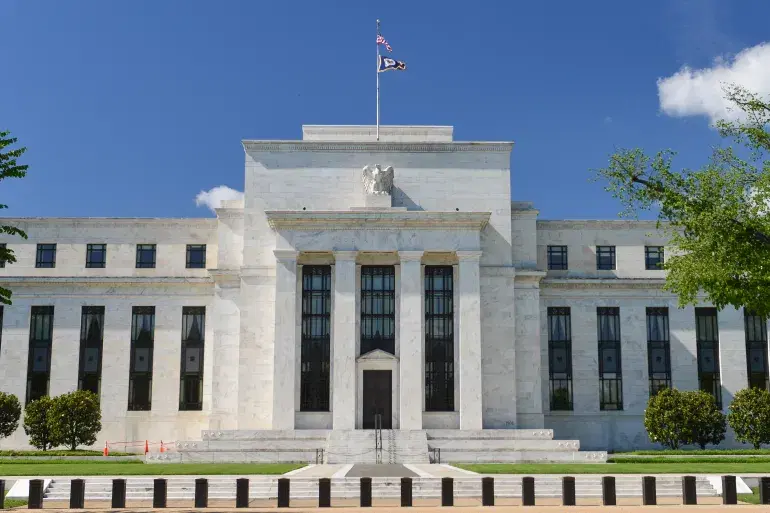
In defiance of U.S. President Donald Trump's public calls to lower interest rates, new Federal Reserve Chairman Kevin Warsh joined his colleagues on the Federal Reserve Board in a move to raise interest rates on Wednesday.
In his press conference following the meeting, he noted that 'it would be difficult for him to describe the general financial conditions as restrictive,' a phrase that contradicts the argument that monetary policy is harming the economy.
The Federal Reserve's unanimous decision to raise interest rates, along with Warsh's comments on Wednesday, was seen as a prelude to further monetary tightening and helped reassure investors about the central bank's commitment to combating inflation.
Andrew Leek, Chief Investment Officer at Mirabaud Asset Management, said, 'The Federal Reserve has regained some of its credibility after raising interest rates.'
Updated quarterly economic forecasts showed that 16 of the 18 policymakers expect at least another quarter-point hike by the end of this year.
Jeff Schmidt, President of the Kansas City Fed, said today, 'Our inflation problem is not just in the energy sector.'
Compared to the previous round, the current tightening cycle of global central banks is expected to be significantly milder, mainly because inflation is not rising as sharply.
The Federal Reserve's forecasts released on Wednesday showed that even the most hawkish U.S. central bank officials expect the interest rate to range between 4.25 and 4.50 percent by the end of 2027, representing only a half-point increase from the current level, before declining.
The Federal Reserve raised the interest rate by 5.25 percentage points from 2022 to 2023, reaching a range of 5.25 to 5.50 percent.
Although the Bank of England kept interest rates unchanged on Thursday, it indicated that they could be raised if the war continues, in a comment interpreted by observers as a clear shift in tone, putting it in a position to follow the interest rate hike path taken by both the Federal Reserve and the European Central Bank.
Governor Andrew Bailey, after voting to keep interest rates unchanged at this meeting, said, 'The longer this crisis lasts, the more difficult it becomes.'
He is one of the three members of the Bank's Monetary Policy Committee who indicated that they might support raising interest rates.
Analysts said they expected the Bank of England to raise interest rates only once. However, financial markets expected after the meeting nearly four quarter-point hikes each over the next year.