From achieving World Cup qualification to the sustainability challenge.. What does Jordanian football need?
Prince Ali Centers face the test of producing a new generation
Amman14 min read
Share
Souqar, Abu Abed, Abu Zema, and Hayel define development priorities
The question facing Jordanian football is no longer how the national team can reach the World Cup finals, now that this dream has been realized for the first time in the history of Jordanian football, but rather how to transform this achievement into a starting point for a sustainable project that ensures continued international presence, establishes more competitive national teams, and makes qualifying for major tournaments a natural result of the system's development, rather than an exceptional milestone in its journey.
Qualifying for the 2026 World Cup was a watershed moment that transcended the boundaries of the green pitch, reshaped the team's image in its Asian and international surroundings, and raised the aspirations of fans who found in "Al-Nashama" a symbol of national achievement. However, the value of historical moments is not measured only by what they achieve at the time, but by the impact they leave on the future.
This is where the most difficult phase begins: moving from celebrating qualification to building what comes next, and reviewing the football system in all its details, from discovering and developing talent, through the reality of clubs and local competitions, to governance, investment, and financial sustainability.
Does Jordanian football possess the components to establish its global presence? What did the World Cup participation reveal about strengths and weaknesses? Where does the role of the Football Association lie, and what can the Prince Ali Centers for promising boys and girls offer in shaping future generations?
These are questions that do not diminish the value of the achievement, but rather give it its true meaning. To answer them, "Alrai" sought the help of experts in the following report:
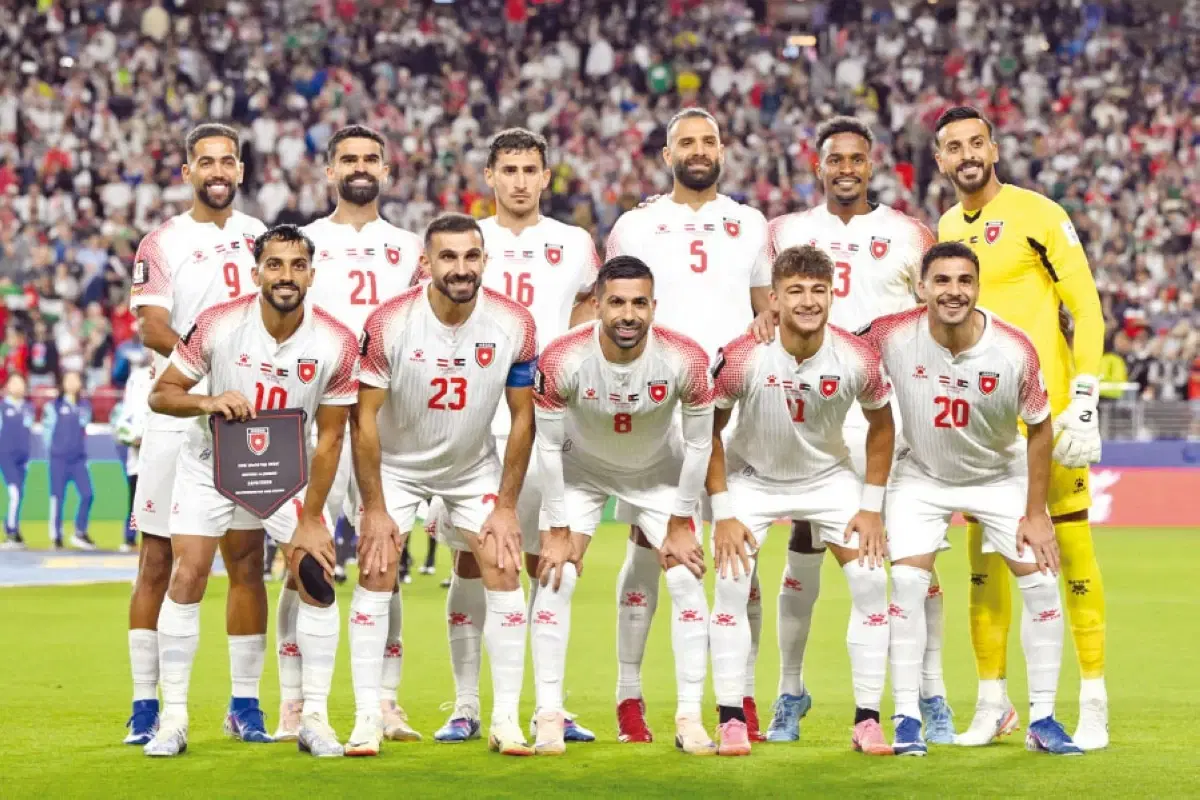
The "Al-Nashama" team entered the 2026 World Cup finals for the first time, placing Jordanian football on one of the largest sports competition platforms in the world. Reaching it was not a fleeting event, but the result of years of work and technical accumulation, during which the players' confidence in their ability to face teams with greater history and resources grew.
However, the final matches put the experience to a different test; Al-Nashama lost to Austria 1-3, in a match during which Ali Olwan scored Jordan's first goal in its World Cup history, then to Algeria 1-2 after taking the lead with a goal by Nizar Al-Rashdan, before ending its participation with a 1-3 loss to Argentina, with Musa Al-Taamari scoring Jordan's goal in the final match. Thus, the participation ended with three losses, with the team succeeding in scoring in all three of its matches.
In this regard, national coach Abdullah Abu Zema said: The experience cannot be reduced to results alone, nor is it correct to ignore them when evaluating performance. Facing teams at the level of Argentina, Austria, and Algeria is different from many regional tests in terms of decision-making speed, quality of transitions, exploitation of spaces, handling pressure, and maintaining focus throughout the match.
On the other hand, Abu Zema demanded that the difference in resources not be used as a pretext to close the door to criticism. Participation in the World Cup is an opportunity to discover gaps before it is an occasion to celebrate reaching it, and the teams that develop are those that turn their mistakes into practical lessons, not those that settle for justifying them with the circumstances of the competition.
Despite this, Abu Zema emphasized that Al-Nashama showed its ability to score against strong opponents and possesses elements capable of making a difference. However, maintaining performance under pressure, reducing influential errors, improving handling of transitions, and expanding options for the technical staff remain essential files in the technical review for the post-World Cup period.
Finally, he hoped that these lessons would be turned into a clear work program, rather than remaining in the memory of the tournament.
There is no single recipe that guarantees the development of football in all countries, but successful experiences often share a clear vision, continuous investment in age groups, competitions that give players opportunities to develop, and an administrative and financial environment that helps clubs continue.
A useful comparison for Jordan is not to choose an advanced team and call for its imitation, but to study the policies that made the difference and determine what can be applied locally according to resources and circumstances; what suits a country with a huge sports market and large financial resources may not suit Jordan using the same mechanisms.
Here, national coach Jamal Abu Abed called for defining the priorities that achieve the greatest impact, whether in qualifying coaches, increasing playing opportunities for age groups, developing stadiums and competitions, or building an integrated system that brings these elements together.
The former Al-Nashama coach pointed out that the Prince Ali Centers could form a practical entry point for this approach if they are linked to coach, club, and age-group national team development programs, and are subject to clear technical evaluation. The Association can also benefit from international participation data and performance analysis of teams to build a knowledge base that helps in making decisions instead of relying on impressions and temporary solutions.
Abu Abed continued: After the World Cup participation, Jordanian football entered a new phase with the Moroccan Badou Zaki taking over as coach of Al-Nashama, while eyes are turning to the 2027 Asian Cup and subsequent commitments. The phase requires, as he pointed out, a balance between maintaining the competitiveness of the first team and investing in the future by developing the football base. One of the two goals cannot be sacrificed for the sake of the other; the first team needs preparation, competitive matches, and well-thought-out technical choices, while age groups need continuity that is not affected by changes in technical staff or match results.
Abu Abed added: Future commitments should also be part of an integrated plan, not a series of separate camps and matches, so that each preparation period has clear goals, and the extent of their achievement is evaluated and lessons are translated into measurable technical adjustments.
In this context, he revealed the priorities, which consist of developing a multi-year national plan for player and coach development with clear performance indicators, ensuring the continuity of the Prince Ali Centers and linking their results to a path toward clubs and national teams, enhancing the financial sustainability of clubs and applying governance and transparency standards, and developing age-group competitions and giving youth actual opportunities with first teams.
He concluded: This requires preparing periodic technical reports on the performance of national teams, identifying strengths and weaknesses, and turning them into work programs, expanding partnerships with the private sector and educational and community institutions to provide additional resources and opportunities, in addition to publishing basic information about development programs and their results, allowing the media and the public to follow and evaluate progress on clear foundations.
The Al-Nashama experience proved that Jordanian football is capable of producing players who reach advanced competitive levels, but maintaining this path requires expanding the selection base and improving the quality of preparation.
Ahmed Hayel, who has appeared in many coaching roles at the club and national team levels, emphasized that talent, physical preparation, and desire alone do not make a fully capable international player; the player needs progressive training programs, physical preparation that fits the requirements of the modern game, specialized medical care, performance analysis, and development of mental and tactical skills, provided that this begins in the age groups, not when approaching the first team.
According to Hayel, preparing coaches is a key element in this equation; centers and academies, in his words, will not achieve their goals if qualified coaches who possess technical knowledge and the ability to deal with young age groups do not work in them, far from reducing training to quick results.
He called for building a clear path for the player that begins with discovering and developing them, then giving them the opportunity for competitive play leading to age-group and first national teams. Standards should also be set for the quality of academy work, their results evaluated, and linked to a national project for talent discovery, with attention to talent in the governorates and not concentrating opportunities in areas most fortunate in facilities and resources.
He concluded: The wider the selection base and the better the quality of training, the greater the ability of national teams to build competitive teams that possess multiple alternatives in different positions.
National technical director Nihad Souqar confirmed that developing Jordanian football requires a comprehensive plan based on clear pillars, starting from education and qualification, through competitions and infrastructure, to national teams and the first team.
Souqar said: Jordanian football possesses a wide fan base and great human potential, but we need tight organization and a clear structure that ensures the sustainability of development, far from temporary solutions.
He explained that the technical department must include a specialized section for training coaches through quality courses according to need, in addition to the promising players' section that relies on the Prince Ali Centers for promising players and lower school tournaments to form a solid base of talent.
Souqar stressed the necessity for the first national team department to be independent with a direct reference to the president or vice president, ensuring the independence of technical and administrative decisions and enhancing the fans' confidence in the team.
He pointed out that the Olympic, youth, junior, and cub national teams must be managed entirely by Jordanian staff to ensure the building of a national football identity, with foreign expertise used only in the first team when needed.
He added: Jordan, with its area and population, deserves a professional league of at least 14 teams, with a fundamental amendment to the third stage currently adopted in the professional league to ensure the fairness of the competition.
He also called for restructuring the first, second, and third division leagues, and canceling the knockout system in favor of a group system that gives players greater opportunities for friction and development.
He emphasized that rehabilitating school, government, and club stadiums represents a fundamental pillar, stressing that this system must also include women's football.
Souqar continued his discussion by calling for the establishment of a board of directors that includes the Football Association, the ministries of youth, health, public security, and civil defense, alongside banks, major companies, and provincial councils, to ensure that development is an integrated national project.
Amid the debate over the future of Jordanian football, the relaunch of the Prince Ali Centers for promising male and female players stands out as one of the steps that could lay the foundation for a long-term development project.
According to information published on the official website of the Football Association, the project is distributed across 65 training centers for males and females in various governorates of the Kingdom, targeting those born in 2015 and 2016.
The expert and most prominent founder of these centers, Souqar, emphasized that the importance of this step goes beyond the number of centers or targeted players, because it restores attention to the foundation upon which the system is supposed to be built.
He added: Success is linked to the quality of training, the competence of coaches, the regularity of programs, the availability of pitches and equipment, and the ability to follow the player's development for many years. It also requires clear criteria for selecting talent and ensuring that opportunities to join are not linked to place of residence, the family's financial ability, or proximity to football decision-making centers.
If the goal is to expand the base of participation, then geographical justice and equal opportunity, according to Souqar, should be among the most important evaluation criteria. The inclusion of promising female players also represents an opportunity to strengthen women's football, provided that an appropriate training environment, qualified staff, and clear paths for transition to organized competition are provided.
Souqar demanded that any work must be accompanied by a mechanism for strict evaluation and field monitoring on the pitches, and that it should not be limited to office reports, in addition to the importance of linking the centers to a national database for talent, periodic follow-up programs, and actual coordination with clubs and age-group national teams.
A national team capable of continuing to compete globally cannot be built through the first team alone; international performance is the result of work that begins at an early age and passes through clubs, coaches, competitions, and technical and medical programs.
The Football Association bears the responsibility of setting a long-term vision that links national teams to an integrated project for developing the Jordanian player, but the responsibility does not lie with it alone; clubs constitute the primary environment in which the young player gains playing minutes and competitive experience.
The reality of the clubs imposes questions regarding financial sustainability, infrastructure, sponsorship, investment, and the ability to retain talent and achieve a balance between the requirements of competition and development needs.
The Ministry of Youth and the Football Association addressed the file of governance and financial empowerment for professional clubs in a workshop last September, with talk of updating the club licensing system and introducing financial and accounting instructions to become a basic requirement for professional clubs.
This step represents an important beginning, but its impact depends on implementation, oversight, transparency in obligations, and the existence of realistic plans for resource management and clear accountability when requirements are breached.
Club development should not be limited to controlling expenses; rather, they must be helped to develop their resources, improve their age-group teams, invest in training, expand their fan base, and build sustainable commercial partnerships.
The importance of reviewing the local competition system and its ability to provide young talent with actual opportunities also stands out, as it is not enough to have a talented player in an age-group team unless an environment is provided that allows for progression and reaching the first team. Here, the necessity of coordination between the Association and the clubs emerges, as well as setting measurable goals for player development instead of working in isolation from each other.
The Al-Nashama national team's qualification for the World Cup gave Jordanian football a rare opportunity to expand its global presence, boost the confidence of players and fans, and open a serious discussion about the future of the game. However, opportunities do not automatically turn into sustainable achievements; they require decisions, investments, plans, follow-up, and a willingness to admit and correct mistakes.
Relaunching the Prince Ali Centers is a step that deserves support, but its success depends on its ability to produce male and female players, expand the practice base, and achieve justice in access to opportunities. The Association's efforts in developing infrastructure and governance should also be accompanied by measurable results at the club and national team levels.
In return, clubs bear the responsibility of investing in talent, coaches the responsibility of developing players, and the media the responsibility of providing professional criticism away from exaggerated praise or unjustified harshness.
Al-Nashama have proven that reaching the World Cup is possible, but the real challenge is for participation in major tournaments to become the result of continuous institutional work, and for the 2026 experience to turn into the beginning of a new path, not a beautiful memory we return to whenever we want to celebrate what has been achieved.
The question that should accompany Jordanian football today is not: Can we reach the World Cup again? But rather: What will we do to be more prepared when we arrive?
It is fair to view the Jordanian participation as a foundational experience, not a final judgment on the level of local football; Jordan underwent a new experience at the highest levels of competition, but the first experience should not turn into a ceiling for ambition.
What is required is not just repeating the qualification, but narrowing the technical gap with advanced national teams, raising the quality of the Jordanian player, and increasing the number of options ready for international competition, so that the national team's ability to perform well is not linked to a limited number of players.
This calls for a detailed review of the participation: the nature of recurring mistakes, how goals were conceded, the level of offensive effectiveness, dealing with leading or trailing in the score, and the difference between starters and substitutes. Publishing studied technical summaries, to the extent that professional considerations allow, enhances the culture of evaluation and accountability and gives fans a clearer picture of the challenges ahead.
It is not required to judge a historical experience, but to benefit from it before the same circumstances are repeated in a future event.