Field tours enhance government spending efficiency and improve service quality
Government tours to link directives with developmental impact
Amman5 min read
Share
Experts: Investing in people is the foundation for raising productivity and enhancing development
Economic experts confirmed that the field tour by Prime Minister Dr. Jafar Hassan in the Marka District, and the directives it included to develop health, educational, and vocational facilities, reflect a government approach that links following up on citizens' needs with improving the efficiency of public services and investing in human capital.
In statements to (Alrai), they pointed out that the importance of these tours goes beyond following up on the needs of institutions to include directing resources toward priorities, enhancing equity in the distribution of services, and linking government spending to measurable developmental outcomes.
The Prime Minister inspected health, educational, and vocational sites in the Marka District of the capital, Amman, yesterday, Monday, as part of his periodic field tours.
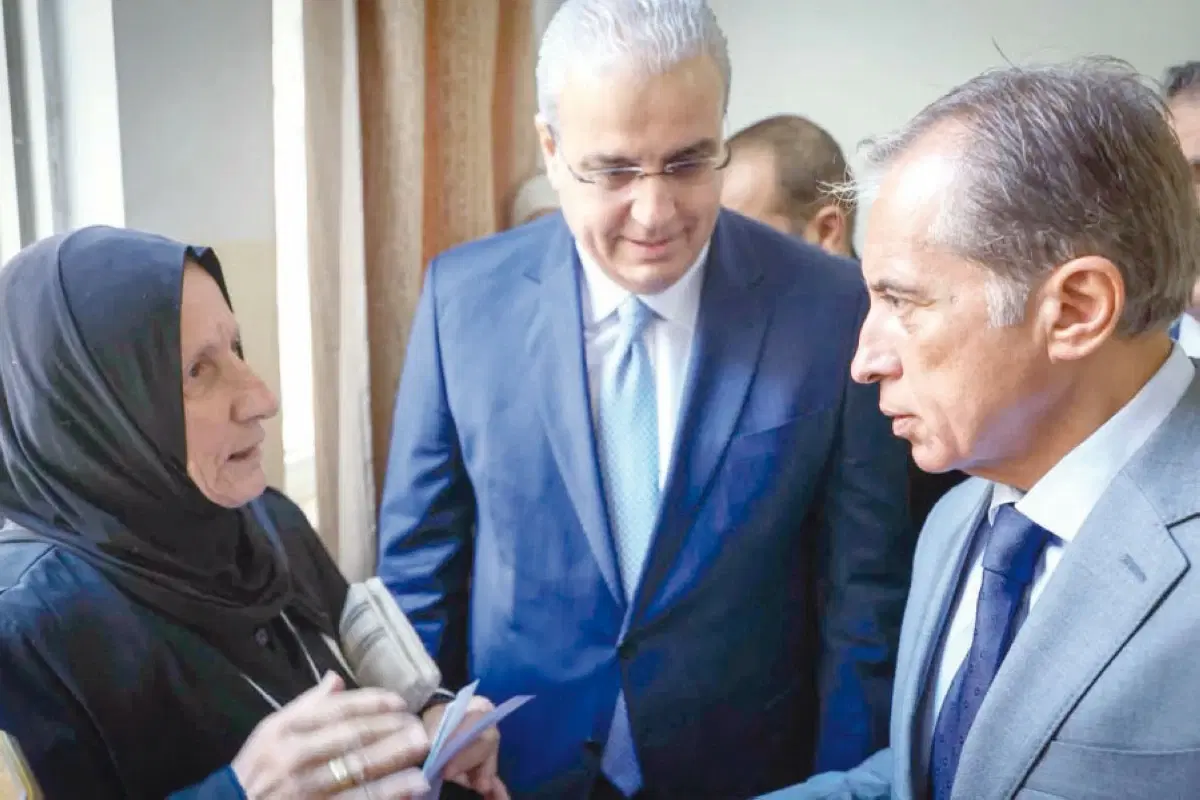
Hassan began his tour by inspecting the Hashmi Al-Shamali Comprehensive Health Center, where he listened to citizens, patients, and staff regarding the center's needs. In the presence of Minister of Health Dr. Firas Al-Hawari, he directed the modernization of its medical devices and equipment, providing it with the necessary staff, and rehabilitating and maintaining some of its facilities. The center serves about 120,000 people and receives nearly 15,000 patients monthly.
Economic expert Hossam Ayesh said that the most prominent message of these tours is that administration and policymaking start from the field, noting that their importance is not limited to the sites they include, but extends to enabling officials to see citizens' needs directly, rather than relying solely on desk reports.
He added that listening to health center patients and inspecting vocational training institutions and schools for the blind allows for identifying the actual needs of these institutions and the extent to which they achieve the goals for which they were established, which enhances the ability of officials to make decisions that are more responsive to reality.
For his part, economic expert Wajdi Makhamreh said that these visits reflect a trend to link government work to the actual needs of citizens and to enhance investment in human capital as a fundamental factor in raising productivity and stimulating economic growth.
He explained that directing resources to modernize medical equipment, maintain facilities, and develop educational and vocational institutions contributes to addressing service deficiencies and achieving better social and economic returns, pointing out that developing the Jordan Academy for Tourism and Hospitality represents an investment in qualifying youth and linking training to labor market needs, which enhances employment opportunities and productivity, especially in the tourism sector.
Makhamreh pointed out that developing a health center that serves about 120,000 people and receives nearly 15,000 patients monthly highlights the importance of directing resources to areas with high population density and increasing pressure on services, which supports social justice and eases health burdens on citizens.
He added that the attention given to the Abdullah Bin Umm Maktoum School for the Blind and the development of its facilities enhances appropriate education opportunities for people with disabilities and supports their future participation in economic and social life. He stated that the desired results of these tours include improving service quality, raising institutional efficiency, developing vocational skills, and aligning training outputs with labor market needs, which contributes to increasing productivity, job opportunities, and improving the quality of life.
In turn, financial and economic expert Dr. Mohammed Al-Hadab Al-Sarhan said that the importance of these tours goes beyond maintaining buildings and updating equipment to addressing needs that directly affect individuals' ability to work, learn, and participate economically, confirming that health, education, and vocational training are investments in the economy's productivity and long-term growth opportunities.
He explained that improving the services of the Hashmi Al-Shamali Health Center could contribute to early disease detection, reducing the need for more costly hospital visits, and minimizing the time wasted by citizens in commuting and waiting for treatment. He stressed the need to evaluate development according to indicators that include waiting times, speed of service delivery, and patient satisfaction, rather than just the volume of equipment.
Al-Sarhan pointed out that the employment rate of graduates from the Jordan Academy for Tourism and Hospitality, which is about 65%, represents an indicator that can be built upon to enhance the link between training and actual employment. He called for expanding the academy's partnerships with hotels, restaurants, and tourism establishments, and monitoring graduate employment rates, wage levels, and job continuity as more indicative measures of the return on vocational training.
He stated that developing the Abdullah Bin Umm Maktoum School for the Blind, which includes 338 students, represents an investment in equal opportunities and empowering human potential, explaining that updating educational tools, buses, and facilities expands students' opportunities to continue their education and acquire the skills necessary to enter the labor market in the future, and enhances the economic participation of people with disabilities.
Al-Sarhan suggested adopting a follow-up card for projects included in the field tours, containing specific dates for implementing directives and indicators to measure their impact, such as service quality and waiting times in health centers, employment opportunities and wage levels in training institutions, and the quality of education and student retention in specialized schools. He emphasized that publishing follow-up results periodically would enhance transparency and measure the actual impact of government efforts.
He concluded by saying that the economic value of these tours is magnified when directives turn into sustainable improvements felt by the citizen, and their results become measurable and evaluable, linking government work to the targets of the Economic Modernization Vision and Public Sector Modernization. He stressed that building a more productive economy does not depend on major investment projects alone, but also begins with improving healthcare, qualifying youth for the labor market, and providing educational opportunities that allow all segments of society to participate in development.