Approval of the legislative intent for the draft law amending the Administrative Judiciary Law for the year 2026.
Approval of the legislative intent for the draft law amending the Societies Law for the year 2026.
Follow Al Rai

Approval of the legislative intent for the draft law amending the Administrative Judiciary Law for the year 2026.
Approval of the legislative intent for the draft law amending the Societies Law for the year 2026.
Approval of the by-law amending the Regulation for Inclusion in Social Security Corporation Insurance for the year 2026.
Approval of the legislative intent for the draft Administrative Organization Regulation for the Accreditation and Quality Assurance Commission for the year 2026.
Approval of the legislative intent for the draft Administrative Organization Regulation for the Jordan Food and Drug Administration for the year 2026.
Approval of the Public Safety Regulation in the Aqaba Special Economic Zone for the year 2026.
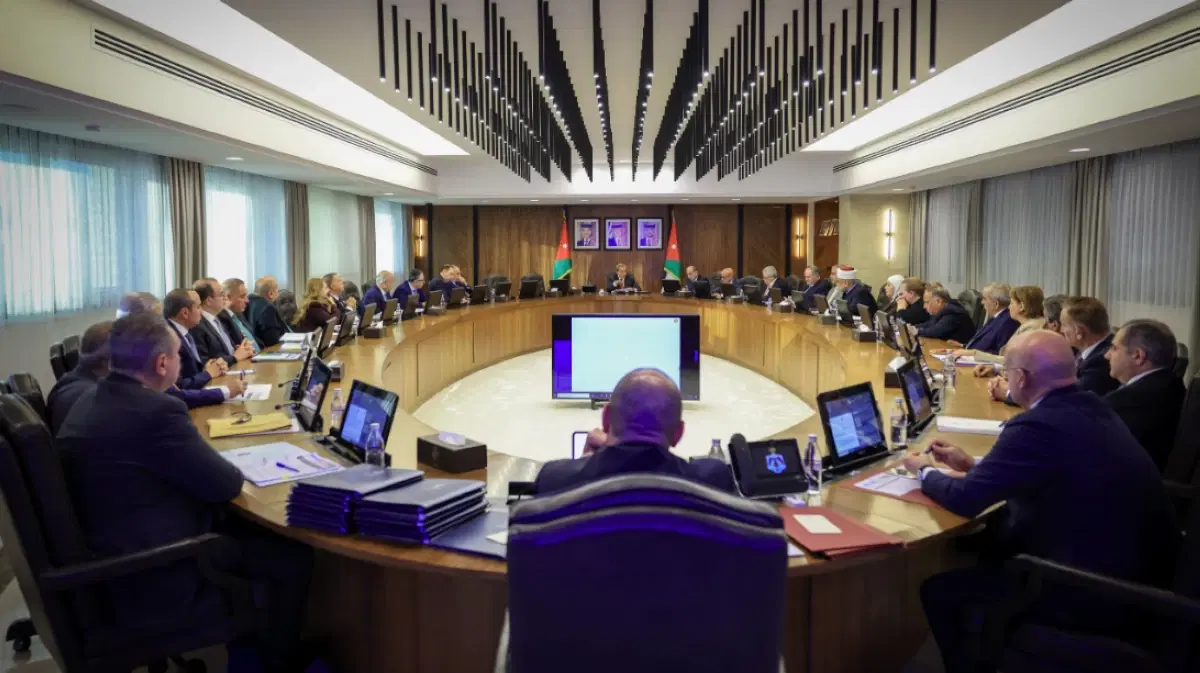
The Cabinet, in its session held today, Sunday, chaired by Prime Minister Dr. Jafar Hassan, decided to approve the legislative intent for the draft law amending the Administrative Judiciary Law for the year 2026, in preparation for its referral to the Legislation and Opinion Bureau to proceed with the issuance procedures in accordance with constitutional principles.
The amendment of the law comes in line with the outcomes of the Committee for Following Up on the Development of the Judiciary, as this law serves as a reference document that establishes the development of the administrative judiciary by transitioning the automation of judicial procedures from a mere procedural option to a general rule and a comprehensive legislative foundation.
The draft law addresses the legislative restrictions that previously hindered the expansion of the use of digital technologies, which were used as an alternative track in specific cases; this contributes to enhancing reliance on these technologies for the purposes of facilitating matters for citizens, improving procedures, and reducing litigation durations.
The amendments permit the holding of court sessions remotely through audio-visual systems—something that was not previously available in the administrative judiciary—as part of simplifying procedures and facilitating them for citizens, and to ensure the establishment of a unified and comprehensive electronic judicial file that is consistent with the national goals for digital transformation.
The amendments allow the submission of a request for reconsideration of judgments and decisions issued by the Supreme Administrative Court, which contributes to avoiding the practical problems resulting from the rejection of appeals on formal grounds without considering their merits; this provides a legislative cover and effective technical performance indicators sufficient to protect the administrative judiciary from the formal dismissal of cases, in order to preserve expeditious justice and ensure the stability of legal positions.
The amendments also grant the court the authority to request any evidence it deems necessary to decide on an urgent request submitted to it, which enables the court to better grasp the facts of the case and assess the necessity of taking quick interim measures to ward off imminent danger or preserve a current situation.
The importance of these amendments lies in developing the administrative judiciary as the body responsible for overseeing administrative decisions, protecting individual rights, and confronting any arbitrariness or تجاوز (transgression) of legal provisions.
The Cabinet decided to approve the legislative intent for the draft law amending the Societies Law for the year 2026, in preparation for its referral to the Legislation and Opinion Bureau to proceed with its enactment procedures according to established rules.
The draft amending law comes in line with the goals of the Economic Modernization Vision and the National Social Protection Strategy, and it aims to bring about a qualitative leap in the civil society sector by consolidating the principles of governance and transparency, and institutionalizing the process of evaluating and classifying societies based on their developmental outcomes.
The amendments provide the legislative cover for comprehensive digital transformation, in addition to prohibiting "dual membership," such that a person is prevented from being a member of the management board of more than one society falling under the same competent ministry.
The amendments also restrict "kinship" in administrative bodies up to the second degree to govern decision-making, with the exception of societies aiming to strengthen social ties in consideration of their nature, in addition to raising the minimum number of founders to ensure the presence of an actual general assembly capable of oversight, reaching 20 people for charitable and developmental societies, and 50 people for family social societies.
The amendments allow for creating a legal basis for establishing a comprehensive "electronic platform" to manage and document society procedures, activate interconnectivity and data exchange electronically with relevant entities to enhance transparency and accelerate achievement, in addition to institutionalizing the classification of societies by setting a legislative basis for evaluating them based on their performance level and the extent to which they achieve their goals, and transitioning from one level to another, linking this to incentives and support.
Furthermore, those in charge of societies will be obligated to disclose and identify donors and beneficiaries in detail and verify their eligibility and records, in compliance with national legislation and international standards for combating money laundering.
The amendments also include measures to reduce the financial and organizational burdens on societies by raising the threshold of the exemption of societies from the mandatory appointment of a legal auditor, so that societies with budgets of 5,000 dinars or more are subject to an external auditor's audit instead of the 2,000 dinar threshold currently in effect, while societies with budgets less than 5,000 dinars are subject to audit by the Ministry of Social Development, in addition to granting coalitions formed by two or more societies to implement joint programs a "legal personality" to facilitate their work.
The draft law also provides legislative cover for registering volunteer initiatives temporarily to implement specific community activities, and regulating the mechanisms for opening their bank accounts and collecting donations, in addition to tightening oversight and regulation by issuing a special and independent by-law for registering branches of foreign societies, tightening control over them, and determining the fate of their funds.
Under the amendments, the Societies Support Fund will be granted the right to issue a special by-law to regulate all matters and provisions related to it.
The Cabinet also approved an amending by-law to the Regulation for Inclusion in Social Security Corporation Insurance for the year 2026.
The amendments include expanding and introducing a new type of inclusion, the first of its kind in the history of the Social Security Corporation, which enables optional subscribers who join work covered by the provisions of the law at a wage lower than the wage they were previously covered on the basis of, to subscribe optionally for the supplementary wage difference.
This pattern allows subscribers to maintain the level of their previously covered wages, prevents their pension rights from being affected by moving to a job with a wage lower than the wage they were optionally subscribed on the basis of, grants subscribers greater flexibility, and encourages them to join a new job even if its wage is lower than their previous wage.
The amending by-law also introduced two new brackets for partial old-age insurance coverage, namely 10% and 25%, for self-employed individuals in freelance professions, so that the two brackets are commensurate with the circumstances and financial capacities of these workers, and enable them to obtain basic insurance coverage, especially work injury insurance benefits, because they are among the categories most exposed to the risks of work accidents.
The amending by-law also confers a clear mandatory character on the inclusion of workers via smart applications and enables the Corporation to apply a newly developed and fully flexible mechanism for their inclusion under the provisions of the law, so they enjoy the insurance protections it guarantees, and this mechanism reflects the volume of work they perform and the contributions paid on their behalf.
The amending by-law included new foundations for approving the ceiling for the annual increase in the optional subscription wage, and these foundations subject the ceiling to objective criteria based on the average wage growth of social security subscribers during the previous year.
The Cabinet decided to approve the legislative intent for the draft Administrative Organization Regulation for the Accreditation and Quality Assurance Commission for the year 2026, and the legislative intent for the draft Administrative Organization Regulation for the Jordan Food and Drug Administration for the year 2026, in preparation for their referral to the Legislation and Opinion Bureau to proceed with their enactment procedures according to established rules.
The amendments to the two regulations aim to develop the administrative and institutional structures in a manner commensurate with the tasks and requirements necessary for developing work, by amending the organizational structure in a way that reflects positively on performance and the completion of tasks to the fullest extent.
Within the framework of legislation regulating support for investment and the operations of certain economic activities, the Cabinet approved the Public Safety Regulation in the Aqaba Special Economic Zone for the year 2026.
The regulation comes for the purposes of enhancing and developing safety requirements in economic facilities, public utilities, complexes, buildings, parks, and schools in the Aqaba Special Economic Zone in line with technical developments, and in a way that strengthens Aqaba's position as a safe economic zone that is attractive for investment and business.
The regulation is compliant, complementary, and supportive of the regulations and instructions of the competent authorities, the Civil Defense, and the Public Security, and promotes integration among them and the exchange of information.
The regulation sets a unified and comprehensive framework for public safety in various sectors and activities within the zone, which enhances the protection of individuals, property, and the environment, raises the readiness of facilities to prevent risks and deal with accidents and emergencies, and supports the continuity of economic, tourism, and service activities.
The system covers four integrated stages: awareness, preventive measures, treatment and rehabilitation, and documenting lessons learned. It applies to all establishments, economic activities, entertainment venues, public events, beaches, residential complexes, and tourist camps within the Aqaba Special Economic Zone, expanding the safety umbrella to include places where citizens work, reside, or are visited by tourists.
The system is considered a framework for coordinating efforts and roles among institutions, with the aim of developing the public safety system, in addition to regulatory clarity that assists in planning, compliance, and enhancing business sustainability.
The system is based on the principle of prevention; it requires establishments to analyze work risks, identify their sources, evaluate them periodically, establish the necessary measures to mitigate them, and document and follow up on these procedures.
The system comes in light of the growing economic and tourism movement witnessed by Aqaba and in light of the required technical developments and updates in the areas of public safety, which have become an important requirement to encourage investment and economic activities; this necessarily requires strengthening safety measures in all economic, investment, tourism, and social facilities, relying on awareness and education, and benefiting from previous experiences in this framework.
The system requires establishments to prepare and update emergency and evacuation plans, have them continuously approved by the competent authorities, and conduct periodic drills in coordination with the Civil Defense, in addition to providing effective early warning systems that allow everyone present at the facility, including persons with disabilities, to deal with warnings and respond to them.
Protection mechanisms are not limited to work sites; the draft system sets safety requirements for event sites and tourist camps, including crowd management, adherence to capacity limits, organization of entry and exit, provision of alarm, firefighting, and first aid systems, and necessary services for the elderly, persons with disabilities, and children. In entertainment and game facilities, the draft system mandates the application of the highest safety standards in operation, conducting periodic inspections and maintenance of games, and providing qualified technical supervision during their operation, while defining the age groups and health conditions permitted to use each game and announcing them clearly to users.
The system also mandates taking necessary measures to protect road users during construction and maintenance works, and prohibits obstructing or occupying roads in a way that affects public safety without prior approval. It also imposes fire prevention requirements in buildings and residential complexes and mandates maintaining the safety of elevators and performing periodic maintenance on them.
The system adopts a unified readiness and early warning classification of four levels: green for normal conditions, yellow for raising readiness and monitoring with a potential for event development, orange for partial activation of the emergency plan when there is a high probability of occurrence, and red for full activation of the plan when the event occurs; to unify the understanding of entities and establishments regarding what must be done in each case.
The measures taken against violators of safety conditions are graduated; after a warning and written notice, work is suspended partially or fully, up to total or partial closure until conditions are rectified and safety requirements are met.
The Council of Ministers decided to approve an agreement for the project to expand and rehabilitate the Wadi Al-Shallala treatment plant, worth $68 million, which is scheduled to be signed during the activities of the Euro-Jordanian Investment Conference.
The project aims to double the plant's capacity from about 13,700 cubic meters per day to 30,500 cubic meters per day, contributing to an increase in the quantities of treated water and improving the efficiency of treatment operations.
The project comes within the framework of the Ministry of Water and Irrigation's efforts to enhance the efficiency of the sanitation sector and expand the provision of non-conventional water sources, by increasing the quantities of treated water suitable for irrigation purposes, which will contribute to substituting treated water for quantities of freshwater used in irrigation and providing this water for other uses, including drinking water.
The project works include adding and expanding a number of treatment units and updating and replacing necessary mechanical equipment, provided that all works are carried out within the current site boundaries of the plant, without the need for acquiring additional land, while maintaining the basic treatment technology currently used.
The Ministry of Water and Irrigation / Water Authority has initiated procedures for tendering the project by issuing the prequalification document for contractors, and the tender for consultancy services for the consultant supervising the implementation works has also been issued, in preparation for moving to the project implementation stages.
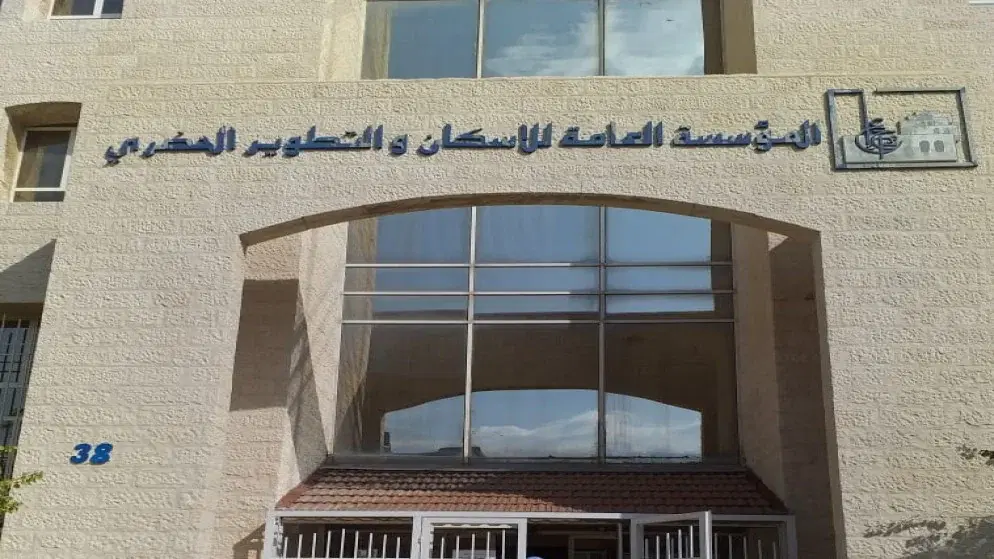
On another note, the Council of Ministers decided to retire the Director General of the Housing and Urban Development Corporation, Engineer Jumana Al-Attiyat, and appoint Amer Nayel Al-Daghami as Director General of the Corporation.
Know more about this story?Send us a tip
Ask about this report — answers stay grounded in its text.