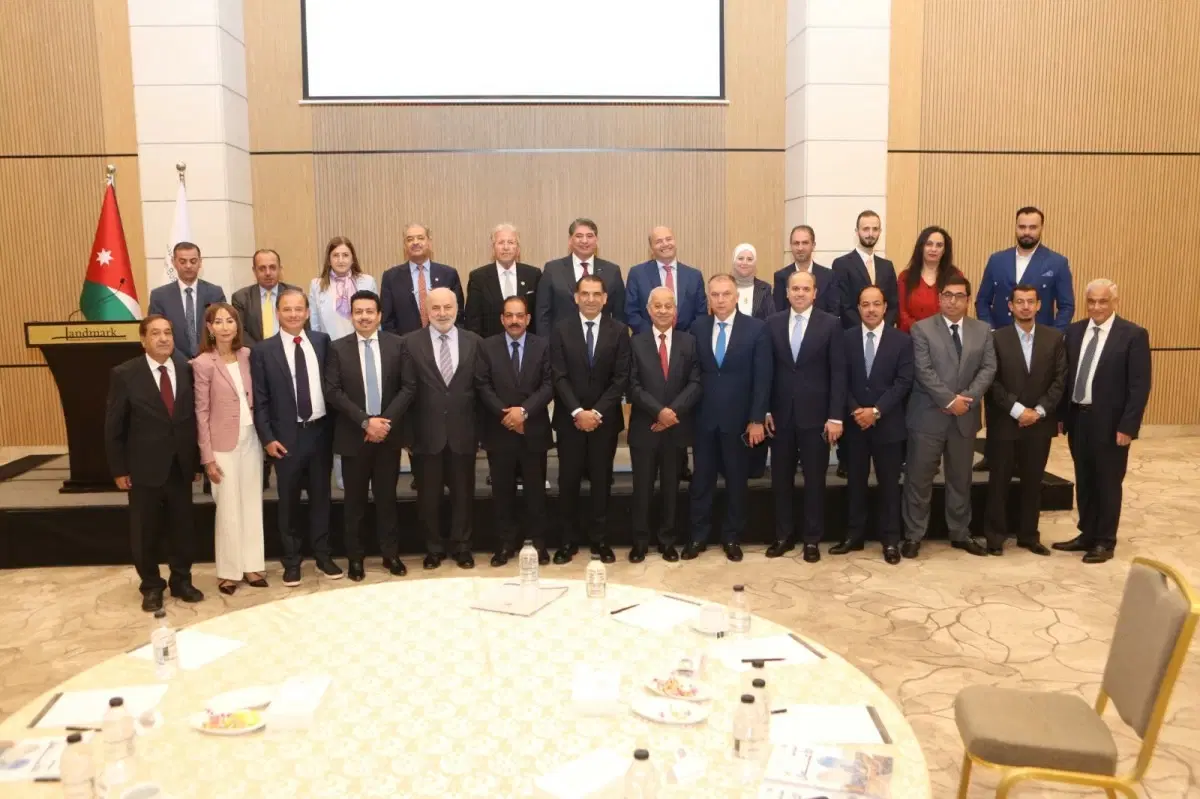
Al-Alawneh said that the implementation of the law directly reflects on the stability of commercial and investment transactions, the ability of business owners to manage their obligations and financial risks, and the maintenance of their companies' continuity and access to financing.
He stressed the importance of conducting a comprehensive assessment of the impact of the law's implementation after one year, with the participation of the private sector and relevant authorities, and utilizing the results of the implementation to develop and simplify procedures and enhance electronic solutions, in a way that increases the efficiency of enforcement and reduces delays, while achieving a balance between the speed of recovering rights and the continuity of establishments.
The seminar included two sessions. The first was titled "The Enforcement Law and Economic Impact," and featured the CEO of the Jordan Strategy Forum, Nisreen Barakat, the former head of the Jordan and Amman Chambers of Industry, Engineer Fathi Al-Jaghbir, and the President of the Jordan Bar Association, Yahya Abu Aboud, and was moderated by the Jordanian Businessmen Association board member, Rami Al-Sahib.
The session discussed the effects of the Enforcement Law on the economic sector and the business environment, including the impact of amendments related to imprisonment for contractual debts and checks on credit, liquidity, and trade, as well as the challenges facing merchants and small and medium-sized enterprises in collecting their dues.
The participants also discussed the importance of finding effective alternatives for enforcement, developing electronic procedures, strengthening the insolvency and restructuring path, and activating payment tools and guarantees, in a way that contributes to achieving a balance between the rights of creditors and the continuity of economic activity.
The second session was titled "The Enforcement Law and the National Dimension," and featured the President of the Economic and Social Council, Dr. Mousa Shtaiwi, the head of the Legal Committee in the House of Representatives, MP Dr. Aref Al-Saaydeh, and the Director General of the Association of Banks in Jordan, Dr. Maher Al-Mahrouq, and was moderated by the Vice President of the Jordanian Businessmen Association, Osama Imseeh.
The session discussed the Enforcement Law from the perspective of the national dimension and focused on the law's repercussions on economic and social stability and the national interest, as well as the importance of developing the enforcement system to achieve a balance between the rights of creditors and debtors and to preserve the continuity of economic activity.
It also addressed the most prominent challenges revealed by the practical application of the law and the possibility of addressing gaps through appropriate legislative and procedural amendments, in a way that enhances the efficiency of the enforcement system and takes into account the various relevant parties.
The seminar concluded with a number of recommendations, most notably conducting a comprehensive assessment of the impact of the Enforcement Law's implementation, reviewing relevant procedures and legislation, expanding the use of electronic solutions, strengthening insolvency and restructuring mechanisms, and developing payment tools and guarantees, in addition to finding effective alternatives for enforcement that ensure the rights of creditors and preserve the continuity of establishments and economic activity.