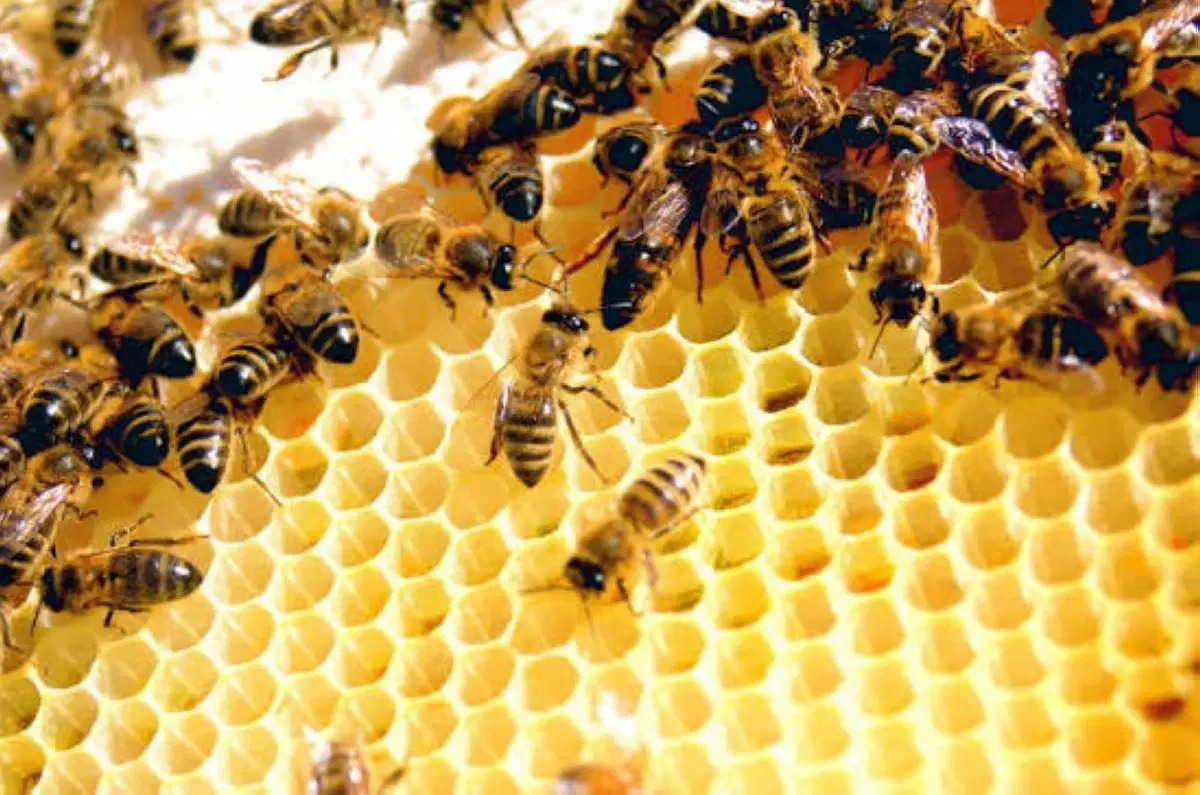
Bees on your balcony.. transient guests or a new colony?
Monitoring6 min read
Share
A home balcony may suddenly transform from a space for relaxation and plant care into a scene that causes anxiety, with the appearance of hundreds of bees gathered in a single mass under a chair or at a window ledge. Between the fear of being stung and the hope that the place will return to normal, an important question arises: has this swarm come for a fleeting visit, or is it preparing to build a new colony?
In reality, the appearance of large numbers of bees all at once does not mean they have reproduced on the balcony; it may be a swarm that has left its original hive in search of a new location to settle. In this case, the balcony might just be a temporary stop on a journey to find shelter, or a place that attracts them if it offers a suitable cavity to protect them from external elements.
Why do bees gather on balconies?
The University of Georgia explains that this phenomenon is linked to a process known as "swarming," which is one of the ways honey bee colonies reproduce. When the number of bees inside a hive increases, the colony prepares to produce a new queen, and then the old queen departs accompanied by large numbers of workers to establish another colony.
During the search for a new dwelling, the swarm stops in a suitable place and gathers around the queen in a compact mass, which may settle on a tree branch, a piece of furniture, or the edge of a building. At the same time, groups of scout bees set out to survey potential sites before the swarm moves to its new shelter.
According to the University of Florida, the swarming process is influenced by several factors, most notably hive congestion, limited space available for egg-laying, the availability of nectar and pollen, as well as the length of daylight hours and the age of the queen. This phenomenon is common among some honey bee breeds during spring, with its timing varying according to local conditions.
How do you know if the bees are transient or permanent?
The presence of a swarm on the balcony does not necessarily mean it will stay there. If the bees are gathered in an exposed mass, they may be in a temporary waiting phase before choosing a new location.
However, the continued movement of bees entering and exiting from a single hole in the wall or near pipes may indicate that the colony has begun to settle inside a protected cavity. Also, the appearance of wax combs or observing continuous activity at the site requires an assessment by a specialist to determine the nature of the gathering and the appropriate action to deal with it.
The Tennessee Department of Agriculture indicates that bee swarms usually leave their gathering sites within 24 to 48 hours, while the University of Florida explains that finding a suitable cavity may take from minutes to four days. Nevertheless, these remain approximate durations and do not guarantee the swarm will depart at a specific time.
Should you wait for the swarm to leave?
Waiting may be a suitable option if the bees are in a place far from human traffic and can be avoided without putting anyone at risk. The University of Georgia recommends leaving the swarm undisturbed when its location is safe, while keeping children and pets away from it.
Although a clustered swarm is usually less inclined to defend itself compared to bees inside a hive, this does not mean there is no risk of being stung. Therefore, one should avoid approaching it, touching it, or attempting to move it individually.
However, if the gathering is near the entrance of the house, windows, or frequently used areas, it is better to contact a professional beekeeper to collect the swarm and move it to a suitable location.
Why are vinegar or pesticides not recommended?
Some may resort to home remedies, such as vinegar, smoke, or spraying water and pesticides, in the hope of getting rid of the bees quickly. But these methods are not a reliable substitute for professional removal and may lead to scattering the swarm or complicating the problem.
The University of Maryland warns that killing bees inside walls with pesticides, without removing the colony, wax combs, and honey, may leave behind residues that cause odors and attract insects and rodents.
The importance of hiring a specialist increases when the colony is inside walls or parts of the building; these cases require expertise in removing the bees and wax combs, cleaning the cavity, and then repairing and sealing its entrances to prevent the bees from returning or another swarm from settling.
Simple steps to reduce the chances of bees settling
Although the passage of bee swarms cannot be completely prevented, reducing suitable nesting places may limit the chances of them settling in the house. The University of Florida recommends following a number of preventive measures, most notably:
Sealing cracks and openings: Inspecting the perimeter of windows and pipe entrances and closing gaps that lead to voids inside walls.
Securing ventilation openings: Installing suitable mesh that prevents bees from entering, while maintaining necessary ventilation.
Getting rid of neglected items: Removing unused boxes, containers, and equipment that may provide protected cavities.
Monitoring bee movement: Paying attention to repeated entry and exit from a specific opening, and requesting a professional assessment when continuous activity is observed.
It is important not to close any opening used by bees before ensuring the place is free of them or the colony removal is complete, so they are not trapped inside the building.
In the end, a bee gathering on the balcony may be just a short stop on a journey to find a new home, or it could be the beginning of a colony settling in a protected place. Between the two possibilities, the safest action remains monitoring the situation from a suitable distance, avoiding disturbing the swarm, and seeking help from a specialist when needed, which protects the residents and preserves the bees at the same time.