At the University of Jordan.. Gardens where nature harmonizes with science, place with humanity, and function with identity
"Spatial Zones" (Zoning)
Amman12 min read
Share
It happens at the University of Jordan... that the gardens scattered along its streets, between its buildings, and across its faculty halls are no longer merely places for rest, recreation, and casual meetings among students, as they prepare for other roles closer to and more connected with the place and the human.
It happens at the University of Jordan... that the gardens are getting ready to be an open laboratory, a national and archival memory, a spiritual space for contemplation, a place for science and learning, and an address for the identity of the adjacent faculty; and an extension of an environment that blends with it in its nature and geographical conditions, to become over time green spaces that speak of beauty and creativity; occupying the center of the visual landscape of the campus; carrying a meaning, telling a story, and offering a wealth of knowledge; thus, each acquires a role and function, and forms a personality such that hardly anyone passing by or crossing it fails to be stopped by its features or to read a line of its message.
This is what is happening at the University of Jordan now; where the "Zoning" project is one of the components of the campus modernization project that the university is currently implementing, stemming from a vision based on redefining spaces and outdoor areas, and giving each zone its character and function in harmony with the nature of the place and the colleges, programs, and specialties it embraces.
According to this vision, the garden will no longer be just a green space, and open areas between two buildings will not be left without a function or identity; rather, they will become an extension of the adjacent building and the college it embraces, drawing inspiration from its specialty and serving its students in a way that aligns with its academic programs and the privacy of its environment; to become a new outlet for science and knowledge, but this time outside the walls of halls and laboratories, thus making beauty a main component within an integrated system upon which the university's experience and mission are based; where nature harmonizes with science, place with humanity, and function with identity.
The idea of the "Zoning" project was not born in the moment, nor did it come as a result of an arbitrary decision made on the spur of the moment; rather, it came as the culmination of consultations, deliberations, and opinions, which produced a philosophical question that has long come to mind: How can we make use of the spaces scattered across the campus, especially if we closely examine its nature and total area of 12.224 km²; according to statistics from the Engineering Department at the University of Jordan, green areas account for 40% of its area, while corridors and streets occupy about 40%, and buildings and facilities form the remaining 20%.
This question was the beginning of the story of creating gardens and the mechanism of their distribution; its first chapters were drafted by the university's Engineering Department under the guidance of University President Dr. Nathir Obeيدات, as a comprehensive master plan for the campus was prepared in a modern style, based on investing in outdoor areas and distributing them across various parts of the university to achieve integration between buildings and the open spaces surrounding them.
After the University of Jordan has made advanced progress in updating its internal infrastructure of halls, amphitheaters, laboratories, and sanitary facilities, as part of the campus modernization project led by the university over the past two years, attention has turned to a new path of modernization; a path that moves from the inside to the outside, reshaping the spaces surrounding colleges and facilities and turning them into vibrant spaces that add a new dimension to university life, making them influential and active elements in the educational, cultural, and social experience, serving students, faculty members, university goers, and visitors.
Under this vision, work is currently underway to distribute the campus in a studied manner into zones that match the nature of the surrounding colleges and facilities, ranging from scientific college buildings and their surroundings, humanities colleges, medical colleges, as well as administrative buildings and other scattered areas whose surrounding environmental nature dictates the identity of their space titles, thus performing various educational, environmental, cultural, and recreational roles and functions.
This qualitative project is supervised by a committee representing an integrated working team headed by the Vice President for Administrative, Financial Affairs and Digital Transformation / Head of the Supreme Modernization Committee, Dr. Ziyad Al-Hawamdeh; with the Director of the Engineering Department as its rapporteur, and including representatives from the Supporting Services Department and the Maintenance Department, alongside faculty members from a number of relevant colleges, including the Faculties of Agriculture and Engineering, to benefit from their academic and technical expertise in designing these spaces and determining their needs.
This committee holds periodic meetings to follow up on the workflow mechanism, review emerging developments, and check on implemented stages to ensure the translation of the idea from a drawn plan on white pages into spaces where function harmonizes with beauty, and where the requirements of the place meet human needs.
The culmination of this project began with the modernization of the street adjacent to the presidency of the university and extending towards the clock tower, where the works included installing interlock tiles, rehabilitating and maintaining pathways, providing seats and sheds, improving lighting, planting greenery, placing trash cans, and providing internet services and coverage networks. This was followed by a subsequent phase represented by the implementation of modernization and development works in the streets branching from the clock tower area towards the faculties of Educational Sciences, Foreign Languages, Arts, the university restaurant, and sports activities, with a total area estimated at (18) thousand square meters.
Gardens for every college.. and a function for every garden
According to the project's plans, the gardens have been distributed between general ones serving the university community and visitors, and others associated with nearby colleges, carrying their identity and function; knowing that some of these gardens already exist, but work is underway to rehabilitate, develop, and equip them with modern services and components, while new gardens are being created in open spaces that were not previously invested in.
King Abdullah II School for Information Technology Garden
Work is underway to establish it to meet the needs of the college's students and provide an outdoor space that can harmonize with the nature of their specialties and university life, allowing them a space to sit, interact, and benefit from digital services.
Faculty of Foreign Languages Garden
It is one of the pre-existing gardens, but the project is moving towards rehabilitating, developing, and equipping it with components and services to make it more suitable for the college's students and visitors.
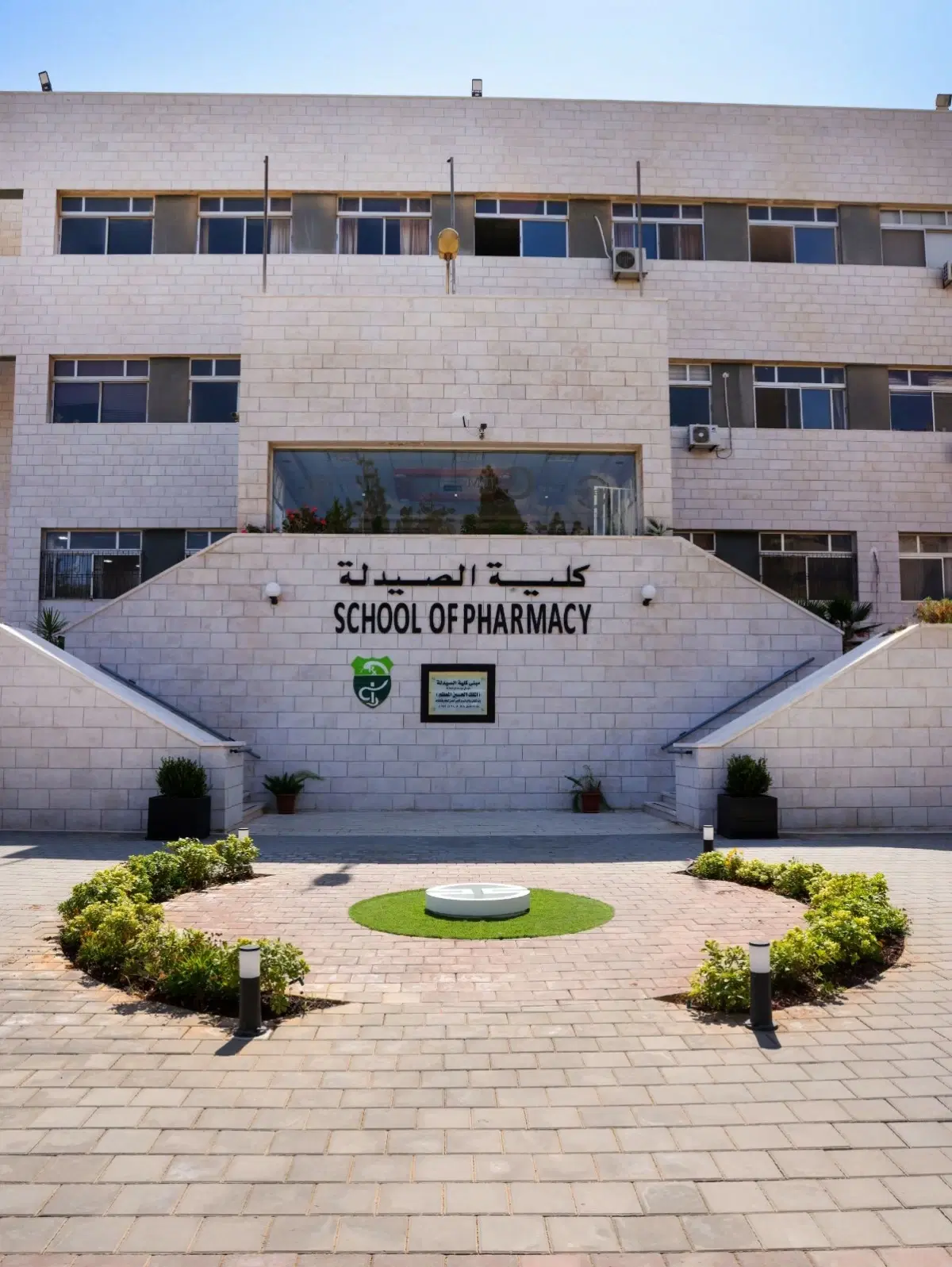
Faculty of Pharmacy Garden
The Faculty of Pharmacy garden adopts a specialized character in its creation, as it is being equipped to grow medicinal plants that form a supportive educational environment for students and researchers, allowing them to benefit from it in relevant studies and research.
Faculty of Agriculture Garden
Its creation took into account a scientific and applied character through planting it with plant types of benefit and value, to be a space that students can benefit from in learning, observation, and application, and to be an extension of what they learn inside the college.
The Heritage Garden near the Museum of Archaeology
Near the Museum of Archaeology, the garden there is being updated to take on a heritage character linked to national identity, becoming an open knowledge space showcasing models of heritage and archaeological landmarks and elements in Jordan, thus forming an extension of the museum's role in introducing the history and legacy of the Hashemite Kingdom of Jordan. Its role will not be limited to displaying these landmarks; it will also be equipped with informative QR codes attached to them, allowing visitors to access the most prominent information about them, transforming the garden into an interactive experience combining observation with learning about Jordanian history and heritage.
The Water Garden near the University Library
Near the University of Jordan Library, the idea of the water garden emerges, taking advantage of the location's nature and water abundance to develop it and add water elements and fountains, giving it a different character that enhances the presence of water as an aesthetic and environmental element at the same time.
The School Garden
The students of the university school also have a share of this vision; work is underway to develop the school garden near the school so that it is not merely a space for recreation, but rather an open educational environment that can embrace educational means and tools that students benefit from, giving the educational process an additional space outside the boundaries of traditional classrooms.
Faculty of Sharia Garden
In the vicinity of the Faculty of Sharia, the vision tends to develop the Sharia garden in a way that matches the nature of the college to be a quiet space characterized by an atmosphere of spirituality, which can be utilized for organizing and conducting remembrance sessions, Quran memorization, and religious activities that suit the nature of the college and its mission.
Those were examples of a number of gardens; some have been completed and their impact is clearly beginning to show, while others are nearing completion, with the creation of new gardens to follow in subsequent stages according to a well-studied timeline spanning two years or more. So far, about 25% of it has been completed, meaning the university has covered a quarter of the way, while other stages still lie ahead to fulfill this vision, whose spaces expand day by day.
The pace of completing this project is not tied solely to the university's internal capabilities, as it is heavily influenced by the support and external contributions it receives. This makes it an open space for participation by the university’s alumni, well-wishers, local community figures, and institutions, giving everyone who sees the university as part of their memory and present an opportunity to develop its spaces, thereby adding a fingerprint and leaving an impact.
The University of Jordan does not close its doors to those who want to leave a mark in it; rather, today it opens a new door for participation to members of the local community, institutions, and everyone connected to it through education, work, or memory, to contribute to a project that reshapes its external spaces and grants them new life.
President of the University of Jordan, Dr. Nathir Obeيدات, described the "Zoning" project as an "opportunity" for anyone who holds a love for the University of Jordan in their heart to turn that love into an impact by contributing to the creation of external spaces and green areas that are not merely beautiful, but carry a message, serve students, and add something lasting to the place. He pointed out that he does not view these contributions as mere assistance, but rather as participation in writing a new chapter in the story of the Mother of Universities.
Obeidat stated that the impact may start from a tree being planted, a garden being established, a space being prepared to be a place for knowledge and gathering, or an initiative through which its owner leaves a piece of their affection in the place that embraced years of their life. He emphasized that the University of Jordan, which turned knowledge into an extended story, deserves to have its alumni and well-wishers present in some of its chapters and to contribute to its advancement and elevation.
He noted that the turnout for contributing to the project reflects this connection, stressing that what is happening at the University of Jordan today is not just about new gardens or spaces, but part of a picture being painted for an upcoming phase, where the relationship with the university transforms from a memory preserved by the mind into an impact left in a place that has embraced successive generations of knowledge-seekers from Jordanians and various nationalities.
For his part, the Chairman of the Supreme Modernization Committee, Dr. Ziyad Al-Hawamdeh, said that the "Zoning" project constitutes a real and tangible addition in redesigning the campus, utilizing its open spaces, and turning them into an active part of university life. Thus, every space carries a function and identity that suits its location and the specificity of the adjacent college or building, providing students with places for learning, reading, meeting, resting, and interacting.
He pointed out that the implementation of the project is taking place according to well-studied plans that ensure the integration and harmony of work across various locations, in line with the general vision of the project to achieve the highest degree of utilization of available spaces. He noted that what has been achieved so far has been praised as a qualitative project in developing the campus environment and reshaping its relationship with the place.
Al-Hawamdeh emphasized that environmental sustainability represents one of the core considerations in the project, as areas are greened with plants capable of surviving and requiring lesser amounts of water, in harmony with the nature of the Jordanian environment and water resource scarcity. Thus, the greening works combine the beauty of the place with the proper management of its resources, contributing to the creation of a more comfortable, vibrant, and sustainable campus.
After taking it upon itself to give its spaces the care and development they deserve, the university today opens the doors of participation to everyone who holds a special place for it in their heart, inviting them to turn this love into action, so that they may have a share in one of the chapters of its extended story, with their name and the impact of their deed mentioned in its gardens, pathways, and spaces. The story in the "Zoning" project may begin with a tree being planted or a small initiative, but when it meets the affection of the university's sons and well-wishers, it will inevitably transform into an enduring impact that bestows upon the place a measure of the loyalty its people bore for it.