"Aqaba Special" signs 16 partnership agreements to enhance local development and empower the community
Amman6 min read
Share
The Aqaba Special Economic Zone Authority is opening a new path for participatory development by transforming the private sector's social responsibility into practical projects with a direct impact on the lives of Aqaba's residents and visitors.
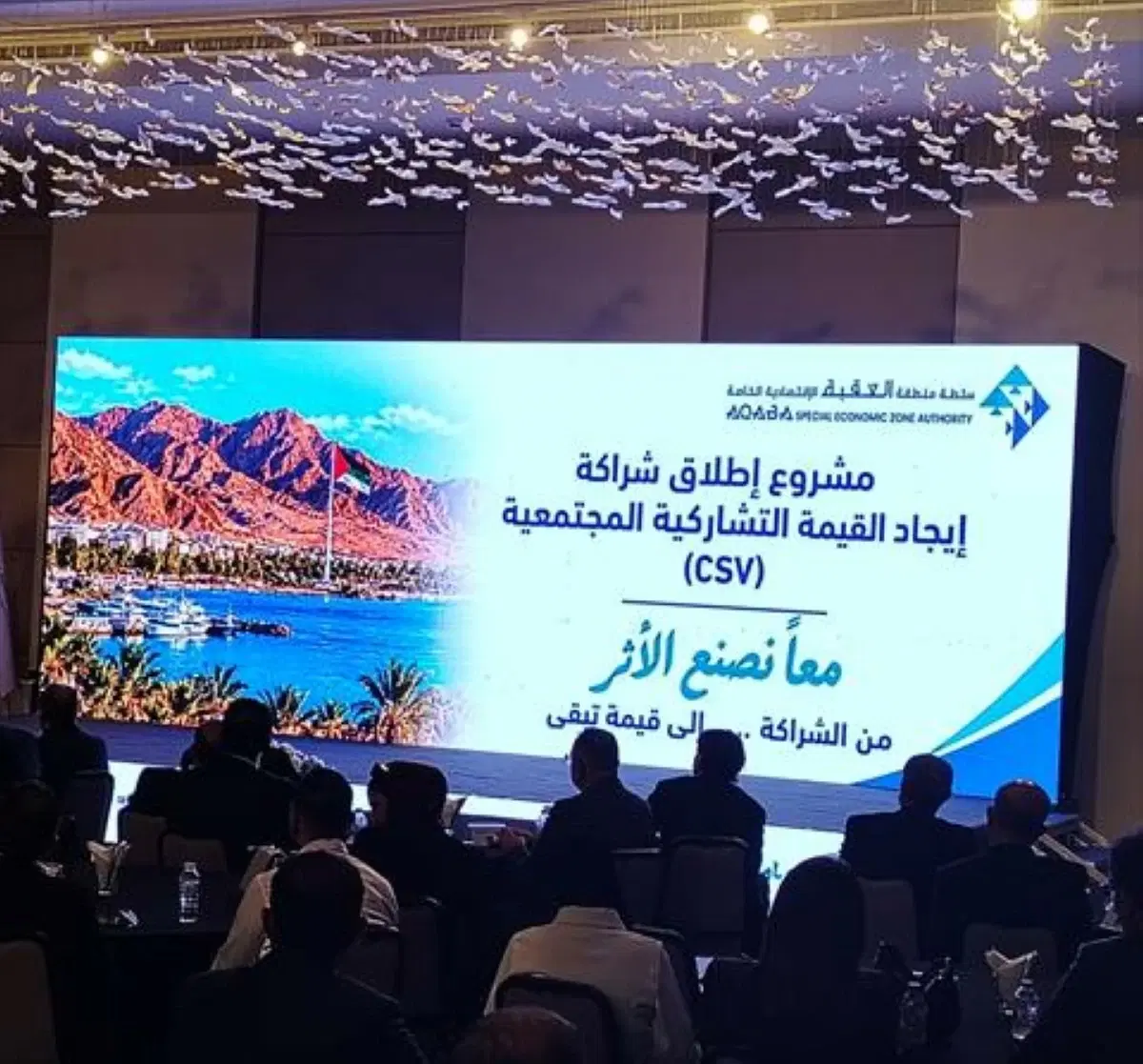
The "Aqaba Special" signed 16 partnership agreements today with the private sector during the launch ceremony of the "Creating Community Participation" project to support education and training, rehabilitate schools, and develop parks and public facilities, as part of a sustainable development approach that enhances opportunities for local community members and expands their participation in Aqaba's development journey.
The Chief Commissioner of the Aqaba Special Economic Zone Authority, Shaher Ramzi Al-Majali, emphasized that the partnership between the public and private sectors and the local community represents a fundamental pillar for supporting development in Aqaba, noting that the city possesses the qualifications and potential necessary to make this model a success through the integration of the roles of the Authority, government institutions, companies, and local community members.
Al-Majali stated that the concept of partnership goes beyond investment and economic activity to establishing social responsibility, so that the private sector becomes an active partner in identifying local priorities and contributing to addressing challenges through tangible initiatives that include education, training, sports, and the development of neighborhoods, parks, and public facilities.
He added that the goal is for citizens to feel the impact of the private sector's contribution in their daily lives, and for initiatives to expand from traditional support to volunteer work and development projects that respond to community needs, strengthen trust between various parties, and allow each partner to contribute according to their capabilities and expertise.
The Commissioner for Tourism and Youth Affairs at the Authority, Dr. Thabet Al-Nabulsi, emphasized the importance of the community partnership that brings together the private sector, government institutions, and civil society organizations, noting that the integration of roles between these parties forms a basis for implementing initiatives that respond to the needs of Aqaba's residents and support their future opportunities.
Al-Nabulsi said that the partners believe in the importance of supporting the local community, each within their sector and capabilities, through programs and initiatives that include training, rehabilitation, education, entrepreneurship, and community development, pointing out that the success of the experience in Aqaba could provide a model that can be replicated in other cities of the Kingdom.
He added that the signed agreements represent a practical translation of this approach, as the areas of cooperation are distributed between supporting schools and public parks, developing vocational and health training programs, providing transportation for trainees, and enhancing entrepreneurship opportunities, in a way that allows the utilization of companies' capabilities to serve the local community.
For his part, the Director of the Follow-up and Achievement Unit and member of the project committee, Dr. Murad Al-Bawab, said that the project has moved, eight months after its idea was proposed, to the stage of translating the partnership into projects and initiatives that are being implemented on the ground by combining the efforts of the government sector, the private sector, and local community members.
Al-Bawab added that the Aqaba Special Economic Zone Authority developed an integrated methodology to implement the project in successive stages, starting with proposing the general idea in February 2026 and introducing its goals and pillars, then communicating with 107 companies operating in Aqaba and holding meetings with them, with the aim of building effective and sustainable partnerships that respond to the development priorities in the city.
He explained that the Authority's team prepared a matrix for parties interested in the project and developed framework agreements to organize areas of cooperation and define aspects of joint work, leading to the signing of 16 agreements, which opens the way for the private sector to contribute to identifying priorities, formulating solutions, and directing resources toward the actual needs of the local community.
Al-Bawab pointed out that the project does not view Aqaba only as a destination for investment and tourism, but as a city with a local community that should be a partner in development and a beneficiary of its results, by expanding opportunities for education, training, employment, and entrepreneurship, and building the capacities of local community members and enhancing their participation in economic and social development.
Agreements to support education, schools, parks, training, and entrepreneurship
In the education sector, the Commissioner for Financial and Administrative Affairs at the Authority, Karima Al-Dabet, signed an agreement with the Aqaba Development Corporation to rehabilitate a school and a club for the elderly, in addition to an agreement with the Aqaba Logistics Village company to develop and rehabilitate schools. The Aqaba International Industrial Estate also signed an agreement to change school lighting at a value of 170,000 dinars, and the Aqaba Water Company provided support to the education sector.
In the field of developing parks and public facilities, the Commissioner for Infrastructure and Urban Affairs, Dr. Al-Mu'tasim Al-Hindawi, signed an agreement with the Red Sea Star Food Industries company to support the development and rehabilitation of a park in the Fifth District of Aqaba.
The Authority also signed agreements with Al-Shaab Roastery, Coral Beach Hotel, Al-Muasiron Group, and Belqees Modern Technology Company to develop a number of parks in Aqaba, starting from the city entrance to the internal parks, which contributes to improving public facilities, enhancing green spaces, and serving residents and visitors to the city.
In the tourism, youth, and entrepreneurship sector, Dr. Thabet Al-Nabulsi signed an agreement with the Orbit Aluminum Industries company to develop a training academy for local community members, while the Jia Clothing company supports the pillars of education, training, entrepreneurship, and local community development projects.
The Aqaba Transport and Logistics Services company will also provide buses to transport trainees participating in training programs, while the Islamic Hospital will dedicate an entire floor for training in the health sector, in addition to opening its doors to trainees to gain practical experience in this field.
In addition to the signed agreements, the KEMAPCO company contributed 20,000 dinars to support training and entrepreneurship, and the Ayla Oasis company provided direct support to these partnerships, which enhances efforts aimed at expanding rehabilitation and empowerment opportunities for local community members.
These partnerships seek to unify government and private capabilities and direct them toward development priorities in Aqaba, which expands the scope of local initiatives and enhances the private sector's participation in improving services and providing more sustainable opportunities for local community members.