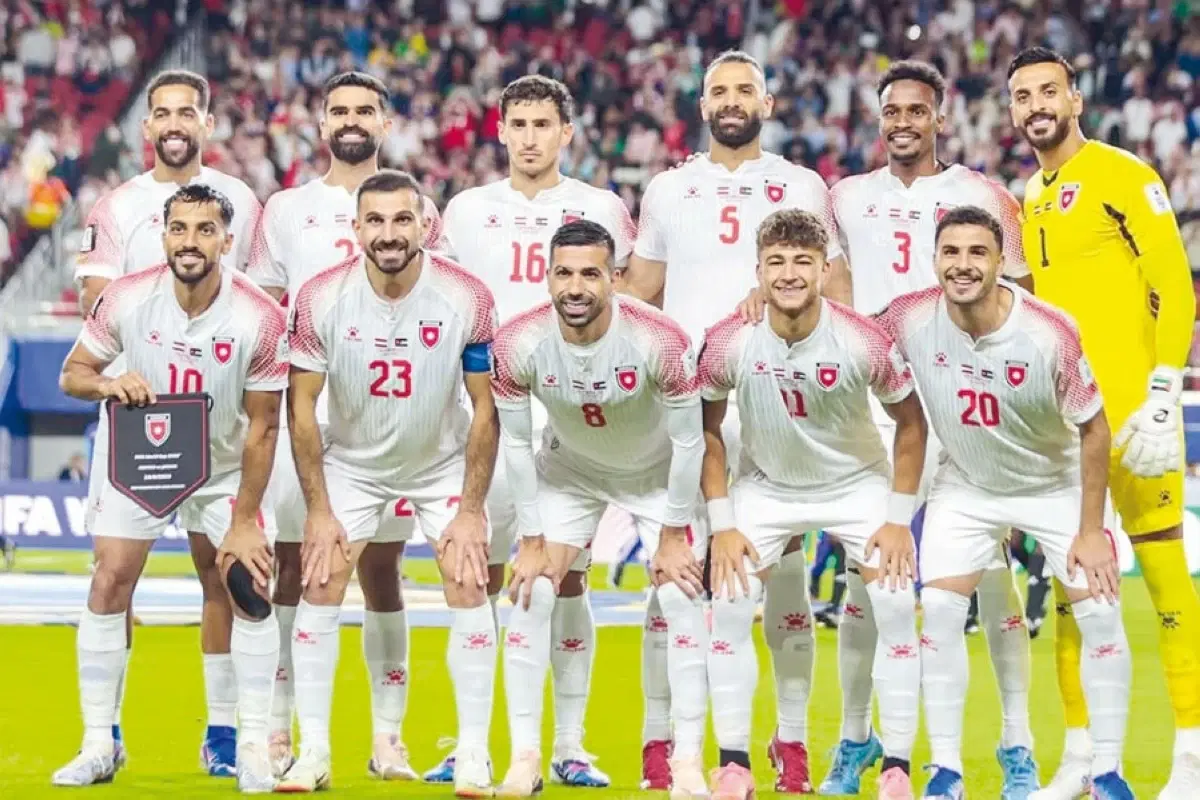
The eyes of Jordanian football fans are turning today, towards the headquarters of the Jordan Football Association, where the new technical director of the Knights, Badou El-Zaqqi, holds his first press conference, to announce the list of players who will participate in the upcoming gathering, which includes two friendly matches against Syria and Venezuela, in the first appearance of the Moroccan coach at the head of the technical staff of the Knights.
The conference, which starts at one o'clock in the afternoon, carries more than just announcing names; it practically presents the first features of El-Zaqqi's vision for the upcoming phase, and opens the door to numerous questions about his adherence to the composition that made the historic achievement of qualifying for the World Cup, or his tendency to make gradual adjustments, whether by summoning new names, or re-calling some players who have been away from the list over the past period. The Federation announced that the Knights will face Syria at eight in the evening on Sunday, the 27th of this month at King Abdullah II Stadium, before meeting Venezuela at the same time on Tuesday, the 6th of October next, on the same field.
El-Zaqqi's first exam
El-Zaqqi, who took over the leadership of the Knights with a one-year contract, came after the Moroccan Jamal Salama, following the historic phase that the team lived through in recent years, which was crowned by qualifying for the World Cup and reaching the final of the Asian Cup 2023, and the final of the Arab Cup.
Thus, the coach does not start from scratch; he has a group that has proven its presence in the biggest commitments, and he knows most of its elements well through his follow-up of Jordanian football and what the Knights have presented in the past period.
But in return, the post-World Cup phase imposes on El-Zaqqi to reconsider the details, especially since the next goal is clear: the Asian Cup 2027 in Saudi Arabia, where the Knights are in Group Two alongside Uzbekistan, Bahrain, and North Korea.
The Knights' Asian journey begins with a match against Uzbekistan on January 8 in Jeddah, then Bahrain on January 13 in Jeddah as well, before facing North Korea on the 17th of the same month in Riyadh, according to the tournament program published by the Asian Football Confederation.
And here specifically, the value of the matches against Syria and Venezuela stands out; they are the first real window for El-Zaqqi to test his ideas, and to start the field recognition process of his players, away from theoretical impressions.
Will the list continue as is?
The most prominent question among the fans before the announcement of the list is the extent of El-Zaqqi's reliance on the names that the public is accustomed to seeing with the Knights.
The basic names seem to be candidates for attendance, led by Al-Taamari, Al-Arab, and Alwan, along with a group of players who formed the backbone of the team in the previous phase. However, the coach also has the opportunity to expand the circle of choice.
Some names seem to be candidates for his accounts, especially the players who have imposed themselves with their clubs, or who have previous experience with national teams, along with young names that can form part of the future of the Knights.
Among the names that impose themselves in this context is Youssef Abu Jalbush ('Saysa'), who moved in August last year to the Algerian club Wydad Setif with a contract for two seasons, in his first professional experience outside Jordan, after his experience with Al-Hussein Irbid. Abu Jalbush plays in the right wing and attacking midfielder positions, which gives El-Zaqqi an additional option in building his list.
And it is noteworthy that the player's move to Algeria came at a time when the player and his new team were still at the beginning of the season, which puts El-Zaqqi in front of a delicate dilemma: should he summon the player based on his known level and potential, or wait for him to get enough playing minutes with Wydad Setif?
According to the Algerian club's match schedule, Wydad Setif will play a league match on September 19, so Abu Jalbush will have the opportunity to start his official journey with his new team almost simultaneously with the upcoming Knights gathering.
Injury file..
El-Zaqqi's list will not be immune to the injuries that accompanied the Knights in the last phase.
Yazan Al-Naimat remains one of the most prominent files; the striker who missed the World Cup due to a cruciate ligament injury, is close to returning to the fields after completing the rehabilitation stages, and moved to the UAE's Shabab Al-Ahly to continue his journey, after ending his relationship with Al-Arabi Qatar, and recent reports indicated that he has entered the last stage of rehabilitation, with expectations of his return to the fields soon.
Ibrahim Sabra's name also stands out, who is still in the physical preparation phase after the injury he sustained during the Knights' preparations for the World Cup, and according to a recent report, Sabra's return to competitions may be delayed until the second half of the Turkish league, which may make him out of the Asian Cup calculations as well if the period of absence continues according to current estimates.
This file will put El-Zaqqi in front of the necessity to deal with each player according to his medical and technical condition, not just his name, especially since the next phase needs players at the highest degree of readiness.
Goalkeeping.. An open door
One of the files that deserve to be followed is also goalkeeping; the list approved on the Jordan Football Association website includes Abu Layla, Nour Bani Atiya, and Abdullah Al-Fakhuri among the goalkeepers of the team.
It is natural that the competition between them is open in front of El-Zaqqi, especially as the new coach will need during the friendlies to test more than one option, and to know the ability of each goalkeeper to implement the requirements of his style, and not just rely on what the players presented in the previous phase.
And the matter is not related to the basic goalkeeper only, but to forming a complete system in this position, which includes a first goalkeeper, a ready alternative, and a third goalkeeper who can be trusted when needed, and we do not forget here that demands went to new names (Ilyas Samir) for example, and others who are performing well in the league.
Attack needs solutions
The attack may be the line that occupies the new technical staff's thinking the most.
The long absence of Al-Naimat, Sabra's injury, and the disparity in the readiness of some players, are all factors that make El-Zaqqi's options in need of a real test.
In return, the Knights have an important attacking group, led by Al-Taamari and Alwan, along with other names that can give the technical staff different solutions.
And here, the match against Syria can be an opportunity to give some names longer minutes, while the match against Venezuela may represent a more rigorous test of the ability to face a team that has different characteristics from a technical and physical standpoint.
Press reports specifically addressed the condition of the Knights' attacking line before the upcoming gathering, indicating that the readiness of a number of attacking options is one of the files that occupy El-Zaqqi's calculations.
Change and stability equation
The fans, of course, will follow the list with different eyes; the first is looking for the continuation of the group that made the historic achievement, and the second is waiting for new names that give the team additional blood.
But El-Zaqqi does not have the luxury of change for the sake of change.
The next phase needs to maintain the harmony that has been achieved, and at the same time discover new options before reaching the Asian Cup.
Therefore, the value of the first list does not lie only in the names that will appear in it, but in the message that the coach will send through it: will he maintain the basic structure? Will he give the opportunity to new players? Will he bring back some names that were absent? And how will he deal with players who have not yet received enough minutes with their clubs?
With all this, the questions seem more than the answers, which is natural at the beginning of a new technical era.
The public, who have become accustomed to specific names over the past years, wants to know how El-Zaqqi looks at the next phase, and who are the players he sees as capable of implementing his ideas.
As for El-Zaqqi, he has the opportunity in the matches against Syria and Venezuela to provide his answers on the field for the first time.
The first match against Syria will be the beginning of the actual work, while Venezuela comes as a second test that can be used to expand the circle of experience.
And between the two matches, every minute of play will be important, and every new name will be subject to follow-up, and every technical decision will be subject to reading, especially since the countdown to the Asian Cup has actually begun.
The Knights are entering a new phase after a historic station in the World Cup, and El-Zaqqi is entering it knowing that the ceiling of aspirations has risen, and that the fans are no longer waiting for mere participation, but want to see a team that maintains its identity, renews its tools, and goes to Saudi Arabia with the greatest possible readiness.
And from here, today's list is not just a list for two friendly matches, but it is the first features of El-Zaqqi's project with the Knights.