Al-Wazhif: The Amman Stock Exchange Award Reflects Government Policies Encouraging Investment
Amman5 min read
Share
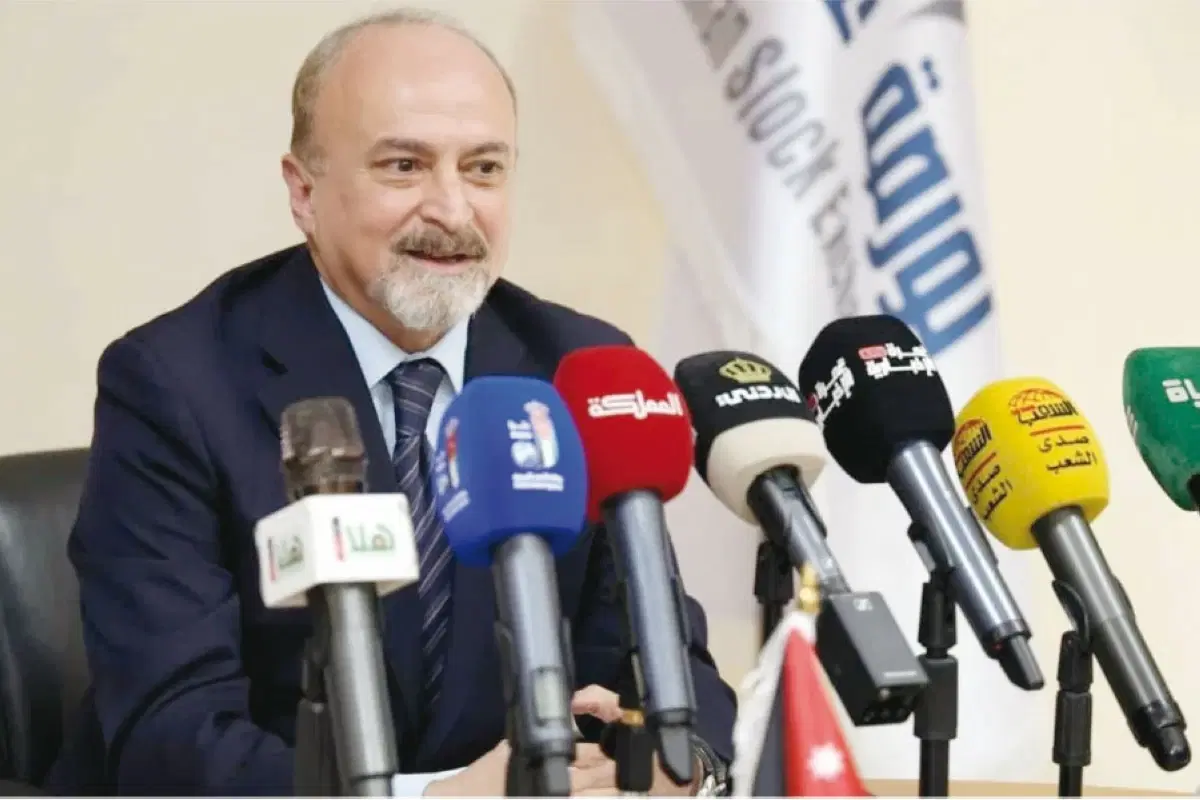
The Executive Director of the Amman Stock Exchange, Mazen Al-Wazhif, confirmed that the Exchange's receipt of the Arab Capital Markets Union Award for 2025 as the best performing Arab stock exchange in terms of price index growth, represents an important indicator of growing confidence in the national economy and the investment environment in the Kingdom, and is an achievement for all national economic institutions, not just the Amman Stock Exchange, in light of the ongoing reform and economic path witnessed by the Kingdom, which enjoys the attention and confidence of international institutions.
Al-Wazhif said, during a press conference held at the Amman Stock Exchange headquarters on Wednesday, to discuss the award, that this achievement comes within the context of the positive trajectory of the national economy, and the policies and economic decisions taken by the government that contributed to improving the investment environment, stimulating economic activity, and enhancing the ability of various sectors to grow, stressing that what the Exchange achieved reflects the strength of the Jordanian economy and its ability to face challenges, and enhances the confidence of investors and international institutions in the national economy, as confirmed by reports and evaluations of international institutions, foremost of which are the World Bank and the International Monetary Fund, regarding economic and financial stability and the Kingdom's continued implementation of economic reforms.
He pointed out that the Arab Capital Markets Union Award, which he received during the annual meeting and conference of the Union in Abu Dhabi, comes as a culmination of the performance of the Amman Stock Exchange during 2025, during which the general index recorded an increase of 45.1 percent, reaching 3611 points, compared to 2488 points at the end of 2024, recording its highest level since 2007, while Bloomberg data ranked the Exchange first in the Arab world and thirteenth globally in terms of financial market performance last year.
Al-Wazhif praised the economic policies pursued by the government over the past period, and the decisions that aimed to stimulate investment, revitalize the financial market, and increase liquidity, stressing that the results of the Amman Stock Exchange cannot be separated from the economic and investment environment provided by these policies.
He explained that among the most prominent government measures that directly affected market activity were the exemption of mutual investment funds from income tax, allowing non-Jordanian investors wishing to obtain Jordanian citizenship to move their investments within the stock exchange, along with the reduction of brokerage commissions and increased trading times, noting that these measures contributed to enhancing the attractiveness of the market and stimulating trading.
Al-Wazhif confirmed that what has been achieved is the result of the combined efforts of all capital market institutions, foremost of which are the Securities Commission, the Amman Stock Exchange, and the Securities Depository Center, along with listed companies and financial and brokerage services companies, pointing out that the upcoming phase requires building on these results and continuing to develop the Jordanian financial market and enhance its competitiveness and attractiveness to local and foreign investments, and continuing to develop electronic systems, legislative and technical frameworks, and implementing strategic projects emanating from the economic modernization vision and the stock exchange's strategic plan.
He pointed out that the number of investment funds operating has risen from one fund to four currently, in conjunction with improved liquidity levels and investor activity, considering these results to confirm the importance of continuing investment-stimulating policies and developing the legislative and regulatory environment to keep pace with the needs of investors and modern financial markets.
Al-Wazhif reviewed the most prominent indicators that reflected the strength of market performance last year, noting that the total return index rose by 58.52 percent, while the market value of listed shares rose by 50.1 percent to about 26.5 billion dinars, recording the highest annual growth since 2005, as trading volume rose by 80.6 percent, and the average daily trading volume rose from 4.4 million dinars in 2024 to 8.8 million dinars in 2025.
He said that the performance of listed companies was a major factor in supporting market performance, as their net profits rose by 12.9 percent during 2025, recording the second highest historical profit level, while companies continued their positive performance during the current year, recording an increase in net profits for the first half by 14.3 percent compared to the same period last year.
He continued that this performance reflects the ability of listed companies to continue their operations, expand, and achieve positive financial results, which reflects on the national economy, public revenues, and investment opportunities, especially since the positive performance of the stock exchange continued during the current year, in conjunction with the continuation of the positive trajectory of the national economy, explaining that the general index rose since the beginning of the year until the end of the trading session last Tuesday, September 29, by 15.7 percent, while the total return index rose by 20.1 percent, and the market value of listed shares by 14.5 percent.
Al-Wazhif explained that trading volume rose by 65.3 percent, while the average daily trading volume rose from 8.8 million dinars in 2025 to about 13.4 million dinars currently, stressing that these indicators reflect the continued confidence of investors in the market and listed companies, along with improved levels of activity and liquidity.
Regarding the development of the capital market, Al-Wazhif pointed out that market institutions witnessed during the past period a development in their technical, technical, and regulatory structure, through the implementation of the latest international standards and practices, noting the implementation of the electronic disclosure system using the extended financial reporting language (XBRL), which is globally accepted and compatible with international financial reporting standards (IFRS), enhancing the quality of disclosure and transparency and facilitating investors' access to financial information.