Al-Rawabdeh: Jordan was built as an authentic Arab homeland, resilient in the face of strife and challenges
Amman3 min read
Share
Former Prime Minister, Dr. Abdurrawouf Al-Rawabdeh, affirmed that since its establishment, Jordan has been built as an authentic Arab homeland, born from the womb of the Great Arab Revolt's nationalist project to serve as a pillar for the causes of its Arab and Islamic nation, foremost among them the Palestinian cause.
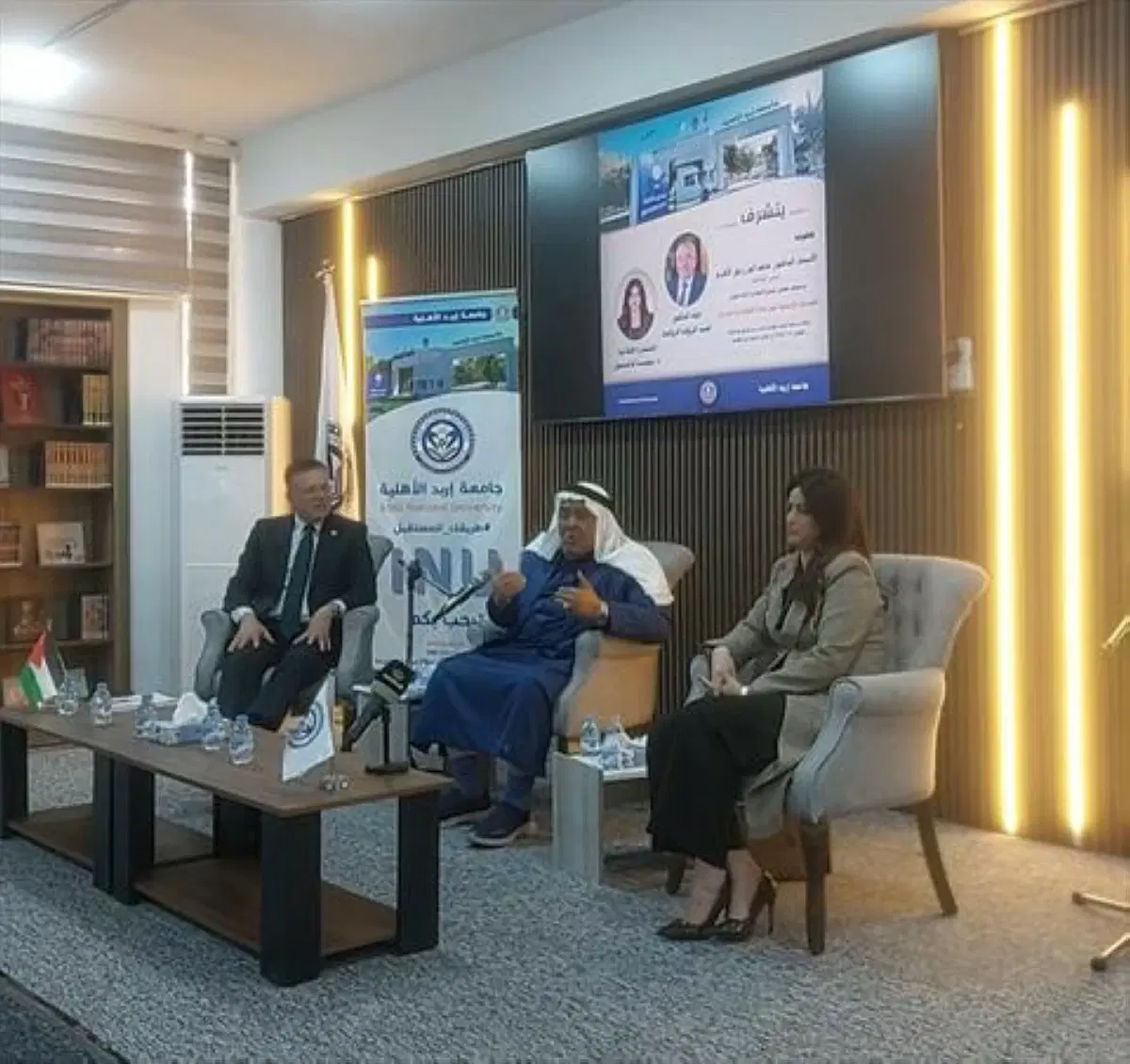
This came during an extensive dialogue symposium hosted by Irbid National University titled "The Jordanian Narrative: Between the State's Inception and Prosperity," in the presence of the university president, Dr. Majid Abu Zureiq, journalist Sonia Al-Zaghouli, and a crowd of faculty members, administrative staff, and students.
Dr. Abdurrawouf Al-Rawabdeh reviewed the features of the authentic Jordanian narrative, pointing out that it is based on a bright historical legacy embodied by the Hashemites and the Jordanian people, affirming that Jordan has remained loyal to its nationalist principles throughout its journey despite grave challenges and scarce resources.
Dr. Al-Rawabdeh addressed the historical junctures and conspiracies that targeted the region, shedding light on the ominous "Balfour Declaration" and the colonial policies led by Churchill, and how those international decisions and understandings contributed to dividing the Levant and carving out its parts to serve expansionist projects, emphasizing that Jordan stood as an impenetrable barrier against those schemes and preserved its identity and constants in defending the Arab nature of the land and the nation's historical memory.
Dr. Al-Rawabdeh pointed to attempts to ignite strife and tamper with the security of this homeland throughout historical junctures, stressing that Jordan was able to persevere and reach safety through the wisdom of its Hashemite leadership and the awareness and cohesion of its people, confirming that despite the difficult financial and economic challenges, and despite the collapse and fall of many regimes and countries in the region, Jordan remained steadfast, lofty, and resistant to defeat and discord.
At the beginning of the symposium, Irbid National University President Dr. Majid Abu Zureiq spoke, confirming that the organization of this event stems from the authentic national role that the university undertakes to shed light on the Jordanian narrative that every Jordanian is proud of. Dr. Abu Zureiq explained that hosting a national and political figure of the stature and acumen of Dr. Al-Rawabdeh represents a valuable and qualitative opportunity to pass on this ancient history and the experience of the Jordanian state to our students, and to introduce them to the roots of the national narrative and the honorable history of the homeland.
For her part, journalist Sonia Al-Zaghouli spoke about the importance of the role incumbent upon the Jordanian media in documenting the national narrative and preserving the memory of the birth of the Jordanian state and its journey over the decades, stressing the necessity of highlighting historical milestones and national positions with steadfastness and professionalism and conveying them to the rising generations.
Al-Zaghouli added in her speech that the Jordanian media is considered a key partner in consolidating national thought and confronting the campaigns and rumors that attempt to cast doubt on national achievements, confirming that presenting this historical narrative in an accurate and clear media framework contributes to building awareness among youth and students and strengthening their pride in their institutions and their Hashemite leadership.
At the conclusion of the symposium, an extensive dialogue took place between Dr. Al-Rawabdeh and the attendees, during which he answered students' questions and interventions regarding various national and historical issues.