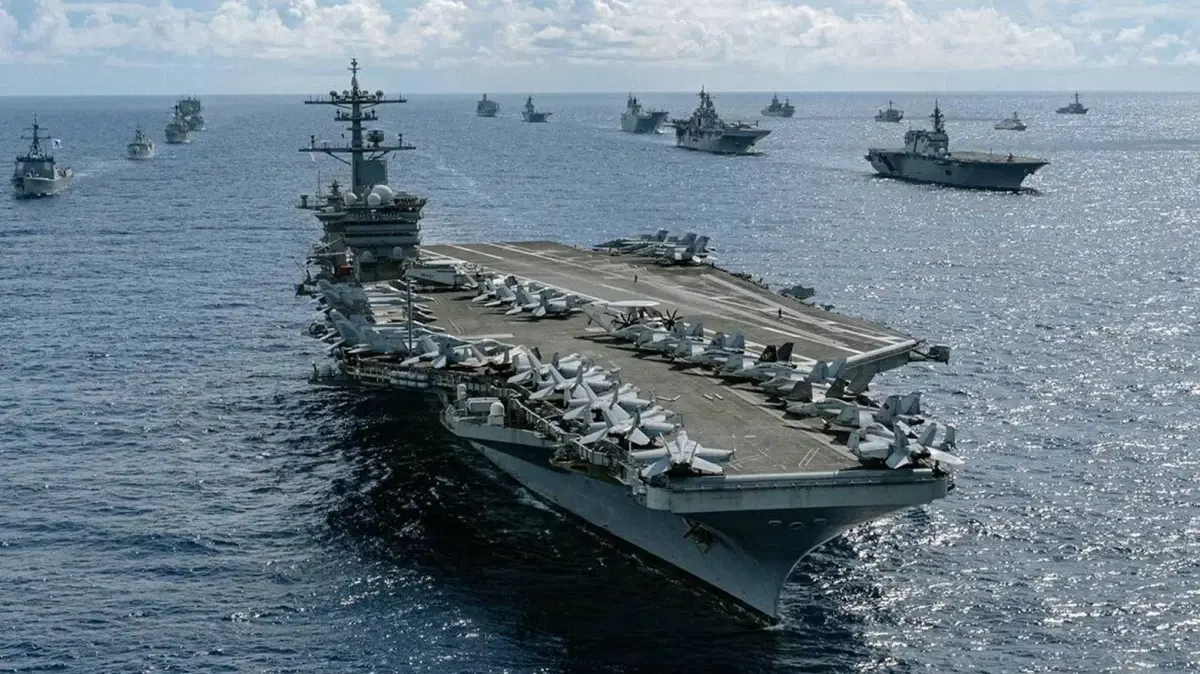
Aircraft carrier USS Lincoln returns to the United States after a long mission in the Gulf
Amman3 min read
Share
The US aircraft carrier USS Abraham Lincoln returned Thursday to its home port on the US West Coast, following a long deployment during which it participated in the war against Iran, raising concerns about the health of its crew members.
Military families lined the pier in San Diego, California, to welcome back their relatives after an absence of nearly a year.
The nuclear-powered ship left California in November 2025 on a mission in the South China Sea, before being redirected to the Middle East shortly before US and Israeli attacks on Iran began in late February.
The aircraft carrier remained at sea until it docked in Thailand in early September.
However, the prolonged deployment took its toll on US service members serving aboard the carrier and its strike group. In August, military families and lawmakers sounded the alarm in light of suicide attempts and food shortages.
Yet US President Donald Trump rejected those accusations, while Defense Secretary Pete Hegseth asserted that the situation had been "misleadingly portrayed."
The latter praised the crew of the Abraham Lincoln during his inspection of the carrier on Wednesday.
Hegseth told the sailors aboard the carrier in the Pacific Ocean, "What the Lincoln carrier strike group has accomplished, no other group has done before."
He explained that it "carried out 10,000 sorties, logged 23,000 combat flight hours, and nearly 4,000 combat sorties," before announcing the awarding of the Presidential Unit Citation to the group in recognition of its "extraordinary heroism in facing enemy forces."
He attacked the media, saying some tried to "turn the USS Abraham Lincoln into a symbol (...) of dysfunction," urging "the American people and the American media (to feel) pride."
The Trump administration acknowledged in a letter sent to a lawmaker last month that there had been eight suicide attempts among service members within the carrier strike group, but emphasized that none of them lost their lives.
The letter stated that although food supplies aboard the carrier were "sufficient," limited resupply operations during the war led to a reduction in the number of main meals available from two choices to one for a brief period.
Meanwhile, the aircraft carrier USS Gerald R. Ford experienced a series of problems during a 326-day mission. A fire broke out in a laundry room aboard the carrier in March, injuring two sailors and causing severe damage to about one hundred bunks, according to the US military, while US media reported significant problems with its sanitation system.