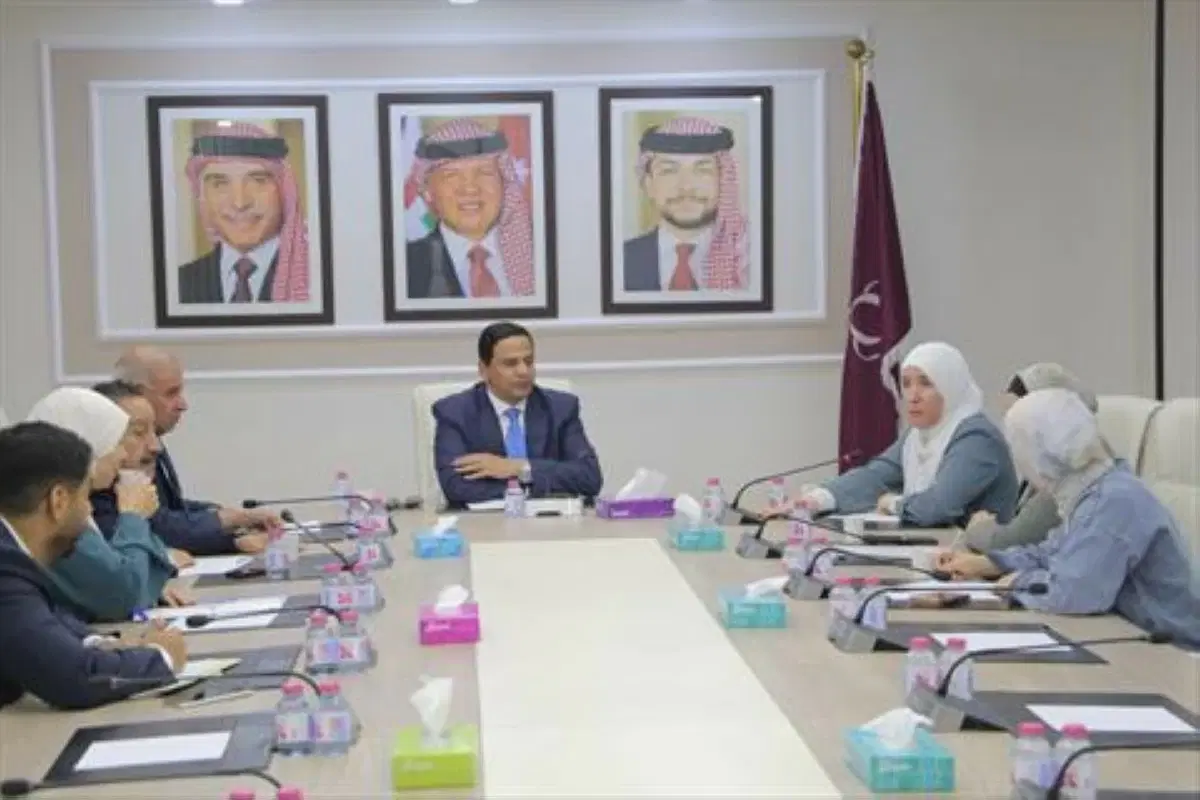
Abu Haniyeh to Alrai: Addressing the Challenges of Connection, Storage, and Protecting Subscribers' Rights
"Energy Committee" Proposes Recommendations for Renewable Energy Modernization.. and the Government Begins the Implementation Process
Amman4 min read
Share
The Parliamentary Energy and Mineral Resources Committee, chaired by MP Dr. Ayman Abu Haniyeh, continued its efforts to address the challenges facing the renewable energy sector, through a series of recommendations and proposals aimed at modernizing the legislative and regulatory framework of the sector, enhancing the stability of the electrical grid, and protecting the rights of citizens and investors.
These efforts come at a time when the Council of Ministers recently approved the justifications for a draft law amending the system for connecting renewable energy source facilities to the electrical system and exempting renewable energy systems and energy conservation for the year 2026, which opens the way for developing the regulatory framework of the sector.
The committee had submitted a package of recommendations on July 6 last year, following a series of meetings, technical and legislative discussions with government and regulatory bodies, sector representatives, and experts, focusing on mechanisms for connecting renewable energy systems to the grid, storage, load management, and sector sustainability.
Abu Haniyeh: The Renewable Energy File is a National File
Abu Haniyeh told Alrai that the committee treated the renewable energy file as a national file linked to energy supply security and grid sustainability and supporting the national economy, noting that its recommendations came after a technical and legislative study and extensive discussions with various stakeholders.
He added that the committee recommended transitioning from restricting the installed capacity of renewable energy systems to evaluating the actual technical impact of these systems on the grid, regulating actual energy exports, and adopting more flexible connection models that include net metering, zero export, and hybrid systems, alongside re-implementing the net metering system for the residential sector and regulating energy storage systems as an independent component.
He explained that the committee also focused on simplifying connection procedures and reducing their costs, creating a unified electronic platform for receiving connection requests, approvals, objections, and the accreditation of companies and equipment, with clear time limits for processing requests.
Abu Haniyeh pointed out that the recommendations included enabling subscribers to object to connection refusal decisions, allowing a transition to the zero export system when connection is not possible, and regulating various connection, storage, and hybrid system scenarios, taking into account the nature of residential, commercial, industrial, agricultural, tourism, municipal, and electric vehicle charging station sectors.
He emphasized the importance of protecting existing subscribers from any financial or regulatory burdens retroactively, preserving acquired rights, alongside compliance with international safety requirements and technical specifications and adopting engineering designs from qualified entities.
He noted that the committee included in its recommendations the development of the energy system in the longer term, through the preparation of a comprehensive national strategy for energy storage systems, the development of distribution networks to accommodate the expansion of renewable energy sources, and the enhancement of load management and energy efficiency.
It also called for strengthening oversight of the import of renewable energy equipment and ensuring their compliance with approved technical specifications, publishing lists of licensed entities, regulating the modernization and rehabilitation of renewable energy plants, and establishing clear frameworks for the post-expiration phase of power purchase agreements.
Abu Haniyeh said that the approval by the Council of Ministers of the justifications for the amended system comes as part of the process of modernizing the regulatory framework of the renewable energy sector, affirming that the committee will continue to follow up on the file with the relevant authorities, ensuring the addressing of the challenges discussed during the committee's meetings.
He stressed that the committee's role is not limited to making recommendations but extends to following them up with the concerned parties, monitoring the measures taken in this regard, listening to various parties, and monitoring the impact of decisions on citizens, investors, and economic sectors.
He confirmed that the committee, under his chairmanship and with the membership of the MPs, will continue to work on energy and mineral resources files according to a methodology based on technical study, parliamentary oversight, and follow-up on results, aiming to develop the legislation governing the sector, enhance national energy security, and support the competitiveness of the Jordanian economy.
The committee's recommendations on the renewable energy file reflect a process that began with studying the challenges and listening to the relevant parties, leading to the submission of technical and legislative proposals and the follow-up of the measures taken by the executive authorities in this field.