Abu Ghazaleh: The efficiency, education, and dedication of the Jordanian people are assets sought by investors and support growth
Amman6 min read
Share
Minister of Investment: Clarity and stability enhance investor confidence, and the Economic Modernization Vision is the compass for governments
Abu Ghazaleh: The number of registered foreign companies that have made Jordan their business hub grew by 23% during the first half of the year
Abu Ghazaleh: The Jordan-Europe Investment Conference cements the Kingdom's position as a gateway to regional and global markets
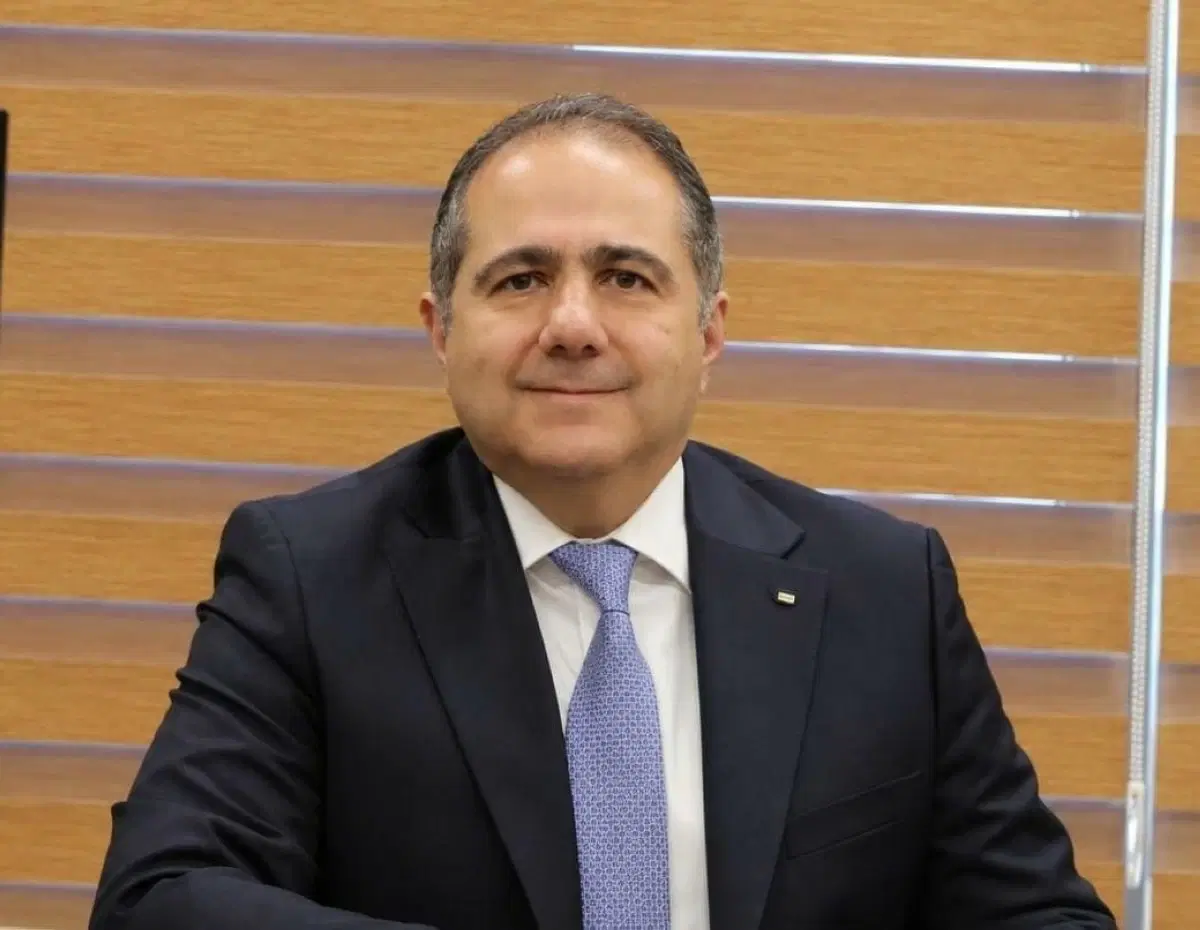
Minister of Investment Dr. Tareq Abu Ghazaleh affirmed that Jordan possesses important competitive advantages that investors look for, foremost among them digital competencies, educated youth, entrepreneurial spirit, and discipline and dedication at work.
During an interview with "CNBC Arabia," Abu Ghazaleh said that certain international policies and developments make investors more cautious in their decision-making, pushing them to seek an environment characterized by stability and clarity of vision.
He added that Jordan provides investors with a clear message that the Economic Modernization Vision serves as a national compass for successive governments, as it has established a clear and stable path for economic and investment policies, enabling investors to make decisions based on specific priorities and programs.
He pointed out that Jordan, despite challenges, continues to achieve economic growth and expand services, reflecting the state's ability to turn challenges into opportunities and plans into tangible projects and achievements.
Minister of Investment Dr. Tareq Abu Ghazaleh stated that the Jordan-Europe Investment Conference constitutes a strategic milestone in the implementation of the Economic Modernization Vision, a practical translation of the Jordanian-European partnership, and an opportunity to enhance the Kingdom's position as a safe and stable platform for business and investment, and a gateway to regional and global markets.
He explained that the conference, which is held under the Royal patronage of His Majesty King Abdullah II and the close follow-up of His Royal Highness Crown Prince Al Hussein bin Abdullah II, comes within a clear government plan to attract quality investments and accelerate the implementation of strategic projects that support economic growth and provide job opportunities.
He added that the conference will bring together an elite group of investors, representatives of funds, financial institutions, and companies, and will present them with well-studied and bankable investment opportunities characterized by clear returns, partnership models, and implementation mechanisms, particularly in the sectors of infrastructure, energy, transport, trade corridors, and technology.
He explained that the importance of the conference goes beyond attracting capital to building long-term economic partnerships and linking Jordanian opportunities with European funding, expertise, and markets, which raises the competitiveness of the national economy and enhances the Kingdom's ability to play a pivotal economic role in the region.
Abu Ghazaleh pointed out that the levels of economic integration and intra-regional trade in the Arab region are still below the available potential, which gives Jordan an opportunity to be an effective link between the markets of the region and the world, benefiting from its political and security stability, strategic location, free trade agreements, and its network of connections with regional and global economies.
He noted that the Jordanian people possess high efficiency and qualifications, an advanced level of education, as well as a spirit of initiative and dedication to work; these are fundamental assets that investors look for and support the economy's ability to grow and develop.
He emphasized that Jordan does not present itself only as a local market, but as a base for production, export, and regional business management, and a destination that enables investors to reach vast markets from a stable and reliable environment.
He indicated that geopolitical variables have prompted a number of foreign companies to reconsider their business locations and investments, and that Jordan has begun to attract a portion of these investments thanks to the stability and clarity of economic vision it provides, as well as the continuous development of the business environment, noting that the number of foreign companies that established centers in the Kingdom during the first half of the year increased by 23 percent.
He considered that this growth reflects the growing investor confidence in the Jordanian economy and the soundness of government reforms and procedures, stressing that the true value of investment is not measured by the size of capital alone, but by the job opportunities it generates, the income it provides to families, what it adds to the production of governorates and the Kingdom's exports, and the opportunities for growth and expansion it offers to Jordanian suppliers and companies.
He added that national economic indicators reflect its ability to withstand and grow despite regional and international challenges, in light of maintaining monetary stability, controlling inflation rates, the continuity of supply chains, and the expansion of infrastructure and service projects; these are factors that enhance confidence and support the sustainability of businesses and the profitability of investments.
He explained that the government has moved from providing general incentives to developing targeted solutions that address the needs of investors, sectors, and regions, through exemptions, incentives, and reduced tax rates, in parallel with simplifying procedures and automating services; with the aim of reducing time and cost, improving the investor experience, and enabling projects to start and expand efficiently.
Regarding the "Invest.jo" platform, Abu Ghazaleh confirmed that it represents the unified national window for investment information, opportunities, and services, shortening the investor's journey from research and exploration to studying the project, communicating with relevant authorities, and starting implementation.
He pointed out that the platform displays more than 120 large, medium, and small investment opportunities distributed across the various governorates of the Kingdom, which have been prepared and presented in a clear manner that allows the investor to identify the nature of each opportunity, its requirements, and its initial indicators.
He added that the platform provides a specialized calculator that helps the investor estimate project costs and build an initial perception of the feasibility study before making a decision, in addition to the "Ask Me" smart assistant service, which relies on artificial intelligence technologies and allows obtaining information and asking questions in more than one language.
He emphasized that automating services and linking them to the "Sanad for Business" platform, which the government is working to develop, reduces time, cost, and effort for the investor, and accelerates the transition of the project from idea to implementation and operation, which reflects on establishing new projects and providing more job opportunities.
Regarding regional affairs, Abu Ghazaleh indicated that the conference will open a space to discuss the role of Jordan and the private sector in supporting reconstruction efforts in Syria, confirming that the Kingdom, by virtue of its location, capabilities, and economic relations, is qualified to be a platform for companies wishing to participate in the projects of the next phase.
He confirmed that Jordan's location and expertise allow it to play a pivotal role in Syria's reconstruction projects, which opens new opportunities for Jordanian companies and service, logistical, and industrial sectors, and expands the horizons of employment, export, and regional economic cooperation.
He stressed that turning reconstruction opportunities into realistic projects requires effective partnership between governments, the private sector, and financial institutions, which allows for risk management and encourages productive investment, and contributes to supporting stability, development, and economic integration at the regional level.