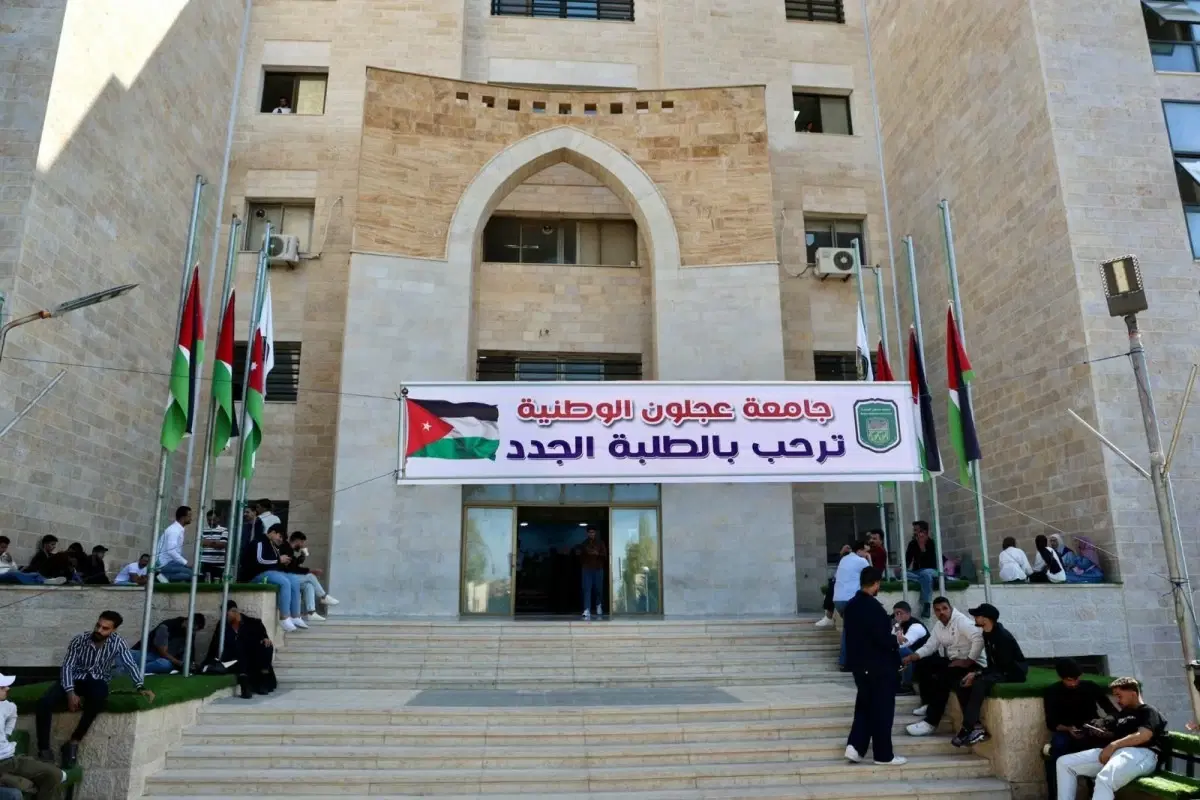
The President of the University, Dr. Mohammad Al-Widyan, confirmed that this achievement reflects the development of the scientific research system, the efficiency of academic staff, and their ability to produce quality research with a global impact, pointing to the university's keenness to provide a research environment that stimulates innovation.
For his part, the Dean of Scientific Research and Graduate Studies, Dr. Mohammad Shihab, said that the inclusion of 7 researchers this year compared to one researcher last year reflects the growing research presence of the university, the development of the quality of scientific production, and the increase in publishing in international journals.
At the German Jordanian University, the university achieved a new research milestone by including nine of its researchers and faculty members in the list of the top 2 percent of the most influential scientists worldwide for 2026, according to the Stanford-Elsevier classification.
The university said in a statement that this achievement reflects the excellence of the university's academic staff and their contributions to developing scientific research and enhancing the university's presence on the international academic scene.
The list included Dr. Ayman Al-Bataineh from the School of Applied Technical Sciences, Dr. Loai Jomaa from the School of Business, Dr. Samir Al-Dahidi from the School of Applied Technical Sciences, Prof. Diaa Zaidan from the School of Computing, Dr. Ahmad Al-Badareen from the School of Applied Medical Sciences, Prof. Raed Mosleh from the School of Sustainable Systems Engineering, Dr. Waleed Al-Zyoud from the School of Applied Medical Sciences, Dr. Alaa Khalifa from the School of Computing, and Dr. Samer Al-Abd from the School of Applied Medical Sciences.
At Yarmouk University, participants in the First International Conference on Sustainable Innovations in Engineering, organized by the Hijjawi Faculty for Engineering Technology, recommended enhancing applied research and partnership between universities, industrial sectors, and government agencies, and directing engineering research toward the needs of society and productive sectors.
The participants called for consolidating the concepts of sustainability and resilience in infrastructure by integrating climate change and disaster risks into planning, design, and operation processes, and developing asset management and preventive maintenance to ensure the safety of facilities and the continuity of services.
They emphasized the importance of supporting low-environmental-impact technologies and materials, developing sustainable building materials, reusing waste, expanding the use of clean energy, and increasing the efficiency of energy and water consumption.
They stressed the necessity of employing artificial intelligence and digital transformation technologies responsibly in the fields of design, manufacturing, project management, and monitoring, while ensuring data quality, verifying results, protecting information, and adhering to ethics and professional responsibility.
In the field of engineering education, the participants recommended updating curricula and enhancing continuous training to keep pace with sustainability requirements and technical developments, and expanding opportunities for applied learning.
The conference witnessed the participation of specialists, researchers, experts, and those interested in the fields of engineering, technology, and innovation from 45 countries around the world.
At Zarqa Private University, students of the Faculty of Media concluded their participation in the activities of the Fourth Future of Media and Communication Forum 2026, organized by the Center for Defending Freedom of Journalists over the past two days under the slogan "The Future of Media and Communication: A Changing World," under the patronage of the Minister of Government Communication and Government Spokesperson, Dr. Mohammad Al-Momani.
The students' participation witnessed an active presence in specialized training workshops and a contribution to the media coverage of the forum's activities, which brought together journalists, experts, academics, and content producers from Jordan and a number of Arab and foreign countries to discuss the rapid transformations in the media and communication industry and to foresee the future of the profession in light of digital and technological development.
The training workshops and accompanying activities of the forum provided students with the opportunity to learn about professional and technical developments in media work and to interact directly with experts and practitioners.
The faculty's students contributed to covering the forum's sessions and activities, documenting them, and producing media materials about them, while practicing editing, photography, and digital media production skills within a professional environment that simulates the requirements of journalistic work.
The Dean of the Faculty of Media, Dr. Othman Al-Tahat, confirmed that the students' participation in specialized forums represents a fundamental lever for developing their professional and digital capabilities and deepening their understanding of the transformations witnessed by the media and communication sector, pointing to the faculty's keenness to provide training and field opportunities that enable students to move from theoretical knowledge to practical application.
He explained that the students' participation in the media coverage of the forum gains special importance due to the direct exposure it provides to the requirements of journalistic work, the application of editing, photography, and digital production skills, and dealing with major events according to professional principles and media standards.
Al-Tahat added that the development of media education is linked to the ability of academic institutions to keep pace with technological developments and to provide students with the digital and creative skills necessary to engage in the labor market.
He emphasized the faculty's endeavor to expand its partnerships with media and professional institutions and to enhance the participation of its students in conferences, forums, and specialized training programs, praising the experiences that contribute to building a qualified media personality, enhancing students' confidence in their abilities, and preparing them to transition to professional life with competence and capability.
The Development and Quality Assurance Unit at Zarqa Private University, in cooperation with the Faculty of Dentistry, also organized a workshop entitled "Interactive Learning and Employing the (H5P) Tool in University Teaching," with the aim of enabling faculty members to design interactive educational activities and employ digital technologies in developing teaching methods and improving the quality of learning outcomes.
The Assistant to the University President for Quality and Development Affairs, Dr. Reda Al-Mawadiah, emphasized the importance of keeping pace with technological developments in university education and employing modern digital tools in renewing teaching practices and enhancing the effectiveness of the educational process.
He pointed to the role of these technologies in providing a stimulating educational environment that allows for the diversification of teaching strategies and encourages students to interact and participate, which reflects positively on the quality of learning and its outcomes.
For her part, the Dean of the Faculty of Dentistry, Dr. Nisreen Al-Salem, emphasized the importance of integrating interactive learning methods and modern technology into teaching university courses, due to the opportunities they provide for enriching the educational environment.
The workshop was presented by the Head of the Faculty Development Department, Dr. Mohammad Al-Abdallat, who reviewed the basic concepts of interactive learning and the capabilities of the (H5P) tool and its applications in designing digital educational content, which allows for the development of educational activities that encourage students to participate actively.
The workshop included both theoretical and practical aspects; the first included an introduction to the foundations of interactive learning and ways to employ digital tools in university teaching.
The practical aspect focused on training participants to use the tool in preparing interactive educational activities and materials that can be employed in university courses, while taking into account the nature of teaching and educational applications in the dentistry specialty.
At Al-al-Bayt University, the Faculty of Technical Education organized a scientific exhibition entitled "Towards a Renewed Medical Future.. Together for Safe Hands," with the participation of faculty members and students of the department, and under the supervision of the department's Community Service and Community Health committees.
The Dean of the Faculty, Dr. Majid Harahsheh, confirmed that organizing this exhibition comes within the framework of the faculty's keenness to continue implementing scientific and academic activities aimed at supporting the educational process, enhancing health and medical awareness among students, and highlighting the importance of safe medical practices.
He added that this event is in line with the university's directions toward modernization and development, interest in educational infrastructure, and the enhancement of supportive medical specialties and applied and digital medical skills.
The exhibition included a group of awareness and practical corners, which aimed to introduce new students to the newly introduced specialties, academic programs, and their professional fields through the distribution and display of guidance brochures.
It also included practical demonstrations on the correct use of personal protective equipment, respiratory therapy, immediate first aid and emergency care, and the latest radiology technologies, which contributes to enhancing practical skills among students and consolidating concepts of safety and sound medical practice.