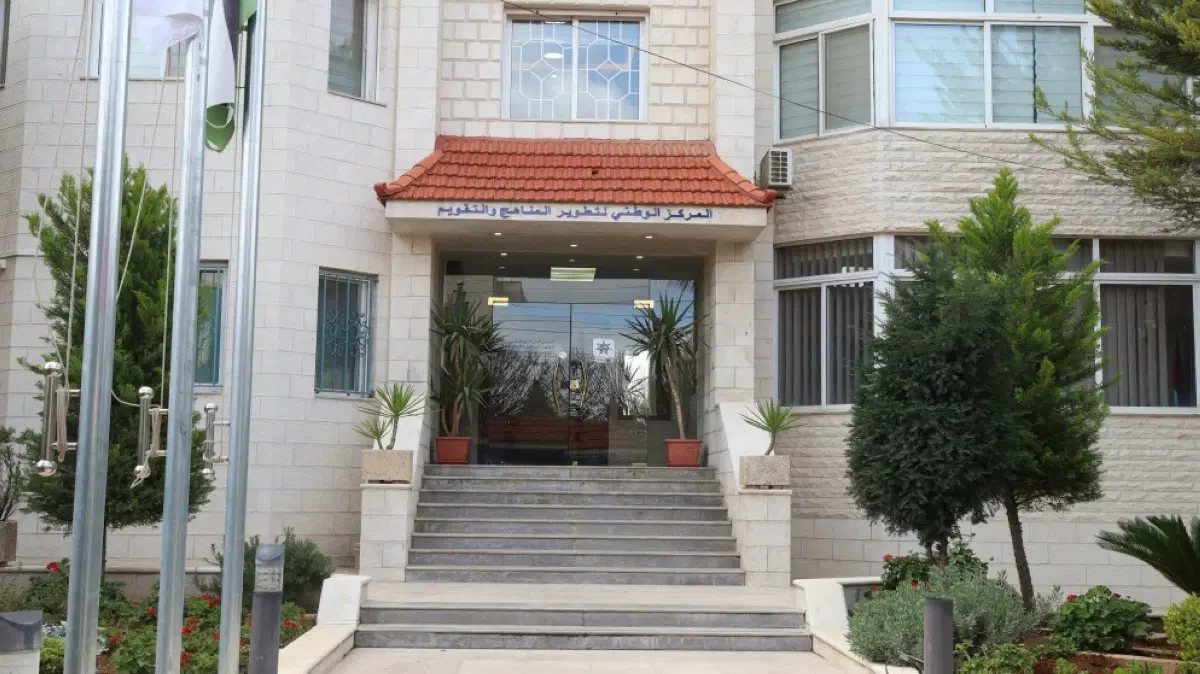
The National Center for Curriculum Development Releases 4 National Studies for Curriculum and Assessment Development
Amman3 min read
Share
The National Center for Curriculum and Assessment Development has issued 4 new studies as part of the 'Series of National Studies for Curriculum and Assessment Development', as part of its ongoing efforts to support evidence-based educational research, utilize study results in curriculum and assessment development and improvement of learning outcomes, and link research work to priority issues in the education system.
These studies are a continuation of the national studies conducted by the Center's Studies and Research Unit, and were prepared by researchers and specialists in the fields of educational research, curriculum, assessment, and measurement from within and outside the Center; which allowed for diversity in expertise and research approaches, and contributed to enhancing the quality of the studies and the reliability of their results and recommendations.
The first study addressed the degree of conformity of the content of ninth-grade science textbooks in Jordan with the requirements of the International Student Assessment (PISA 2025) framework, with the aim of revealing the extent to which the content is aligned with the scientific competencies, knowledge, and practices included in the framework. The results showed that the content contributes to building an understanding of scientific concepts and phenomena, with the need to enhance opportunities for data analysis and interpretation and linking scientific knowledge to life and practical situations.
The second study examined the degree of conformity of the content of tenth-grade science textbooks in Jordan with the requirements of the (PISA 2025) framework, by analyzing the content in light of the scientific competencies, knowledge, data interpretation, evidence, and contexts addressed by the framework. The results confirmed the importance of enhancing the use of scientific knowledge, data analysis, and evidence reasoning in various situations.
The third study addressed the impact of developed curricula in Arabic and English on the development of critical and creative thinking, problem-solving, life skills, and achievement among students. The study included a sample of (635) male and female students from the ninth, tenth, and twelfth grades, distributed across the three regions of the Kingdom, during the 2025/2026 academic year. The results showed improvement in a number of targeted skills and academic achievement, and recommended continuing to develop curricula in light of competencies and learning outcomes, enhancing activities that develop higher-order thinking skills and life skills, and utilizing the results to improve teaching practices and conducting periodic evaluation studies.
The fourth study is related to the development of an indicator of Jordanian national identity and its psychometric properties, by constructing a national indicator consisting of nine dimensions: emotional, cultural and historical, behavioral and ethical, civil and political, value and social, digital citizenship, global, economic and developmental, and security. The study results showed a high level of national identity among the sample members, and the indicator enjoyed high degrees of reliability and stability.
The four studies reflect the diversity of issues addressed by the series; combining an analysis of the extent to which the content of textbooks aligns with international assessment frameworks, evaluating the impact of developed curricula on student learning, and studying national and value dimensions. They also fall within national research priorities related to curricula and assessment, and are subject to scientific research and specialized arbitration criteria; enhancing the quality of their outputs and the reliability of their results.
Through the 'Series of National Studies for Curriculum and Assessment Development', the Center seeks to promote a culture of evidence-based research and evaluation, and provide a scientific reference for researchers, educators, decision-makers, and those working in the educational field; supporting the continuous development of curricula and assessment and improving the quality of education and student learning outcomes.